




Charlemagne's Coronation Brings Unity
Emperor restores order and faith
FaithTap · Oct 13, 2026 · 12 min read
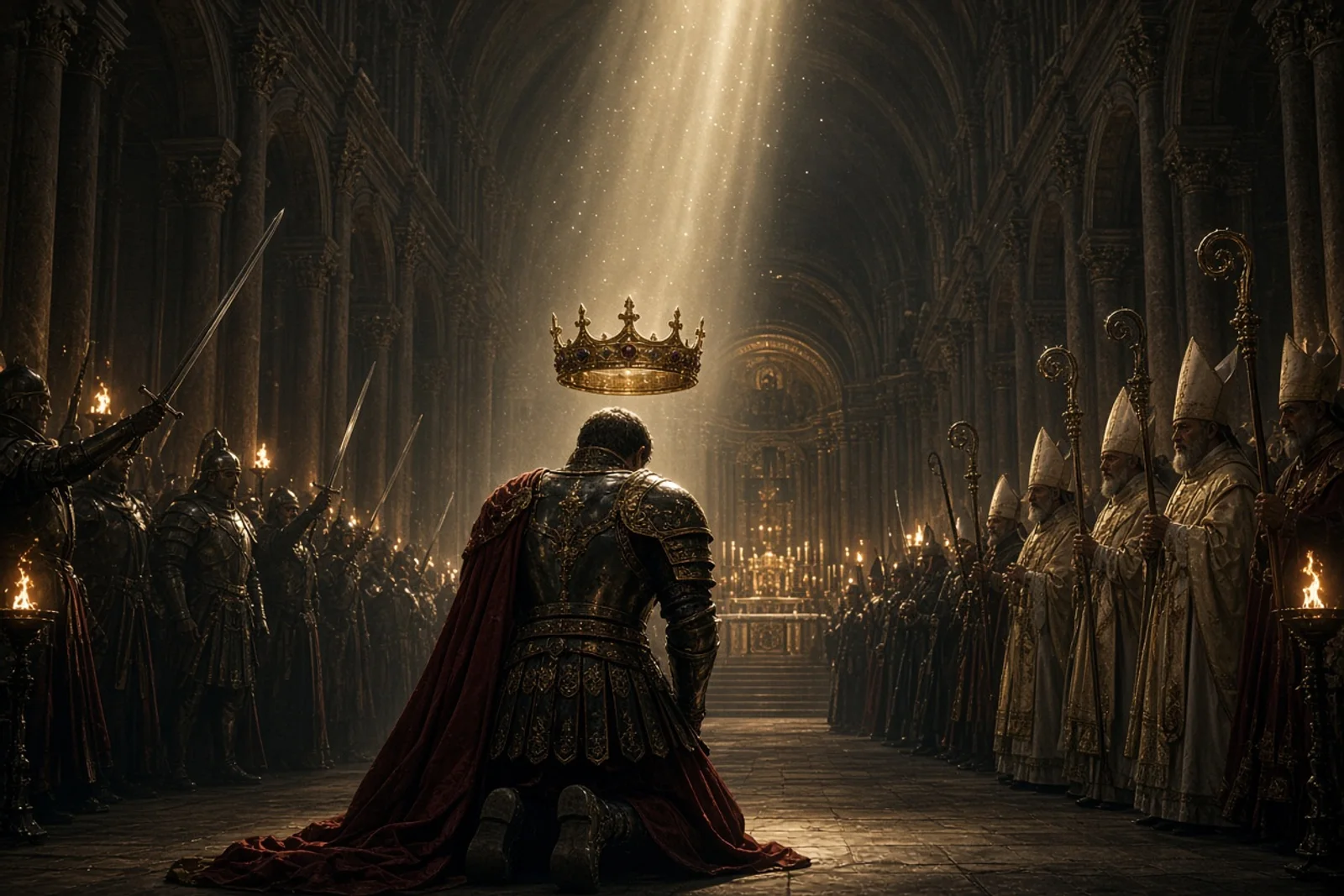
The nave stretched long under the winter light that filtered through high windows. I stood pressed among the Romans and Franks near the altar rail, the stone floor numbing my feet. Leo moved through the Mass with careful steps, his voice steady on the Latin prayers. Two days earlier the same man had placed his hand on the Gospels and sworn he had done no wrong. The words had hung in the air while Charlemagne listened from a bench a few paces away.
A draft moved through the side doors. Charlemagne knelt at the rail, head bowed, the plain circlet he wore for travel still on his hair. Leo finished the canon and turned. The deacons held the crown between them, gold catching the candle flame. Leo took it, lifted it once, and set it on Charlemagne’s head without pause. The metal settled with a small sound that carried farther than it should have in that space.
A shout rose from the front ranks. “Carolo Augusto, a Deo coronato, magno et pacifico imperatori Romanorum, vita et victoria!” The cry came again, louder, from throats that had rehearsed it. Charlemagne stayed on his knees for a moment longer than expected. When he rose the crown stayed in place. His face showed nothing that could be read from where I stood.
Outside the basilica the December air cut at the lungs. People spilled into the square, repeating the title. I heard a Frank from the royal household say the word “imperator” as though testing its weight. A Roman priest beside him answered that the old empire had slept and now woke. Neither man raised his voice above the other.
Charlemagne walked back toward the Lateran palace with the crown still on. Leo kept pace at his left. Guards cleared a path through the crowd. I followed at the edge, close enough to see the red mantle shift with each step. The metal of the crown caught the low sun and threw small flashes onto the paving stones.
That night the palace kitchens sent bread and wine to the quarters where the Frankish retinue slept. I carried a tray to one of the antechambers. Charlemagne sat with a map unrolled across a table, the crown resting on a cushion beside it. He traced the line of the Rhine with one finger and spoke to a count about winter quarters for the army. The count answered that the Saxons had submitted again. Charlemagne nodded once and moved the finger east toward the Elbe.
Leo remained in Rome through the rest of the month. He restored two small churches that had lost their roofs the year before. Each morning he walked from the Lateran to the worksite, a single attendant behind him. On one of those mornings I saw him stop at the door of St. Peter’s and look back at the place where the crown had been placed. He did not speak.
Charlemagne left for Aachen in early January. The crown traveled in a chest carried by two mules. Snow had begun to fall on the road north. I joined the rear of the column for three days before turning back at the first staging post. The last I saw of the emperor was the glint of the chest straps under a gray sky.
In the months that followed, messengers carried letters between Aachen and Rome. Leo asked for confirmation that the new title would protect the papal lands. Charlemagne answered that the title carried duties as well as rights. The exchange settled nothing new, yet both men continued to write.