




Chiune Sugihara Writes Visas Until the Train Leaves
Defying his own government, a Japanese diplomat hand-wrote transit visas for 18-20 hours a day — and kept signing them through the train window as he left.
FaithTap · Sep 24, 2026 · 9 min read
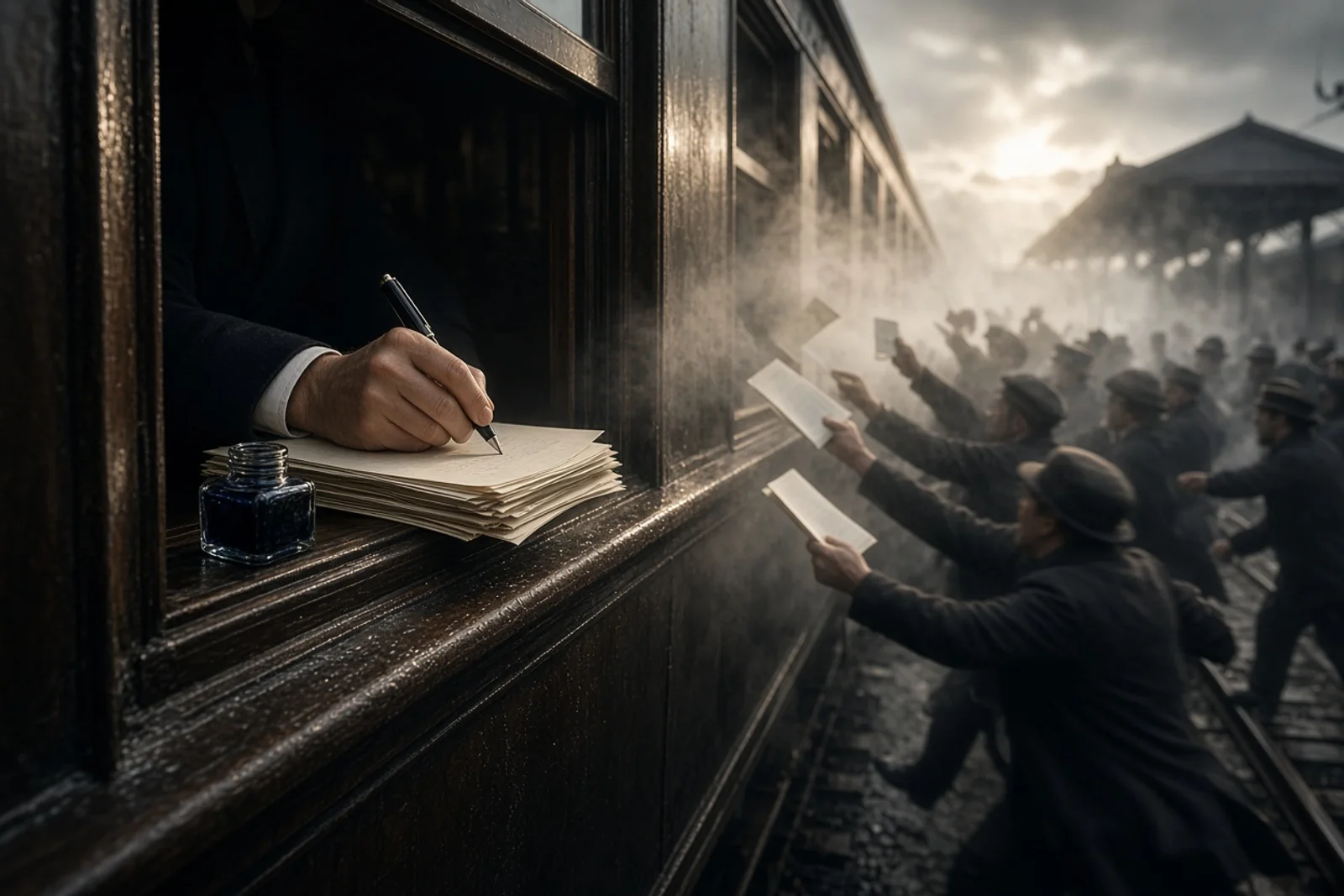
The fence gave first at the corner nearest the linden tree, and I remember the sound of it, a low groaning creak, before I understood what was happening. It was the morning of July 27, 1940, and there were perhaps two hundred of us pressed against the palings of a house on Vaižganto Street in Kaunas, and I had been standing there since before light, my shoes soaked through with dew, watching young men try to climb over while the consulate's own people pushed them back down.
I had come from Poland the autumn before, walking most of the way, and by the time I reached Vilna I had learned to read a map of borders the way other people read scripture — which line meant death, which line meant maybe. Someone in Vilna had told me about a Dutch island called Curaçao, a place none of us could point to on a globe, and about a Dutch consul who was writing visas for it that nobody in Curaçao would ever have to honor. A destination visa. A fiction, but a useful one, because a fiction stamped in the right ink could get you across the next border, and the next, if only some other consul somewhere agreed to let you pass through his country on the way.
That was why we were at the fence. Word had gone through the refugee lodgings like a fever: the Japanese consul in Kaunas might grant transit visas, might let us cross Siberia toward the ocean, if we could only get in front of him and make him listen.
He came to the window of his own bedroom that morning, I was told later, and opened it to find us already there, filling the yard, hands laced through the pickets. He said afterward he had no idea who we were. I believe that. Nothing about our faces could have told him. We were only weight against a fence, only need with no shape yet.
Word passed back through the crowd that he would see five men. I did not know their names then, only that they went in through the gate while the rest of us stood in the sun and waited, and I learned only afterward that among them was a young lawyer named Zorach Warhaftig, and that a man named Samuel Graudenz went in as his secretary, carrying whatever papers might make the case. Inside, they told him what had already happened to towns like mine — the bombing, the occupation, the Germans coming from one direction and the Soviets closing the other. They told him he was the last door left standing.
He believed them. He said as much, later, in his own words — that he wanted to issue the visas but did not know how, that he would need Tokyo's permission first. So he wired the Foreign Ministry. I did not see the cable, of course. None of us did. We only saw him afterward, at the consulate window, and the crowd reading his face like weather.
The answer from Tokyo, when it came, was no. Not an outright refusal of the man, but of the method — the Ministry insisted any visa required a confirmed onward destination and proof of money for the journey, and everyone standing in that yard knew, without needing to be told, that almost none of us had either. Our Curaçao papers were paper only. Our pockets were empty. By every rule the Ministry could cite, we were not eligible for anything.
He cabled again. And again after that. I remember the days more by hunger and weather than by date — one morning cold enough that my breath fogged, another so hot the crowd thinned by afternoon and came back at dusk — and each time, no permission arrived. Still the people kept coming, from Vilna, from villages I'd never heard named, drawn by the same rumor that had drawn me.
His wife came to the window sometimes, and I watched her face more than I watched his, because it was easier to read. She said afterward that she was not frightened by us, only struck by how many of the women stood with their hands pressed together, begging without words, and that she understood, watching them, exactly how far we had come to reach that fence.