




Christopher Columbus Names Island After Savior
Explorer dedicates voyage to Christ in logs.
FaithTap · Oct 2, 2026 · 11 min read
The deck pitched under my boots as the Pinta’s lantern swung ahead of us in the dark. Salt stung my eyes and the wind cut through the canvas we had patched three times since the Canaries. I kept my station by the rail, watching the black water break white along the bow, listening for the call that had not come in thirty days. Columbus stood near the mast with his charts, the same ones he had shown the men back in Palos, the lines drawn in his own hand. He spoke little that night, only to ask the boy at the hourglass to turn it again.
Land appeared first as a line of white that might have been foam. Then it held steady. The shout from the Pinta reached us across the water before our own lookout found his voice. Men poured up from below, bare feet slapping the planks. Columbus ordered the sails shortened and the boats made ready. I went with the first party because my watch had the oars.
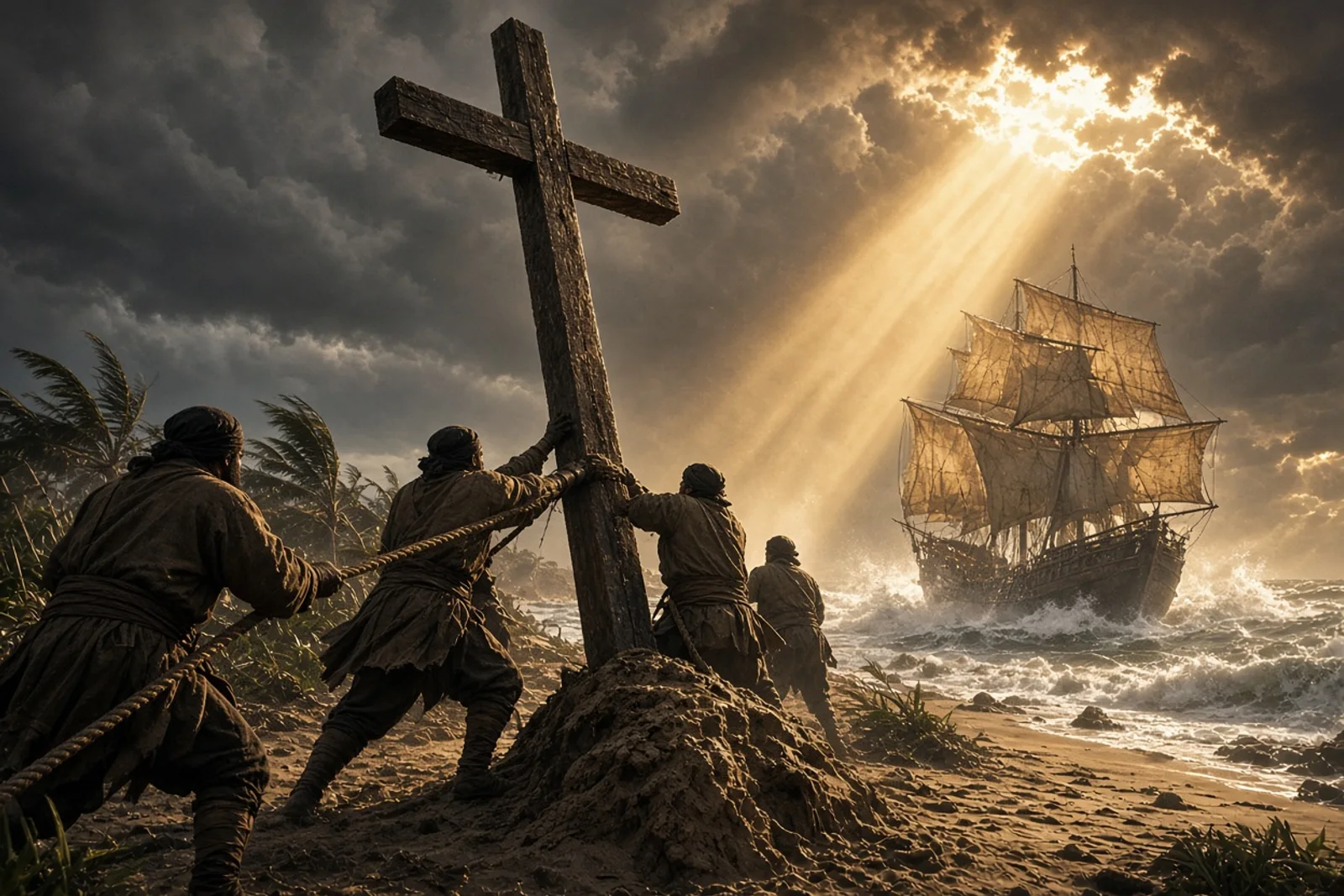
The island lay low and green, fringed with surf. We grounded the boat on pale sand and Columbus stepped out first, the royal banner in one hand and the green cross in the other. He drove the staff into the ground and spoke the words that named the place San Salvador. He said he took it for the sovereigns under the protection of the Savior whose name he had carried across the sea. The men around him answered with a ragged cheer that died quickly when they saw the people watching from the tree line.
Those watchers came forward once the weapons stayed at our sides. They wore no cloth, only ornaments of shell and feather. Their hands were empty. Columbus had the interpreter try words from the coast of Guinea, then signs. The people brought roasted roots and parrots with bright wings. One man touched the metal of a sword hilt and drew back his fingers as if burned. I watched Columbus watch them. He asked their name for the island and wrote it beside his own in the book he kept open on his knee.
We stayed three days. The water casks were filled at a spring that ran clear over white stones. Columbus walked the shore each morning, noting the trees and the birds, marking distances with the paces of his long legs. He spoke often of the gold he expected to find farther on, yet each time he returned to the cross he had planted. He told the men the voyage had been made under that protection and that the same hand would open the way to the Indies. Some listened. Others only wanted the share of any treasure that might come.
On the fourth morning we weighed anchor and stood south. The people followed us along the beach until the trees hid them. Columbus ordered the sails trimmed for the next island he had seen from the masthead. He named that one Santa Maria de la Concepcion before we reached it, and the one after Fernandina, and the one after that Isabella. Each name went into the log with the date and the wind. The men grew used to the pattern. They stopped asking when we would turn for home.
We reached the larger land the natives called Cuba and then the one they called Haiti. Columbus left thirty-nine men at a fort built from the timbers of the wrecked Santa Maria. He chose the site because the harbor was deep and the people there had traded gold for hawk bells. Before he sailed he set another cross on the hill above the beach and read from the book he carried. The men who stayed behind stood in a line and watched the ships grow small on the horizon.
The return crossing took longer. Storms split the fleet. The Niña limped into Lisbon with her mainmast sprung and half the crew sick. Columbus went ashore in his stained coat and presented himself to the Portuguese court before he continued to Spain. When he reached Barcelona the sovereigns received him in the hall where the court had gathered for the victory over Granada. He laid out the parrots, the cotton, the small pieces of gold, and the six people he had brought across the ocean. They stood quiet while the hall watched them.
He made three more voyages. Each time he carried the same book and the same banner. He named more islands after saints and after the royal family. He wrote in his letters that the gold and the spices would one day pay for the recovery of Jerusalem. The Crown removed him from the governorship after complaints from the men he had left behind, yet the names he had given remained on the charts. Ships still sail past the low green island that was once called Guanahani. The cross he planted is gone, but the name San Salvador still marks the place where he first stepped onto the sand and spoke the word that bound the voyage to the one he served.