




Cliff Richard Publicly Professes Faith
British singer announces conversion and baptism.
FaithTap · Sep 25, 2026 · 11 min read
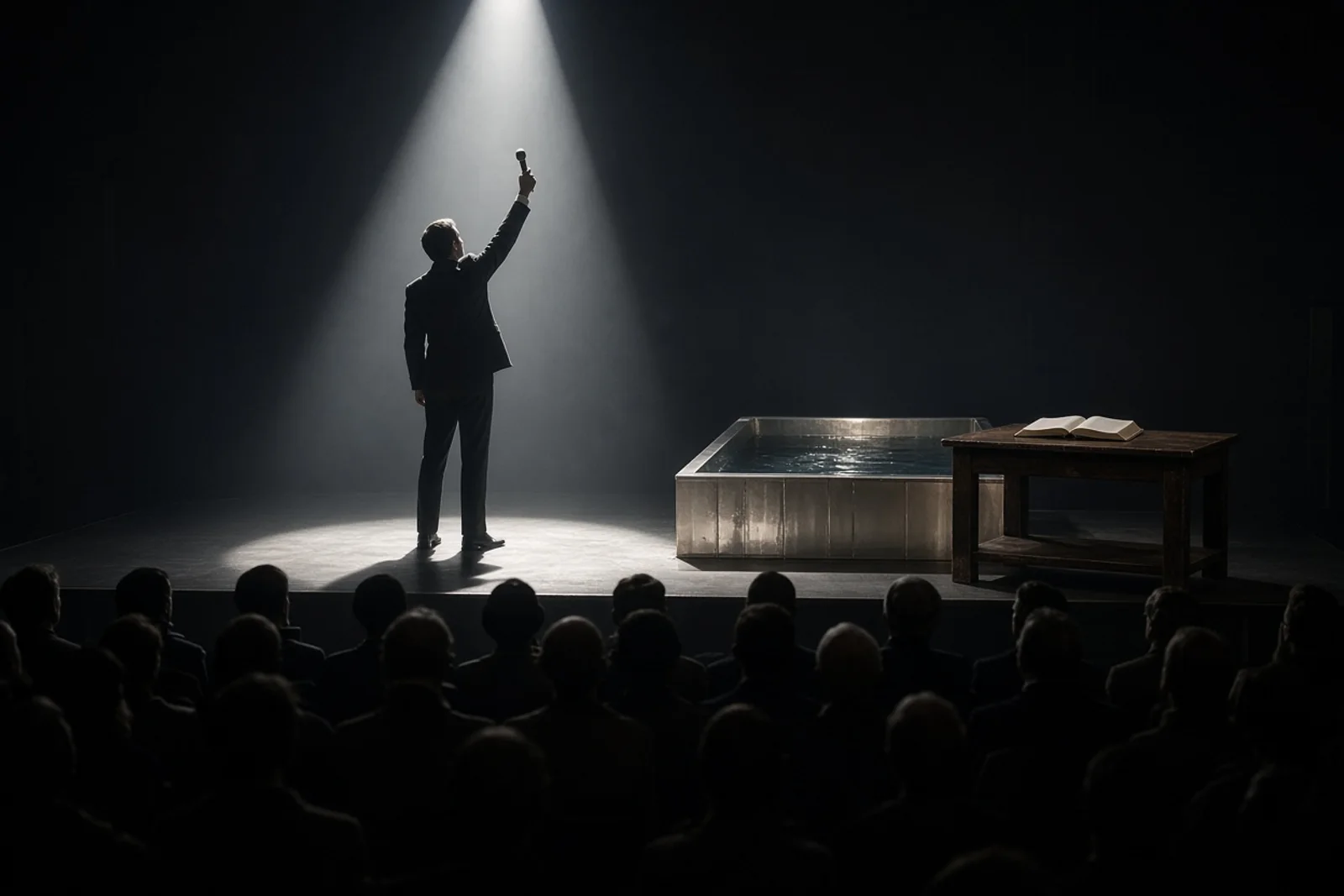
I pushed through the side door of the Earls Court arena just after seven, the air already thick with damp wool coats and the smell of wet programmes. Rain had started outside, but inside the lights were up full on the platform and the choir was filing in. I had my notebook open and a pencil stub in my pocket, the same one I had used the week before when Cliff’s people rang to say he might speak tonight.
He had been quiet about it for months. The private change had come earlier, while he was still touring and cutting records. He told a few of us he had been reading the New Testament most evenings, sometimes on the tour bus between towns. No single sermon had done it. The words had simply settled on him over time until he knew he could not go back to the old way of living.
Billy Graham stepped to the microphone first. His voice carried without strain, the same measured tone he used in the big American tents. When he finished the invitation, the aisles began to fill. People moved forward in ones and twos at first, then in larger groups. I stayed where I was, watching the platform.
Cliff walked out alone, dressed in a dark suit, no band behind him. The crowd noise swelled and then dropped as he reached the centre. He did not sing at once. He stood with both hands on the rail and looked out across the seats. I could see the slight movement of his shoulders as he took a breath.
He spoke about the difference between believing in God and giving the rest of his life to Christ. The words were plain. He said he had tried to keep the two things separate for a while and found he could not. Then he said he wanted to make the stand public so that anyone who worked with him or listened to his records would know where he stood from that night on.
A few reporters near me began writing fast. One of them muttered that this would be on the front pages by morning. Cliff kept going. He mentioned the pressure he had felt from some churches to leave the stage altogether. He said he had considered it, even spoken to a teacher-training college, but had decided that walking away would leave the people he knew in the business without any Christian voice at all.
When he finished, Graham came back to the rail and placed a hand on his shoulder. They stood together for a moment without speaking. The choir began a hymn and the people who had come forward were led to side rooms for cards and follow-up. I stayed in my seat until the arena started to empty.
Outside, the rain had stopped. I walked toward the tube with the notebook still in my hand, the pages damp at the edges. The next morning the papers carried the story under headlines about the pop singer who had chosen faith over the charts. Cliff gave a short statement to one of the evening editions. He said Billy Graham had given him the courage to speak openly after months of quiet conviction.
In the weeks that followed, the phone calls came in from promoters and from church groups alike. Some wanted to know if the records would change. Others asked whether he would still tour. He answered that the music would continue and that the faith would run through it. He appeared at two more Graham meetings that year, once in Birmingham and once in Manchester, always without the full band, always speaking from the same platform.