




Clive Staples Lewis Kneels and Prays
Oxford don yields to God after long resistance.
FaithTap · Sep 24, 2026 · 11 min read
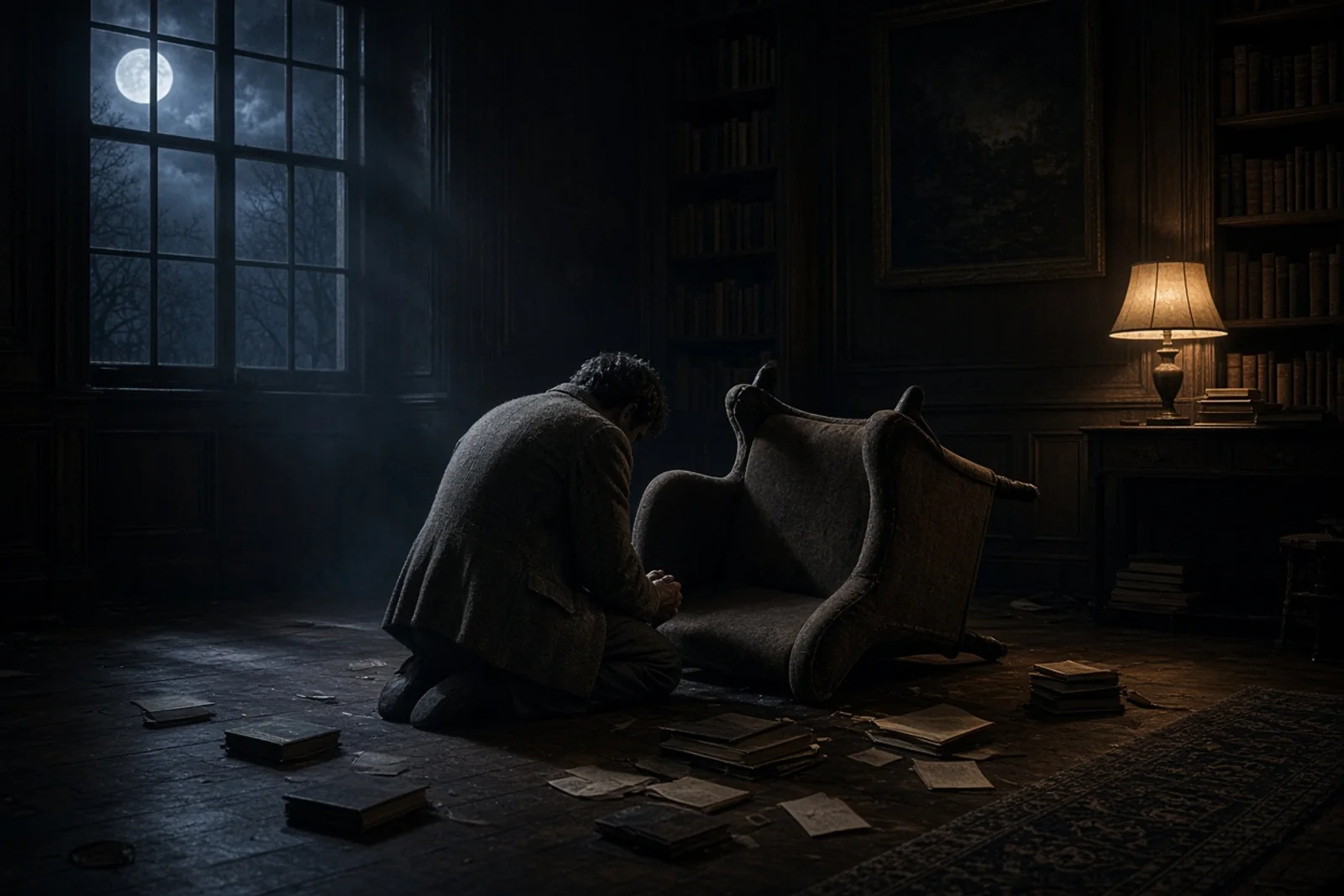
The fire had burned low in the grate when I pushed open the door to his rooms that evening. Lewis sat at the desk with his back to the window, a stack of unmarked essays on one side and an open Greek text on the other. He did not turn at once. The collar of his gown had slipped, and the room smelled of coal dust and the cold that always crept in from the quad after dark.
We had known each other since his return from the war. He taught philosophy then, and later English, always with the same clipped precision that kept undergraduates from asking more than the question allowed. He spoke of God only to dismiss the possibility. The arguments were old to him by 1928, rehearsed so often they had lost any sting. I heard him tell a visitor once that the universe showed no sign of mind, only of matter pressing on matter. The visitor left looking smaller.
His father died in September 1929. Lewis went to Belfast for the funeral and came back thinner. He said little about the days at the bedside or the letters that followed. In the common room he still joined the talk after dinner, but the edge had gone from his replies. When someone raised the old topic of design in nature he let the others carry it without interruption.
By the start of Hilary term the change showed in smaller ways. He stopped correcting undergraduates who used the word “soul” as if it named something real. He walked the river path alone more often, sometimes past the hour when the bells rang for evensong. One afternoon I found him standing outside the college gate with a book under his arm, not yet opened. He asked whether I had ever felt the ground shift under a conclusion I had held for years. I said I had not. He nodded and walked on.
The night it happened I had stayed late to return a set of papers. His door stood ajar. The lamp on the desk threw a circle of light no wider than his hands. He was not at the desk. He knelt on the rug between the two armchairs, head lowered, one hand braced on the floorboards. The posture looked awkward, as if he had dropped there rather than chosen it. I heard nothing spoken. After a minute he rose, brushed the knees of his trousers, and returned to the desk. He did not look toward the door.
I left without knocking. The next morning he appeared at breakfast as usual. He asked after a colleague’s health and passed the marmalade when it was wanted. Yet the resistance that had shaped every conversation for a decade had gone quiet. When the subject of belief arose later that week he answered that he now thought some mind must stand behind the order of things. He offered no argument, only the statement.
Letters to his brother and to Arthur Greeves began to mention the same point. He wrote that he had reached the end of the road he had chosen at seventeen. The tone stayed measured. He still called the step reluctant. In one note he described himself as the most dejected convert in England, the phrase appearing without flourish.
By the summer of 1930 his reading had shifted. The books on idealism and materialism stayed on the shelves, but new volumes on the problem of pain and the meaning of myth appeared on the desk. He spoke of joy less as a private sensation and more as a pointer. Students noticed the change in tutorials. Where he once dismantled arguments, he now asked what the argument presupposed.
The full step to Christian doctrine came later, in 1931, during a walk with friends to Whipsnade. He arrived an unbeliever in the divinity of Christ and left believing it. The record of that day is his own. What mattered in the rooms at Magdalen was the earlier surrender, the moment the word “God” ceased to be a word he refused.