




Corrie ten Boom Opens Home for Holocaust Survivors
Survivor creates place of healing
FaithTap · Oct 5, 2026 · 9 min read
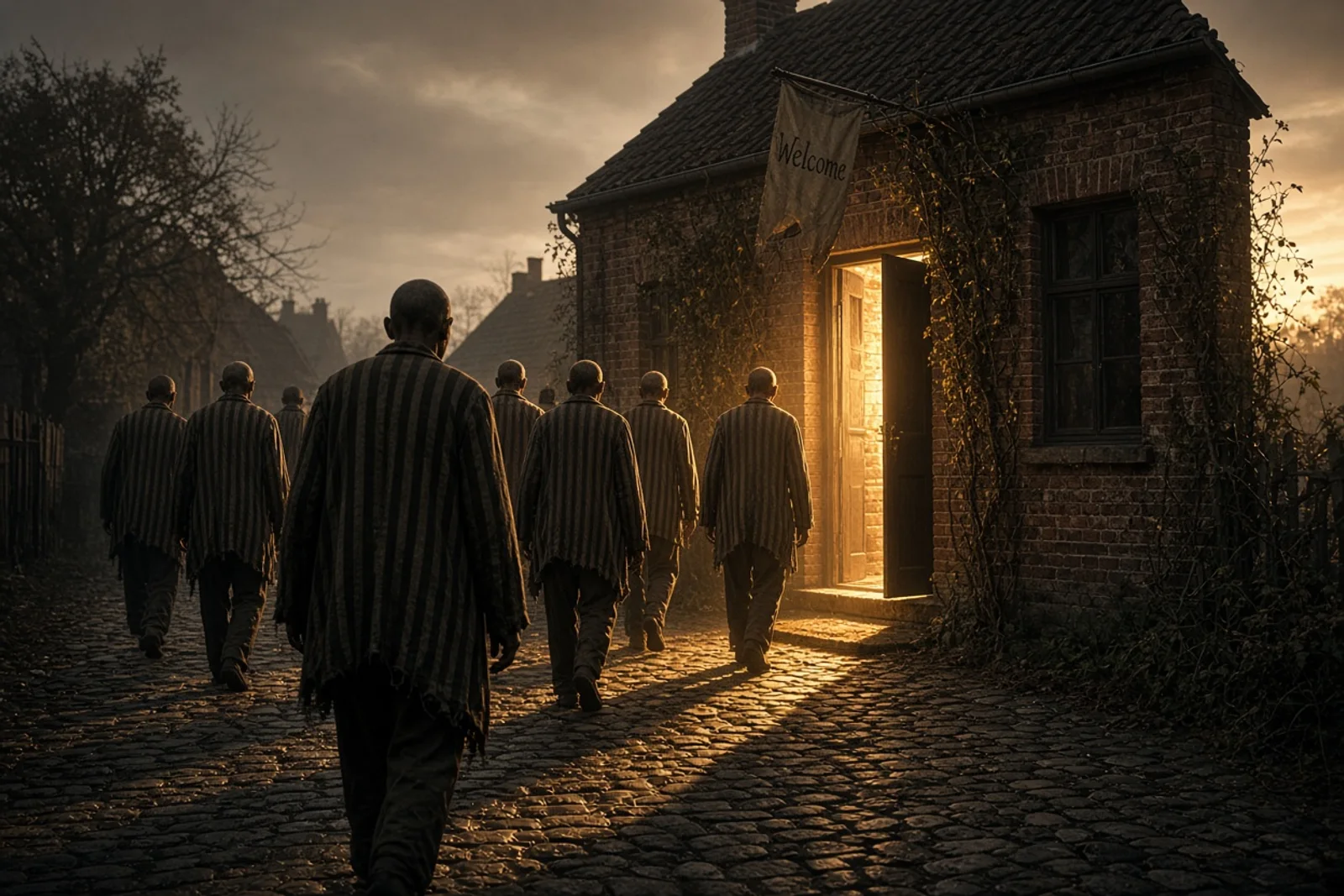
The train from Amsterdam slowed at the Haarlem platform just after noon. I stepped off with two suitcases that belonged to no one in particular and walked straight into the square where the watch shop still stood with its shutters half-drawn. Corrie ten Boom was already there, sleeves rolled past her elbows, sorting blankets on the curb. She looked thinner than the woman who had once passed ration cards through the back door, yet she moved with the same quick hands that used to hide people behind the false wall upstairs.
We loaded the blankets onto a borrowed lorry. The driver, a man from the old resistance circle, said nothing about the camps. He only asked where the beds should go once we reached the house. Corrie answered that the largest room needed eight, the smaller ones four each. She had counted the beds the week before, walking the empty floors alone.
By mid-afternoon the lorry turned onto the lane that led to Schapendunien. The house sat behind a low brick wall, its windows open to the spring air. Corrie unlocked the front door and propped it with a stone so the light could reach the hallway. Inside, the rooms smelled of fresh paint and the faint trace of disinfectant someone had used on the stairs.
We carried the first mattresses up together. Corrie took the top end without asking for help. At the landing she paused, set her side down, and ran her palm along the banister as if checking for dust that was not there. Then she lifted again. The sound of our footsteps on the wooden steps was the only noise in the house.
That evening three women arrived from a reception center near Utrecht. One carried a paper parcel tied with string. She set it on the kitchen table and did not open it. Corrie showed each woman a bed, explained where the washroom was, and left a towel on every pillow. She spoke softly, the way people speak when they know the listener has heard too many loud voices already.
The next morning a man came on foot from the station. His coat hung loose at the shoulders. Corrie met him at the gate and asked his name. He gave it, then asked whether there would be work. She said there was always work if a person wanted it, but rest came first. He nodded once and followed her inside.
By the third day the kitchen began to fill at mealtimes. People sat at the long table without speaking much. Corrie moved between them, pouring tea, placing bread within reach. When someone dropped a cup she bent at once, gathered the pieces, and carried them out without comment. The others watched her hands the way children watch a clock.
A week later the first letters arrived. Corrie read them at the desk in the small office off the hallway. One envelope carried a return address from a camp in Germany. She set it aside unopened for an hour, then opened it after the others had gone upstairs. She read it standing, folded it again, and placed it in the top drawer.
The house settled into a rhythm of its own. Laundry hung on lines behind the brick wall. Someone found a radio in the attic and tuned it to music that did not mention the war. Corrie walked the garden each afternoon, checking the soil where vegetables had been planted before the occupation. She pulled weeds with the same steady motion she had once used to wind watch springs.