




Dante Writes Divine Comedy in Exile
Poet finds hope after banishment
FaithTap · Sep 22, 2026 · 10 min read
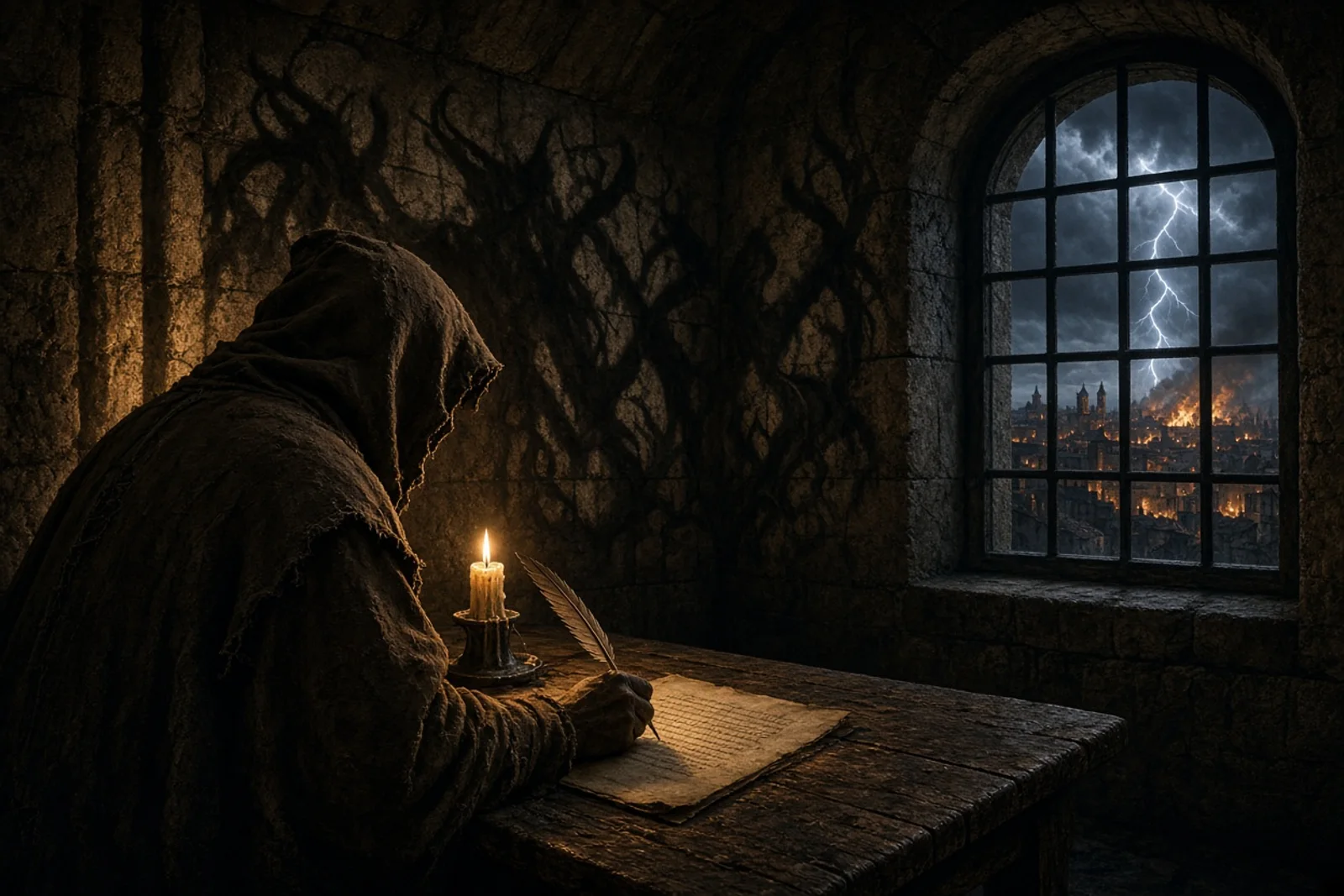
I was hauling water from the well behind Cangrande’s hall when the stranger first appeared at the gate. It was late autumn, the air already sharp enough to bite through wool, and the guards were arguing about whether to let another Florentine beggar inside. The man wore a patched cloak and carried a leather satchel tied with cord. He gave his name without flourish and asked only for a place to sit and write. Cangrande’s steward recognized him anyway and sent a runner to the upper rooms.
By the next morning the household knew Dante Alighieri had arrived from Lucca. He was given a small chamber above the stables, a table, and two candles each evening. I brought the candles and the ink. The first night he did not speak to me. He sat with his back to the door, shoulders hunched, and scratched lines onto a sheet of vellum until the shorter candle guttered. When I returned at dawn the sheet was covered on both sides and the floor was scattered with discarded scraps.
He stayed through the winter. Most days he walked the outer wall before first light, then returned to the table. Sometimes he dictated to himself in a low voice, testing the sound of a line against the stone. The terza rima came slowly; he would repeat three lines, change the middle rhyme, and begin again. I learned to leave the door ajar so the smoke from the brazier could escape. Once, when the ink froze in its pot, he melted it over the coals with his own hands and went on writing without looking up.
News from Florence reached us in fragments. The Black Guelphs still held the city. Cante de’ Gabrielli’s sentence stood; any return meant death. Dante never spoke of going back. Instead he asked me, late one evening, whether I remembered the hills south of Fiesole at sunrise. I said I did. He nodded and wrote the word “stelle” at the bottom of the page, then crossed it out and wrote it again.
In the spring he traveled briefly with Cangrande’s men to the Adige, then returned thinner and more silent. The pages had grown into quires. He kept them in order inside a wooden box he locked each night. When I asked what the work was called he answered only that it was a comedy, because it began in sorrow and would end under the stars. He did not say whose sorrow.
By the second year the household had grown used to him. Servants stopped staring when he passed. Cangrande himself came down once and asked to hear a canto. Dante read the descent into the circle of the violent. His voice did not rise or fall; it simply carried the lines as if they were already fixed in the air. When he finished, Cangrande thanked him and left. Dante returned to the table without comment.
He spoke of Virgil more than of living men. The Roman poet guided the early cantos the way a man leads another through unfamiliar streets at night. Later Beatrice took over, and the language changed. Dante would pause for long stretches, staring at the wall as though listening. Once he told me the hardest part was not the punishments but the precise weight of grace. He said it as if reporting the cost of grain.
The box of quires traveled with him when he moved on. I did not follow at first. Two years later I found him again in Ravenna, thinner still, working in a room lent by Guido Novello. The poem had reached the fixed stars. He showed me the page where the blessed souls appear as lights arranged in the shape of an eagle. His hand trembled when he pointed to a single line, but the script itself remained steady.
He finished the last cantos in the weeks before his death. I was there the morning he sealed the final pages. The room smelled of lamp oil and the river mud outside the window. He asked me to carry the completed manuscript to a certain monk who would make copies. I asked whether he wanted the title changed to Divina Commedia, the way some already called it. He shook his head. Comedy was enough.