




David Brainerd Ministers to Native Americans
Missionary serves despite illness
FaithTap · Sep 23, 2026 · 10 min read
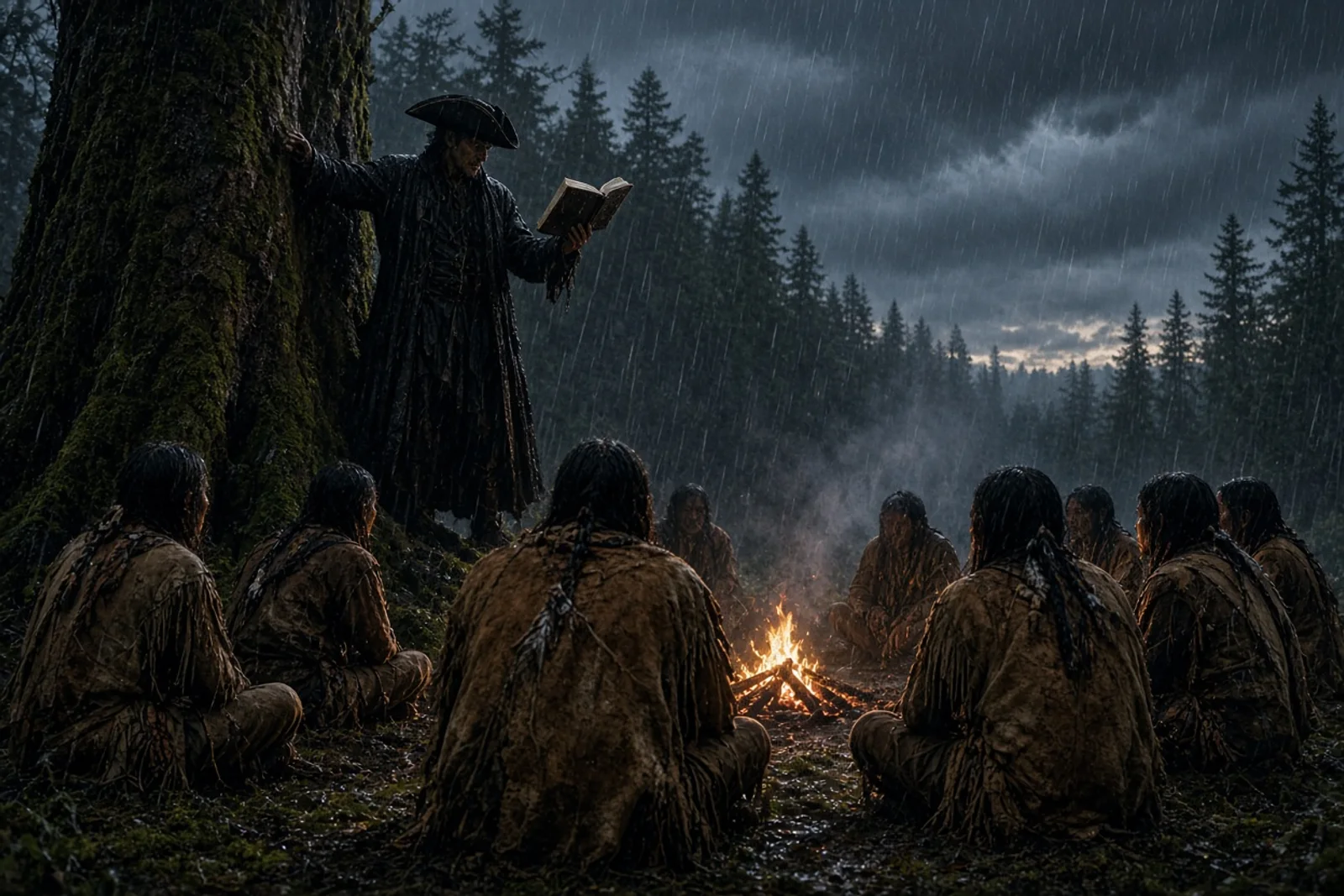
I rode with him through the low pines that morning, the trail still soft from spring rain, and watched the way he held the reins with one hand while the other pressed against his ribs. Brainerd coughed once, wiped his mouth, and kept the pace. We were three days out from Newark, where the presbytery had laid hands on him two weeks earlier. The papers naming him to the work among the Delaware sat rolled in his saddlebag, already creased from handling.
At Crossweeksung the houses stood scattered along the creek bank. Women were pounding corn in wooden mortars. Children ran between the cook fires. When Brainerd dismounted, a few of the men came forward. One of them, an older interpreter named Moses, spoke first in their tongue and then in broken English. Brainerd answered quietly, asking where the people gathered when the sun was overhead. They pointed to a cleared space beneath two tall oaks.
He preached that first afternoon with his voice still raw from the journey. He spoke of a single God who had made the forests and the rivers and who required no gifts of wampum or tobacco. Several women stayed afterward to ask questions through Moses. One carried a child on her hip and kept glancing at the sky as if expecting the old powers to answer back. Brainerd listened without interrupting. When she finished he simply repeated that the same God had sent his own son to die and rise again. She nodded once and walked away.
The next weeks followed the same pattern. He rose before light, read from the small Bible he carried, then walked the paths between the lodges. Some days he found only two or three willing to listen. Other days the whole clearing filled. He never raised his voice above what the nearest listeners needed. When the coughing fits came he stepped into the trees, spat, and returned. The people noticed. They began leaving bowls of stew at the small shelter he had built for himself.
By midsummer the numbers had grown. Men who once spent mornings at the fishing weirs now sat through the long talks. One of them, a man named Joseph, asked to be baptized. Brainerd questioned him for three days, walking the creek bank each evening until the answers satisfied him. The baptism took place on a Sunday when the water ran clear after rain. Moses stood beside the bank and translated each sentence. Afterward Joseph helped Brainerd carry firewood, though neither man spoke much.
Brainerd received letters that summer from ministers offering settled churches in Connecticut and Pennsylvania. He read them by the fire after the evening meetings and set them aside. Once he told Moses he could not leave while the people still asked questions no one else would answer. Moses repeated the words to the others the next morning. That same week three more families asked for instruction.
The illness never left him. Some nights I heard him moving inside the shelter, trying to find a position that eased the pain in his chest. He still rose at first light. When he could no longer walk the full circuit of the lodges he sent word for people to come to him. They came. The clearing under the oaks grew crowded enough that latecomers stood at the edges.
In early autumn he traveled back to the Forks of the Delaware for a few weeks, then returned. The congregation had continued meeting in his absence. Joseph led the singing of the psalms they had learned. When Brainerd stepped into the clearing again the people stopped what they were doing and gathered without being called. He preached sitting on a stump because standing tired him too quickly.
One evening a conjurer from a neighboring band arrived and demanded to know why the old dances had been abandoned. Brainerd answered that the dances had never brought the rain or the game the people needed. The man stayed three days, listened, and left without further argument. Two of his relatives remained and asked for their own instruction.