




David Livingstone Begins African Explorations
Missionary opens continent
FaithTap · Oct 3, 2026 · 10 min read
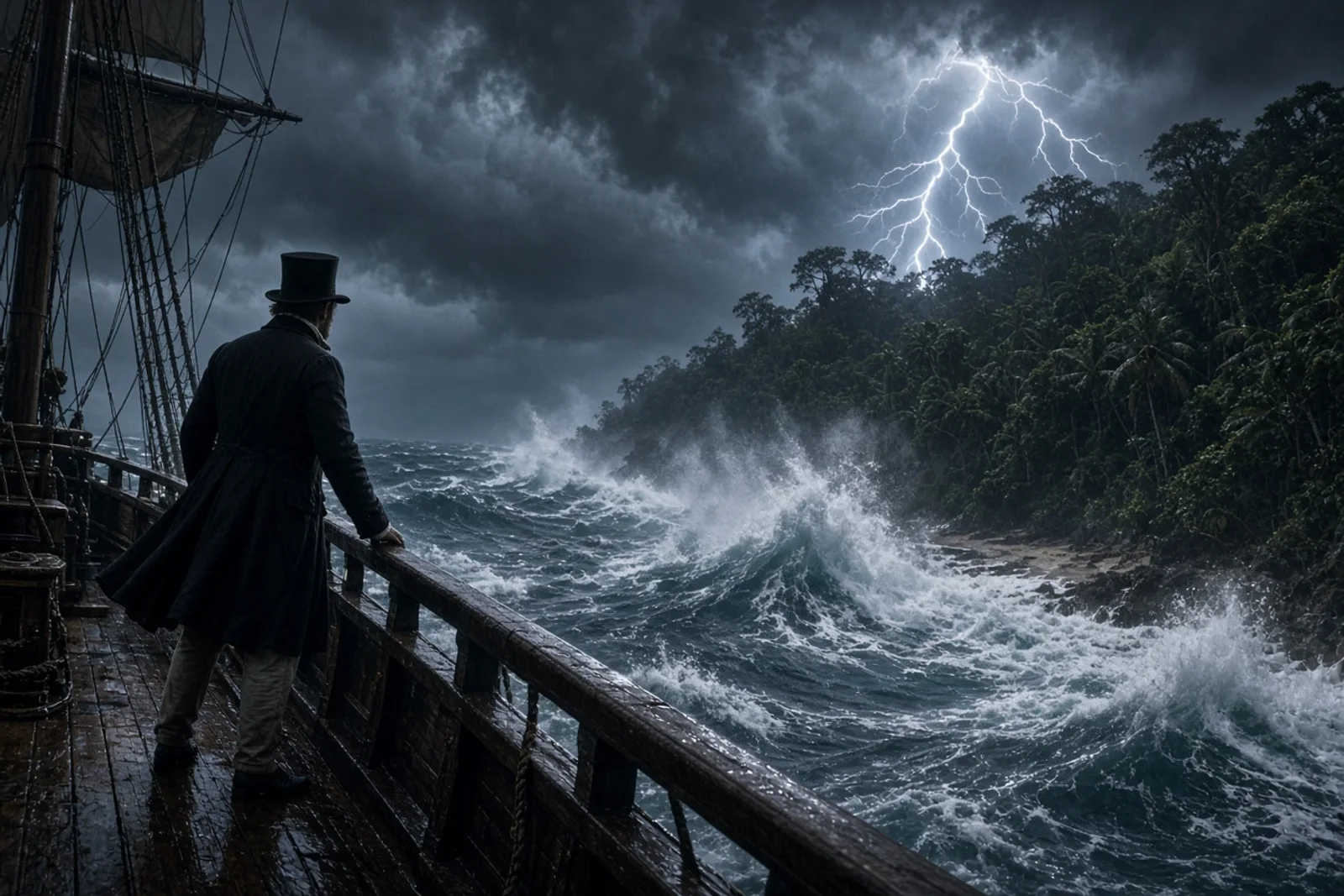
The deck tilted under a sharp gust as the coastline rose from the haze. I gripped the rail and watched the man in the dark coat lean into the wind, his eyes fixed on the low hills beyond Table Bay. He had not spoken much during the weeks at sea, but his notebooks filled faster than the rest of ours combined. When the anchor chain rattled down on 15 March he was first to the gangway, medical bag in one hand, a small case of instruments in the other.
Cape Town smelled of salt, dung, and fresh bread from the market stalls. Livingstone moved through the crowd without pausing, asking directions in a quiet voice that still carried over the noise. I followed because the Society had asked for an extra pair of hands on the inland road, and because his manner made refusal feel smaller than it should have. We loaded two wagons that same afternoon. The oxen stamped and blew while he checked the harnesses himself, testing each buckle.
The road north ran through dust that rose in thick ropes behind the wheels. At night the fires drew jackals close enough to see their eyes. Livingstone sat up late with a lantern, writing by its light until the oil smoked. He asked the drivers about water holes and grazing, and he listened when they answered. One morning he treated a boy whose foot had been crushed by a wagon wheel; the splint he made held for the rest of the trek.
We reached Kuruman on the last day of July. The mission stood in a shallow valley where the river still ran clear between the reeds. Robert Moffat met us at the edge of the settlement, his beard white with dust. Livingstone stepped down from the wagon and clasped his hand without ceremony. They spoke for only a few minutes before Moffat pointed to an empty hut and said it would serve until something better could be built.
Inside a week Livingstone had set up a small dispensary under a thorn tree. People came at first out of curiosity, then because word spread that the new doctor did not demand payment before he looked at a wound. I kept the ledger of supplies and watched how he measured out quinine with the same care he used for the Bible verses he read each evening. The heat pressed down by midday. He worked through it, sleeves rolled, sweat darkening the front of his shirt.
By September he was already talking of moving farther north. Moffat warned him about the distance and the uncertain welcome beyond the last reliable water. Livingstone listened, nodded, and continued packing. He chose two local men who knew the trails and asked them to guide him to the Khatla settlements. I asked if I could come. He considered it, then said the wagon would be lighter with one less person, but he left me a list of medicines to prepare in case he sent back for them.
The party left at first light. I stood on the rise above the river and watched the dust settle after the last ox. Weeks passed. A runner arrived with a note in Livingstone’s hand reporting that the Khatla chief had granted permission to stay. Then nothing for nearly a month. When the next message came it was carried by a man whose arm was bound in a sling of bark cloth. He said a lion had charged the camp at dusk. Livingstone had fired once and missed; the second shot struck the animal as it knocked him down. The shoulder wound had been cleaned with whisky and stitched by firelight.
The runner also brought a small packet of seeds the doctor had collected along the way. He wanted them planted at Kuruman so he could see what would grow when he returned. I set them in the mission garden that afternoon, pressing each one into the turned earth while the sun dropped behind the hills. The river kept its steady sound. Somewhere beyond it the wagons were moving again, and the notebooks were filling.
The seeds I pressed into the soil that evening were from a species of acacia the Khatla had shown him near the Kolobeng stream, and when the first shoots appeared in October 1841 they matched the description he had written on the packet. Months later a second runner reached Kuruman with a longer letter dated 12 December 1841, addressed to Moffat, in which Livingstone recorded that the lion’s claw marks still showed on his left shoulder and that the wound had healed only after repeated applications of a poultice made from the leaves of the mopane tree. He added that the Khatla chief Sechele had asked for a school and that he had begun lessons in reading on 3 January 1842 using a slate brought from the Cape. The letter also listed the latitude of the settlement as 24 degrees 23 minutes south, measured with the brass sextant the Society had supplied.