




Desiderius Erasmus Publishes Greek New Testament
Scholar enables Bible access
FaithTap · Sep 27, 2026 · 11 min read
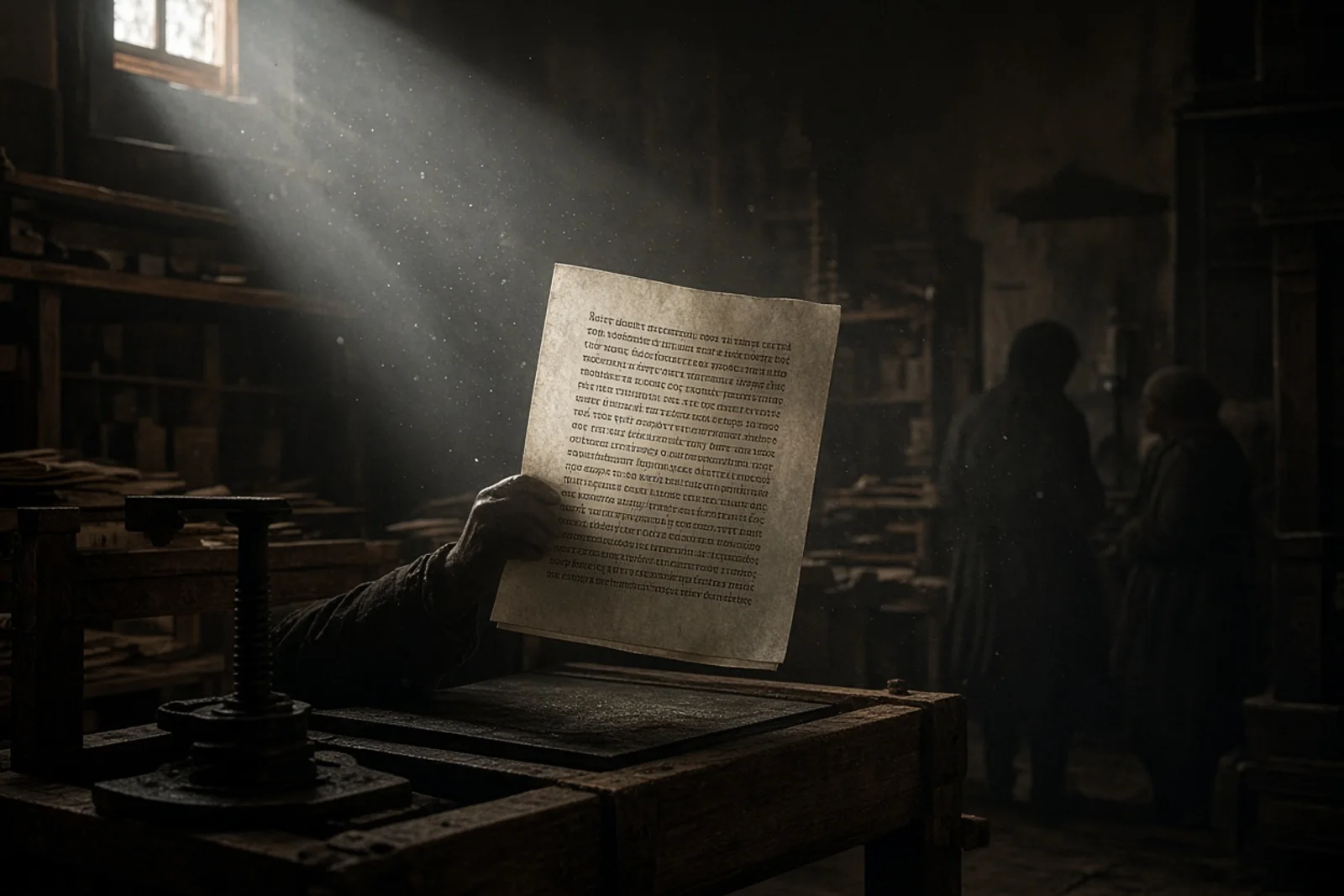
The press hammered through the night like a heartbeat that refused to slow. I stood at the long table with the other men, my fingers black to the knuckles, sorting the damp sheets as they came off the bed. Froben had promised the whole run finished by the first of March. That left us three weeks to bind and correct what the type had already mangled. Erasmus walked the length of the room every hour, shoulders hunched under the same black gown he had worn since October. He stopped at each station, lifted a page, and read without moving his lips.
The Greek columns sat on the left, Latin on the right. We had only seven manuscripts to work from, all of them late and none of them whole. When the last pages of Revelation ran out, Erasmus wrote the missing verses back into Greek from the old Latin he was trying to replace. He did it at the corner table under a single lamp, the quill scratching fast enough that the ink sometimes smeared before it dried. I carried those sheets to the compositor myself. The man set the lines without comment, though he raised one eyebrow at the invented words.
Froben kept the accounts in a small ledger he never let out of his sight. Every morning he added the cost of paper and the wages for extra hands brought in from the town. He told us the Spanish Polyglot had already been printed two years earlier but still waited for Rome to give permission. We were going to reach readers first. That single fact kept the lamps lit past midnight and the beer watered.
One afternoon the door opened and a messenger brought a packet from England. Erasmus broke the seal at once and read standing up. He said nothing, only folded the letter into his sleeve and went back to the proofs. Later I heard him tell Froben that the bishops would fight the new Latin. He expected it. He wanted the Greek there so any priest could check the changes for himself.
We reached the last signature on the twenty-eighth of February. The press ran until the oil in the lamps turned black. I pulled the final sheet, still warm, and carried it to Erasmus. He held it to the window light, checked the alignment of the two columns, and nodded once. No one cheered. We stacked the quires on the long bench and began folding.
The books left the shop on the morning of the first. Wagons waited in the yard while the binders finished the last covers. Erasmus stood at the loading door with his hands behind his back, watching the stacks disappear under canvas. He looked older than the year before, though only six months had passed. Froben paid the drivers and came inside to count the remaining copies for the bookshops in Frankfurt.
Three weeks later the first complaints arrived by letter. Readers pointed out reversed letters, lines that ran together, Greek words that made no sense. Erasmus answered every note the same day, promising corrections in the next printing. He already had the manuscripts for that edition laid out on the same table. The work did not stop.
I stayed on through the summer, setting type for the Annotations volume that would follow the text. Erasmus wrote new notes every week, sometimes striking out whole paragraphs he had printed only months earlier. He kept a small Greek Testament open beside him, one of the actual manuscripts we had used, and compared every line. When he found a reading he had changed too freely, he marked it for the next run.
By the time the second edition appeared in 1519 the first printing had already crossed the Alps and the Channel. Luther read a copy in Wittenberg and began his own German version from it. Tyndale carried another to England. Neither man met Erasmus, yet both worked from the columns we had hurried into type under the winter lamps.