




Desmond Doss Saves 75 Men at Hacksaw Ridge
Conscientious objector rescues 75 wounded without weapon.
FaithTap · Sep 26, 2026 · 11 min read
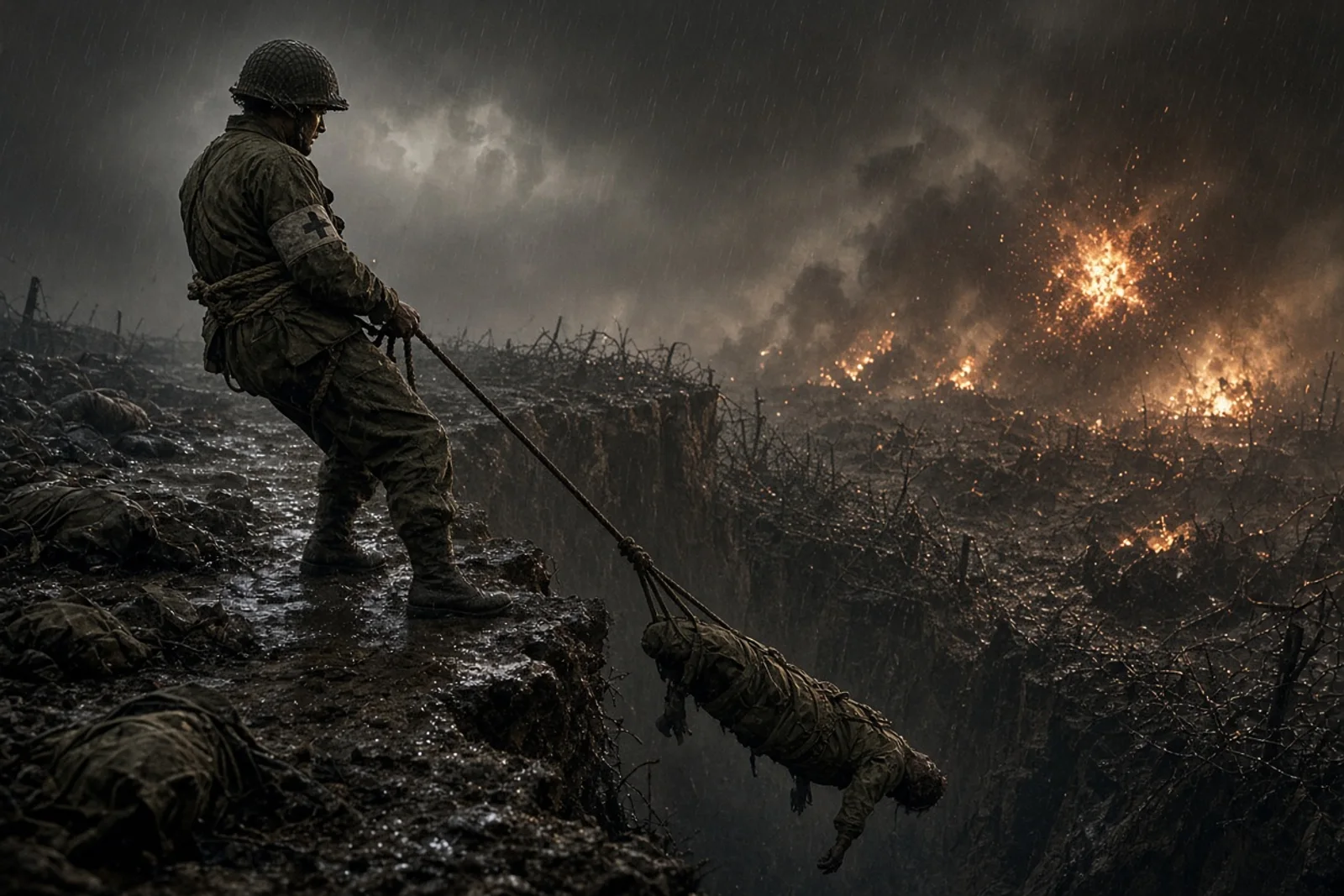
The shells walked across the plateau like a man kicking over furniture in the dark. I lay with my face pressed to the dirt where the machine gun had cut me down an hour earlier, and every time the ground jumped I tasted blood and cordite. Desmond Doss moved between the bodies without a helmet or a rifle, the red cross on his sleeve already torn and filthy.
He had come up the cargo nets with the rest of us that morning. Most of the men who once threw boots at him while he prayed were glad enough to see him now. When the first barrage drove the battalion back down the cliff, Doss stayed. He told the lieutenant he would not leave the wounded on the escarpment. The lieutenant did not argue.
I watched him drag the first man to the edge. The rope litter he had rigged swung against the rock face three hundred feet below. Doss paid out the line hand over hand, talking to himself the whole time, then hauled the empty litter back up. He did not stop to rest. The next soldier was heavier, and the litter twisted once on the way down. Doss waited until it steadied, then began again.
By mid-afternoon the sun had baked the plateau. I could not move my legs, so I counted the trips he made. Twenty-three. Twenty-four. Each time he returned he checked the living first, then the dead, then came back for another. When he reached me he cut my blouse open with a pocket knife and packed the wound with sulfa. He said my name once, as if to be sure I heard him, then looped the rope under my arms.
The descent took longer than I expected. The litter bumped the cliff twice. At the bottom two men from the aid station unfastened the straps and carried me to a jeep. I looked up and saw Doss already climbing again.
Three days later he went two hundred yards past the line to pull a man out of a shell hole. The same day he crawled to the mouth of a cave under grenade fire and bandaged four soldiers before dragging each one back in separate trips. On the fifth of May he treated an artillery officer while shells landed close enough to throw dirt on both of them, then gave plasma while he waited for the litter bearers.
That night the company tried to take the next rise near Shuri. When the grenade burst near my position I heard Doss call out that he was hit in the legs. He refused to shout for another medic. He dressed his own wounds and lay there five hours until the stretcher team reached him. On the way down the hill a Japanese tank appeared. Doss rolled off the litter and pointed the bearers toward a more badly wounded man lying nearby. While he waited for them to return, a sniper’s bullet broke his arm.
He used the stock of a dead man’s rifle as a splint and crawled three hundred yards to the aid station. The last time I saw him that spring he was on a stretcher being loaded onto the USS Mercy. His left arm was in a cast and both legs were bandaged. He had already been hit four times on the island.
After the war I visited him once at the hospital in Georgia where they removed the lung. He could not work as a carpenter anymore, but he still kept a small garden behind the house. His wife Dorothy brought us coffee on the porch and did not let him lift the tray. Later, when the antibiotics took his hearing, he learned to read lips well enough to follow conversations at the kitchen table.