




Dorothy Day's Baptism After Conversion
Journalist and activist Dorothy Day is baptized Catholic following a personal crisis and reading of Scripture.
FaithTap · Sep 23, 2026 · 9 min read
The train from the island clattered into the city station just after noon. I stepped off with a bundle of clean linens under one arm and the afternoon papers under the other, the way I had done every other day that week. The ward was on the third floor, the long room already warm from the radiators though the March wind still cut along the streets outside. Dorothy sat propped on two pillows, the baby wrapped tight against her chest. She had been writing since morning.
A young Italian woman in the next bed watched everything. She had three children already and a heart the doctors kept coming back to measure. When the physicians left she turned her face to the wall for a while, then asked Dorothy what name she had chosen. Dorothy said she had not settled it yet. The woman reached under her own pillow and held out a small medal. Dorothy thanked her but did not take it.
I stayed through the afternoon. Dorothy finished the piece for the New Masses and asked me to carry it to the office before the presses closed. She wanted the workers to read it, she said, because the feeling belonged to every woman who had ever brought a child through winter into spring. The baby slept through the noise of the ward. Outside the windows the light lasted longer each day.
Fred came once that week and stood at the foot of the bed. He looked at the child, then at the crucifix on the wall above the Italian woman’s bed, and left without sitting down. Dorothy did not ask him to stay. When the door closed behind him she asked me to bring her the Imitation of Christ from the apartment. She kept it on the blanket beside her and read while the baby nursed.
By the time they let her leave the hospital the trees along the avenue had leaves. She took a small place near the church so she could stop on the way home from the market. Some mornings I walked with her. She would go inside for a few minutes, come out again, and we would continue on without speaking of it. The child grew heavier in the carriage. Dorothy wrote at the kitchen table when the baby slept, short pieces mostly, and once or twice she showed me pages she did not send.
Fred stayed away longer each time. One evening in early summer he came for his clothes. Dorothy stood in the doorway holding the baby while he packed. He did not look at either of them when he left. After that she kept the door locked at night and began to attend the early Mass. She never asked me to come inside with her. I waited on the steps until she returned.
In the fall she told me she had decided the child would be baptized. She had waited through the summer because she still hoped Fred might change his mind, but the hope had gone. She asked if I would stand as godmother. I said yes. We chose the name Tamar. The priest at the church set the date for the first week of December, then moved it when the child caught a cold. Dorothy waited without complaint.
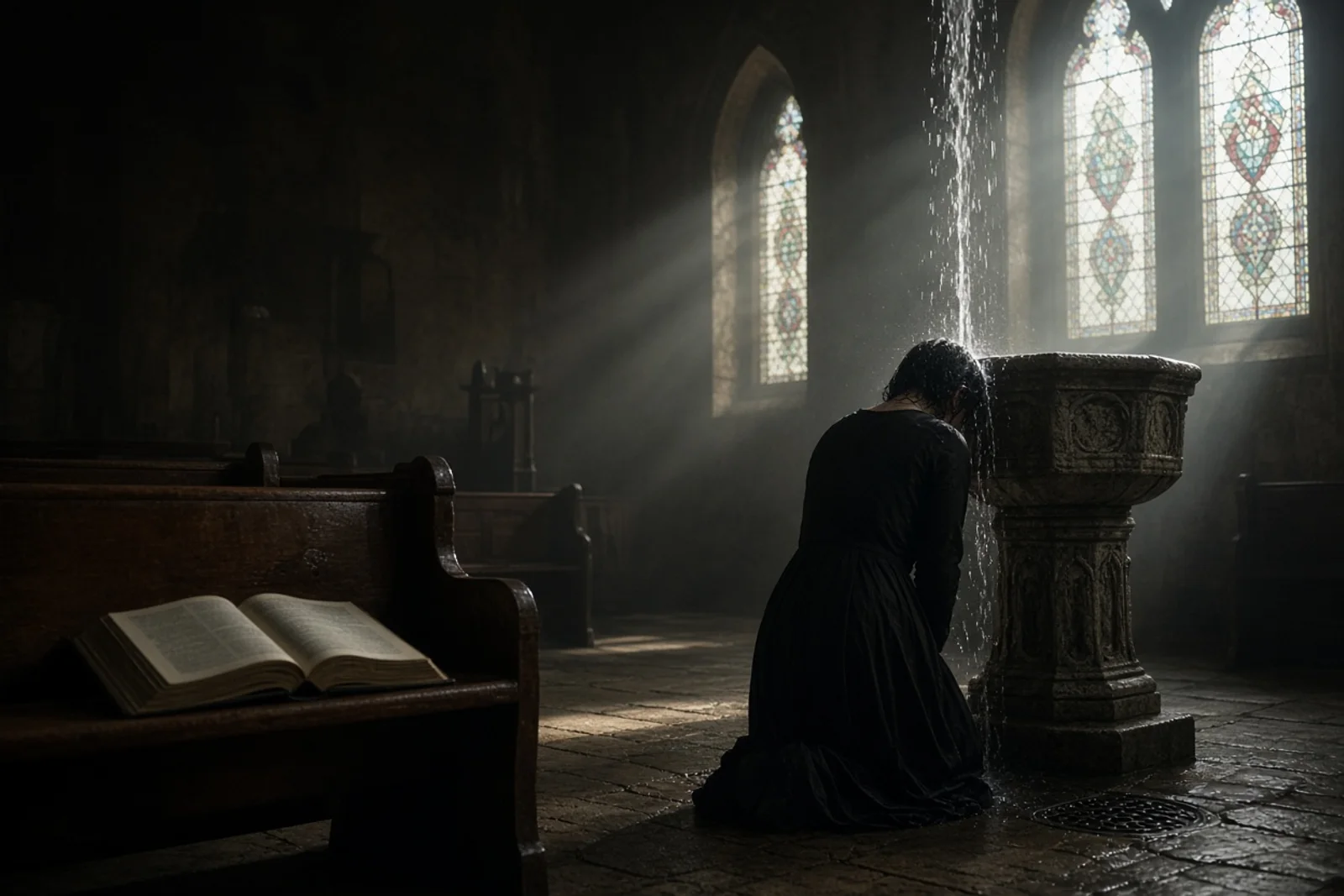
The day before Christmas the city turned cold again. Snow lay on the steps of the church when we arrived. Dorothy carried the child wrapped in the same blanket she had brought from the hospital. The priest met us in the baptistery. He poured the water and spoke the words. The baby cried once and then was quiet. Dorothy answered the questions in a steady voice. When it was finished she stayed a few minutes longer in the pew while I held the child in the vestibule.
After that she went to Mass every Sunday and on most weekdays. She still wrote for the radical papers when they would take the pieces, but she no longer went to the meetings. The Italian woman from the hospital sent a card at Easter with the medal inside it. Dorothy kept the medal on a string above the child’s crib. She did not speak of Fred again except to say he had found work upstate.