




Dwight L. Moody Accepts Christ
Shoe salesman led to faith in Boston stockroom.
FaithTap · Sep 29, 2026 · 10 min read
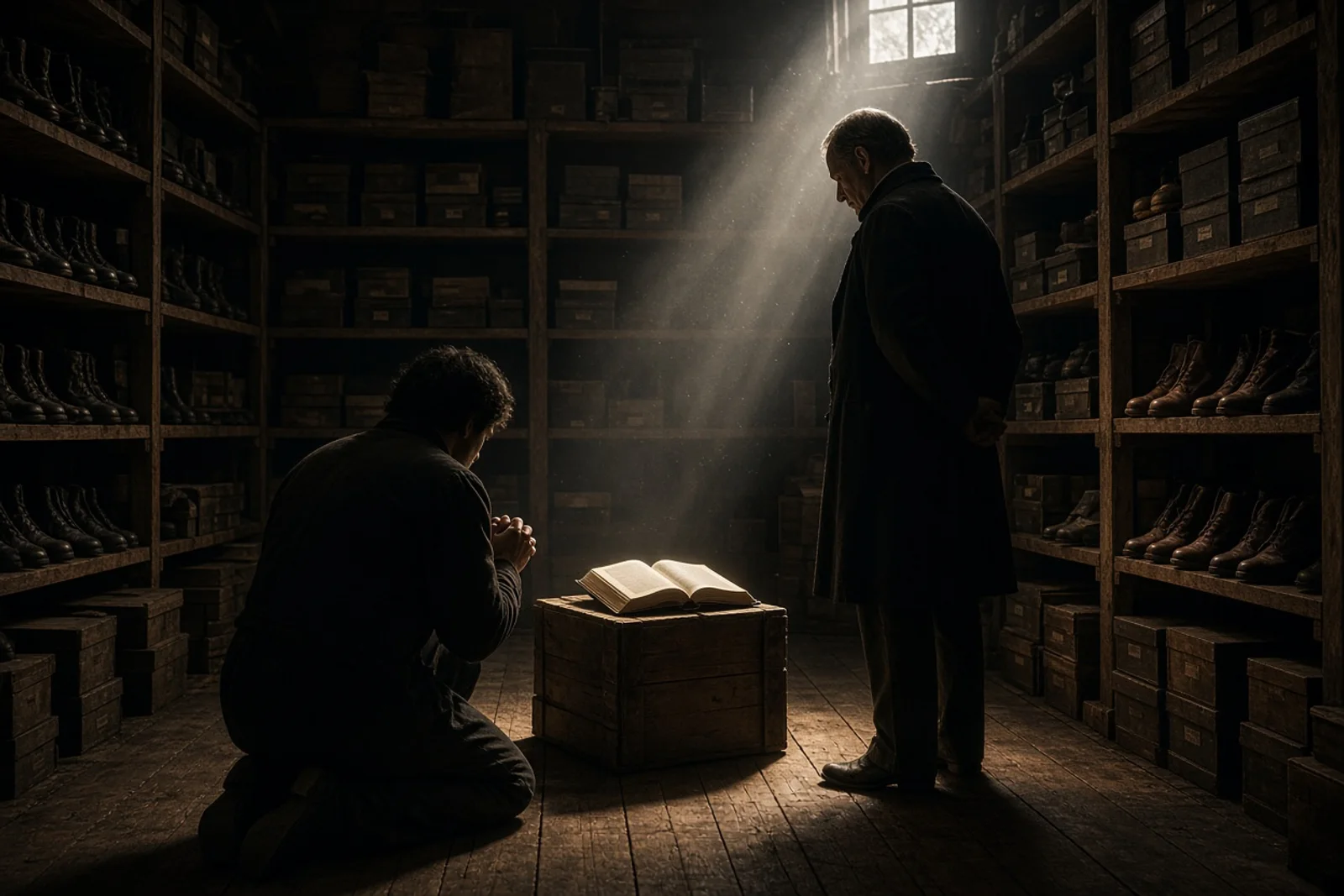
I was tying twine around a crate of boots when the front door opened and Edward Kimball stepped inside. He paused just past the threshold, hat in his hands, looking toward the curtain that hid the stockroom. The store smelled of new leather and the wet wool of customers’ coats. Outside, rain had begun to fall on Tremont Street, tapping the glass.
Kimball had been teaching the class at Mt. Vernon for three months. Most of us sat near the back because Moody talked through the lesson. He asked questions the others never raised, blunt ones about wages and hell and whether any of it mattered once a man left the room. Kimball never raised his voice at him. He only listened and then read the next verse.
That afternoon Kimball walked the length of the counter without speaking to the clerks. He lifted the curtain and disappeared into the back. I kept working. Ten minutes passed. The only sound was the scrape of a stool leg on the floorboards.
When Kimball came out again his face was pale. He nodded once at no one in particular and left. Moody stayed behind the curtain. I finished the crate and carried it to the loading door. Through the gap I could see him still sitting on the low stool, both hands resting on his knees, staring at the row of shoe boxes across from him.
He did not speak of it that evening when we closed. He swept the floor, turned the sign, and locked the door behind us. On the walk to the boarding house he kept his hands in his pockets and answered when spoken to, nothing more. The next Sunday he arrived early for Kimball’s class and took the seat nearest the window. He answered every question put to him and stayed after to help stack the chairs.
Two weeks later he asked Samuel Holton if he could be excused from the store on Wednesday evenings. Holton agreed provided the ledgers stayed current. Moody began attending the prayer meeting. He spoke little at first, then one night stood and asked whether a man could be sure of his standing with God without waiting for some later feeling. The room grew quiet. Kimball answered from his chair. Moody sat down again and did not move until the meeting ended.
By summer he was visiting the wharves on his dinner hour, handing out tracts to the men unloading ships. He carried them in the inside pocket of his coat and gave them without comment. Some men took them. Some dropped them in the water. He returned with whatever remained and placed them back on the shelf above the stockroom door.
In the spring of 1856 he told Holton he was leaving for Chicago. He had saved enough for the train and wanted to open his own counter. Holton shook his hand at the door and wished him steady work. Moody carried one carpetbag and the Bible Kimball had given him the week before. He did not look back at the store when he reached the corner.
Letters came every few months. He wrote of the Sunday school he had started in an empty saloon on Illinois Street, of the boys who came barefoot and left with their names written in a ledger so he could find them again. He asked for prayers for certain families and listed the number of conversions each week in the same hand he had once used for invoices. The letters stopped arriving after the fire in 1871, then resumed from a new address farther north. By then the school had its own building and he was no longer keeping the count himself.