




Edict of Milan Grants Religious Tolerance
Constantine and Licinius legalize Christianity across the empire.
FaithTap · Oct 2, 2026 · 12 min read
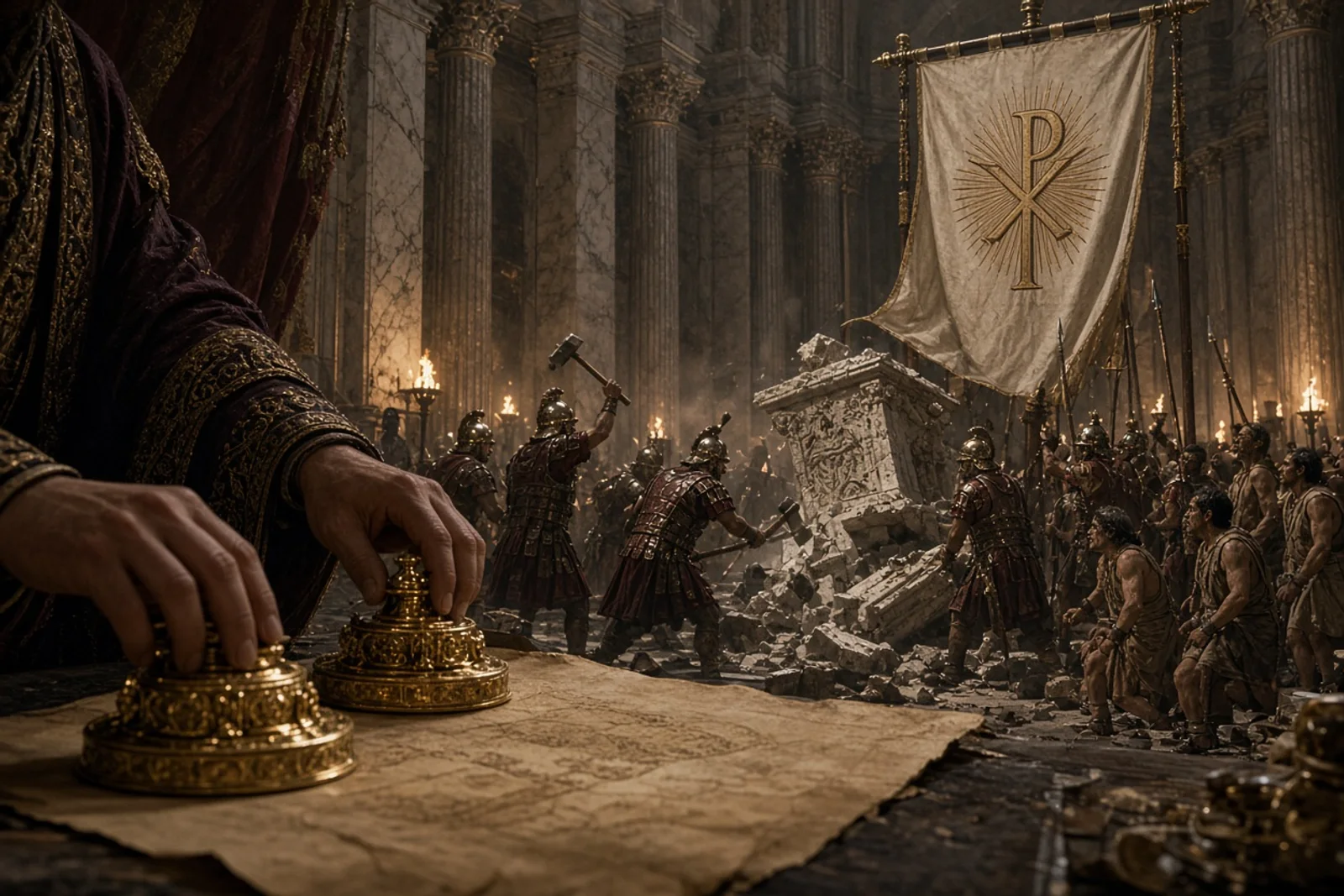
The road into Mediolanum still smelled of wet ash from the winter fires. I walked it with the last of Constantine’s baggage train, my sandals caked in the same mud that had slowed the wagons for three days. My task was simple: carry the sealed rolls from the baggage master to the clerks who waited inside the palace gates. I had done the same work for six years, first under a different master who would have had me flogged for wearing a small cross cut into a belt buckle. Now the buckle rode openly at my waist.
Constantine’s sister Constantia arrived two days later. Her litter stopped at the forum steps while Licinius’s men cleared a path. I stood among the crowd of scribes and messengers and watched her step down. She was wrapped in a cloak the color of old wine, and she did not look at the soldiers who saluted. The marriage was set for the following morning. By afternoon the palace corridors already carried the low sound of men arguing over grain levies and frontier garrisons.
I was sent to the antechamber outside the main hall with a fresh stack of blank tablets. The doors stayed closed most of the day. When they opened, Constantine came out first, his face still marked by the dust of the road from the south. Licinius followed, taller, slower in his step. They spoke quietly, heads angled toward each other. One of the guards told me later that the talk had turned to the old rescripts against the Christians. No one raised a voice.
That evening the rain started again. I slept on a bench in the clerks’ room and woke to the sound of voices in the corridor. A messenger from the east had arrived with word that Maximinus still held Bithynia. Licinius ordered extra horses saddled before dawn. I was given a second set of tablets and told to follow the senior secretary, a man named Julius, who had served under both emperors at different times.
Julius kept me near the table where the drafts were prepared. The language began with the usual phrases about the safety of the republic. Then it shifted. The words that appeared most often were “full authority to observe that religion which each preferred.” I copied them three times before the wax cooled. No one explained what the change meant beyond the instruction that the text must reach every provincial governor before the summer campaigns.
On the third morning after the wedding, the final version was read aloud in the hall. Constantine stood with his hands behind his back, listening. Licinius nodded once when the reader finished. The document did not name any single god above others, yet it removed every previous restriction on the Christians and ordered the return of their meeting places and burial grounds. Julius told me to prepare copies for the western provinces first. He said the eastern ones would wait until Licinius dealt with Maximinus.
I carried one roll myself to the posting station outside the northern gate. The clerk there weighed it, sealed it again, and asked no questions. On the way back I passed a small group of men and women standing at the old Christian cemetery just beyond the walls. They were not hiding. One of them held a lamp even though the sun was already high. No one stopped them.
Licinius left Mediolanum four days later with three legions. Constantine remained another week to settle accounts with the city magistrates. I stayed with the clerks who were still sorting the confiscated property lists. Some of the houses marked for return had been empty for eight years. Others had been turned into barracks or storehouses. The work of restoring titles took longer than the drafting of the agreement itself.
By early summer word reached us that Licinius had defeated Maximinus near Adrianople. The same messenger who brought that news also carried an order to post the Milan agreement in every city of the east. I helped prepare the Greek versions that would travel with the new governors. The text remained the same, only the names at the top changed.