




Elizabeth Fry Begins Prison Reform
Quaker ministers to women inmates
FaithTap · Sep 21, 2026 · 10 min read
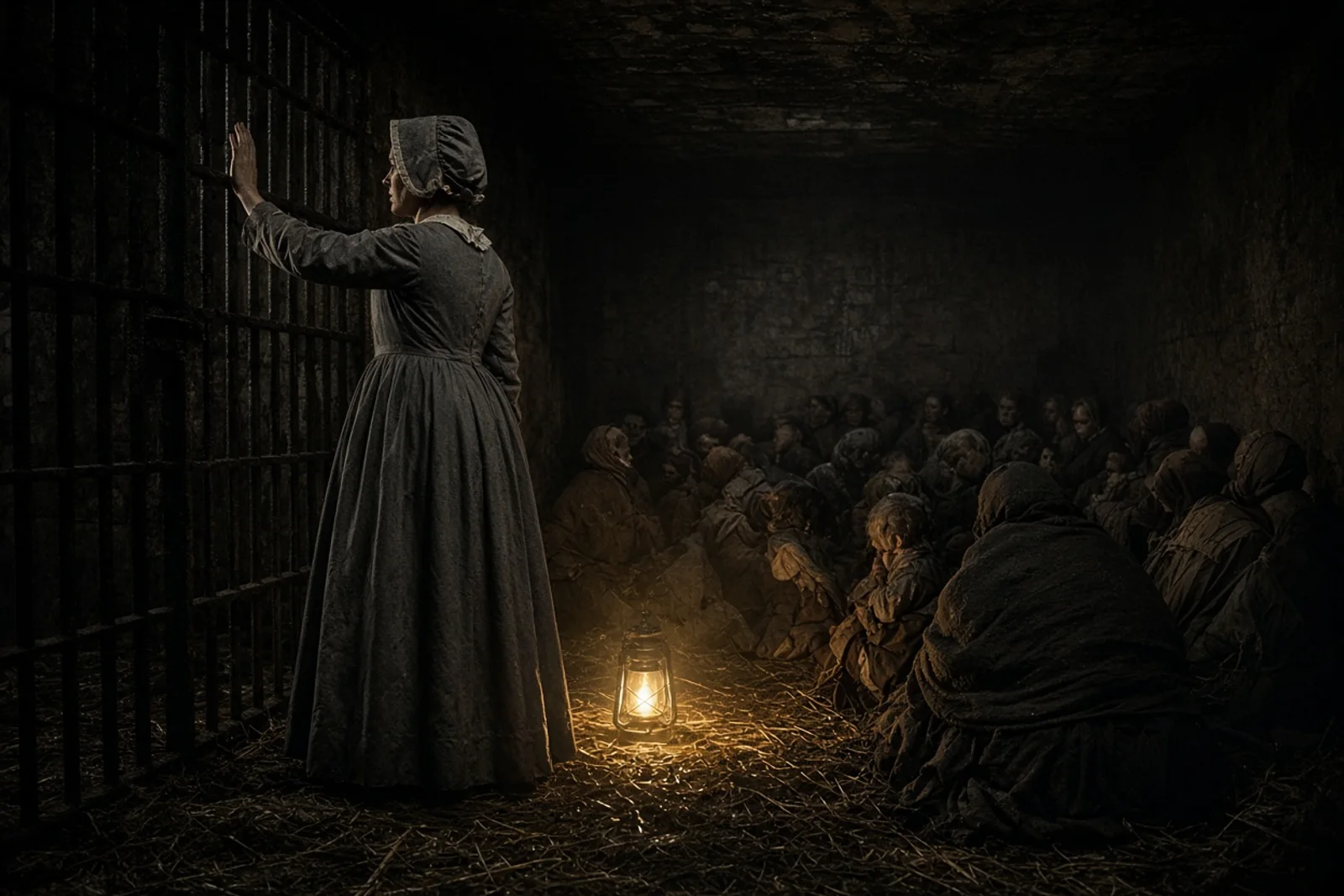
The cart jolted over the cobbles and stopped at the outer gate. I steadied the basket of bread and cheese on my lap while the driver called up to the turnkey. Rain had soaked the straw beneath us, and the smell of wet wool mixed with the sharper reek that already drifted from inside the walls. Elizabeth Fry sat opposite me, her hands folded over the edge of another basket. Two other women from our meeting waited in the carriage behind. None of us spoke.
A guard in a stained coat came down the steps. He looked at the baskets, then at Fry. “I don’t think we can let you go in,” he said. “They’re a bunch of wild beasts in there. They’ll have the rings off your fingers before you reach the stairs.”
Fry answered quietly that we had come with food and would not stay long. The guard shrugged, unlocked the wicket, and waved us through. The smell hit at once. It rose from the straw on the floor, thick with waste and old blood and the sour tang of gin. Light came only from high slits and a single lantern carried by the warder who led us. Women and children pressed against the bars of the first ward. Some reached through. Others sat or lay without moving.
We set the baskets down and began handing out loaves. A woman near the back pulled a bundle of rags from a dead infant and wrapped them around a living child beside her. No one stopped her. The warder turned his lantern away. Fry watched without speaking. When the bread was gone she asked the warder how many women were held here. He said more than three hundred in wards built for sixty, and that the men’s side ran right alongside until the next assizes.
We left before dark. On the way out Fry asked the guard whether any of the women had been taught to read. He laughed once and said most could not keep their own names straight. She nodded and did not ask again.
Three years later the separation of men and women had been ordered, yet the women’s wards still stank and the straw still crawled. Fry returned with fresh provisions and this time carried a Bible under her arm. She opened it in the middle of the largest ward and began to read aloud. The noise did not stop at once. A woman near the door kept shouting at another over a blanket. Then the shouting thinned. Within a quarter hour the only sounds were the rustle of straw as women shifted closer and the thin crying of a baby held against its mother’s shoulder. Fry closed the book and asked whether they would like her to return. Several nodded. She came the next week and the week after.
By the third visit she had drawn up a simple order for the day. The women would rise at six, wash as best they could at the pump, and then sit to sew or knit. She brought thread and needles from her own stores and promised to sell whatever they finished. A small room at the end of the corridor became a school where older children learned letters while their mothers worked. Fry asked each woman to agree to the rules before she received material. Most did. Those who refused were left to the old wards.
She gathered twelve women from our meeting into what she called the Ladies’ Newgate Association. We met at her house on Sunday evenings and divided the tasks. One member trained the matron in keeping accounts. Another arranged buyers for the finished shirts and stockings. Fry herself visited each week to hear complaints and to read. No man entered the women’s section without one of us present. The City authorities were not told.
In April 1817 the prison committee asked to see what had changed. Fry sent word the day before. We cleared the long table in the main ward and set out the work already finished: piles of shirts, rows of knitted stockings, slates with careful sums. The women stood or sat in rows, their hair combed, their aprons clean. When the aldermen and the sheriff walked in, the only noise was the scrape of a bench leg. The men stopped at the threshold. One of them asked the matron whether these were the same prisoners who had been here six months earlier. She answered that they were.