




Elizabeth Fry Begins Prison Visiting at Newgate
Quaker reformer reads Bible and teaches women inmates.
FaithTap · Sep 24, 2026 · 11 min read
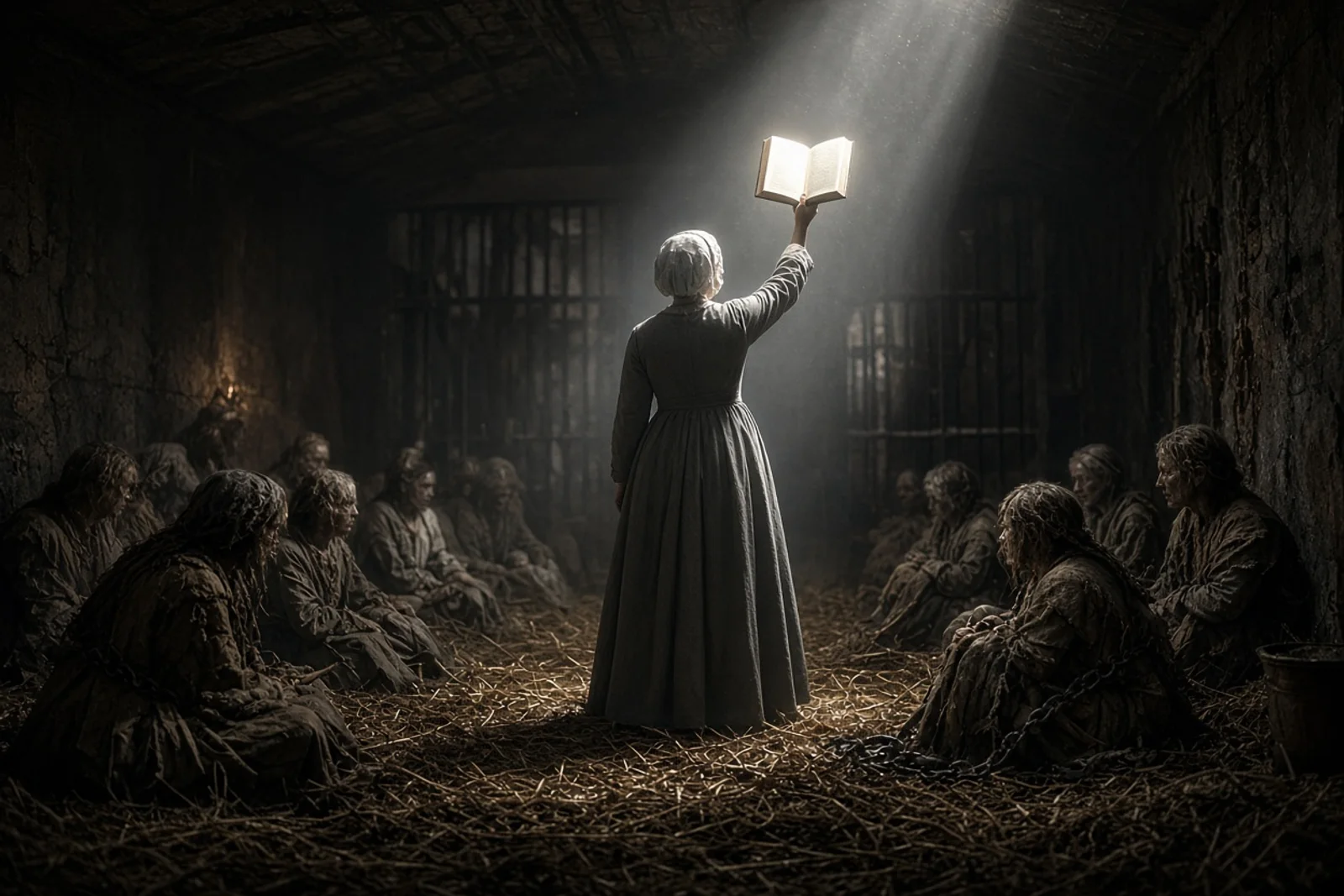
The iron gate slammed shut behind us before the turnkeys had finished their warnings. One of them, a heavy man with a ring of keys at his belt, kept shaking his head at Elizabeth Fry. He said the women inside would tear the caps from our heads and worse. She thanked him without raising her voice and asked only that the basket of bread and cheese be carried through. I walked at her shoulder, carrying the smaller bundle of shawls we had brought from the meeting house. The smell met us at the threshold, thick as standing water.
We stepped into the women’s yard. Three hundred bodies pressed into space meant for sixty. Straw covered the floor in places, black with use. Children ran between the legs of the women, some barefoot, some wrapped only in rags. A woman near the wall shouted at another over a tin cup. The second woman answered by flinging the cup, and the liquid spattered across the straw. No one moved to stop them.
Elizabeth set the basket down on a low bench. She did not speak at once. She looked at the nearest group of women, then at the children clinging to their skirts. One child, no more than two, sat on the floor with a piece of bread in both hands, chewing slowly. Its mother lay on her side nearby, eyes half open, breath loud. The guard who had followed us muttered again that we should leave while we still had our shoes.
A woman in a torn shift pushed forward and reached for the basket. Another caught her wrist. They began to shove. Elizabeth stepped between them without touching either. She asked their names. The first gave hers as Mary. The second would not answer. Elizabeth opened the basket and handed each a piece of bread. The shoving stopped. More women came toward the sound of voices.
We moved farther into the ward. The straw gave underfoot. In one corner a woman sat with a newborn wrapped in her apron. Beside her lay another infant, still and small. Two older women bent over it. One lifted the tiny body and began to strip the cloth from it. She passed the cloth to the woman with the living child. The living child cried once, then quieted when the cloth was wrapped around it. Elizabeth watched without speaking. She reached into her own cloak and took out a folded square of linen she had brought. She gave it to the woman with the newborn.
The afternoon light came through a high grating and fell in narrow bars across the floor. The women who had taken the bread sat in a half circle now, eating. Some still shouted across the yard, but the nearest ones stayed quiet while Elizabeth asked after their children. One woman said her boy had been taken to another ward the week before. Another said she expected to be sent to the ships soon. Elizabeth listened to each. She did not write anything down. She only nodded and asked whether they had enough water for the day.
When the basket was empty we turned back toward the gate. The turnkey who had warned us stood with his arms folded. He asked whether we had lost anything. Elizabeth said we had not. She asked him how many women were held without trial. He gave a number. She thanked him and said she would come again with more bread.
Outside the gate the air felt thin after the yard. We walked to the carriage without hurry. Elizabeth sat with her hands folded over the empty basket. She did not speak of what she had seen. I watched the street pass. A boy sold matches at the corner. A cart loaded with cabbages rolled past. The ordinary sounds of the city seemed distant, as if heard through the same grating that had let in the light inside.
She returned the next week with another basket and two more women from the meeting. The turnkeys let us through without argument this time. The women in the yard recognized her. Some came forward at once. Others stayed back until the bread was passed. The child who had worn the dead infant’s cloth was still there, now walking unsteadily between the women’s legs. Its mother sat against the wall, eyes clearer than before.