




Elizabeth I Ends Marian Persecutions
Queen brings religious peace
FaithTap · Oct 1, 2026 · 10 min read
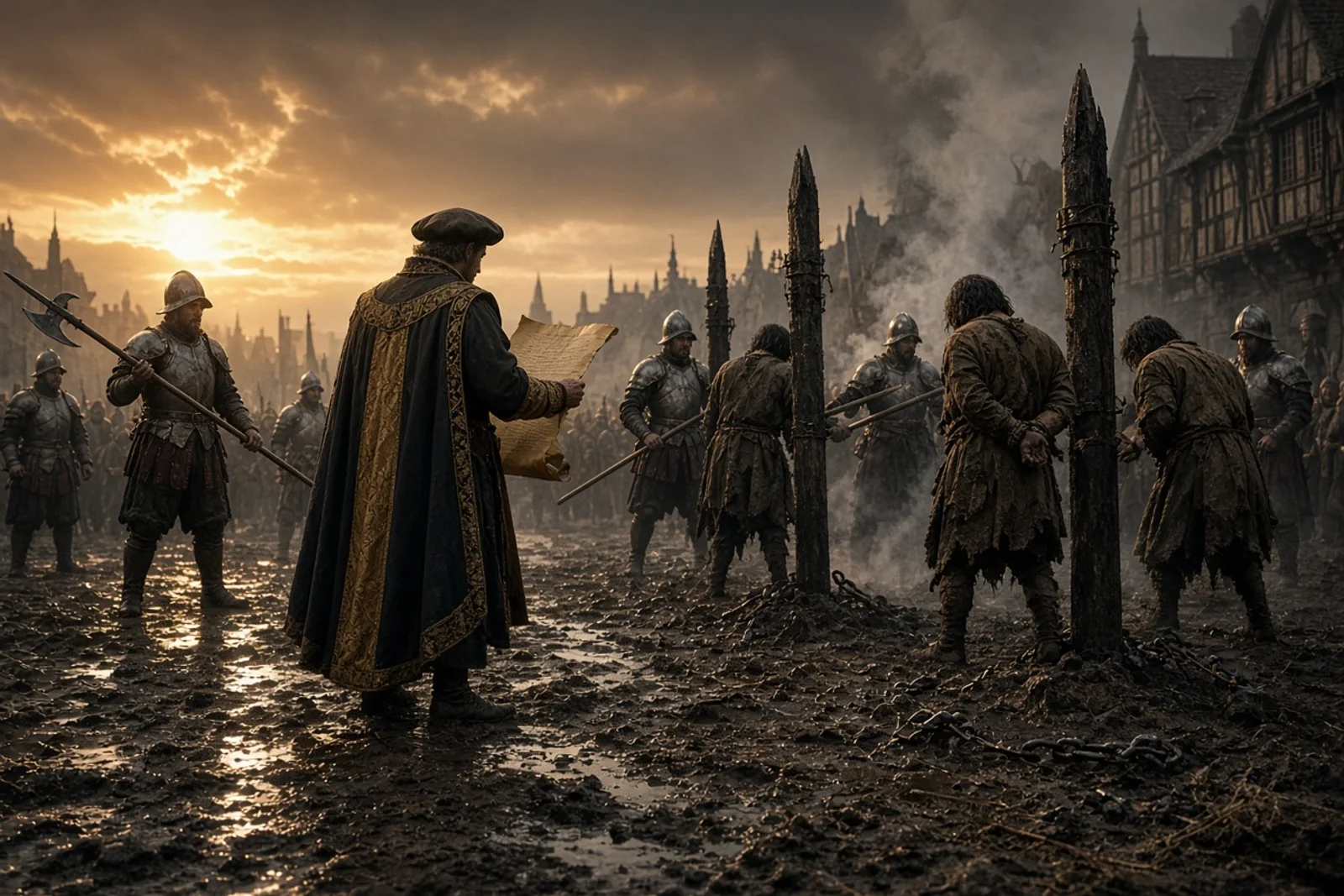
The bells started wrong that morning. I was on the bridge with a sack of tallow candles when the first one rang from St Paul's, then another from across the river, not the slow toll for the dying but a quick, uneven clatter that made the watermen stop rowing. Word had already reached the wharves that the Queen lay past speech at St James's. Men stood in clusters, some crossing themselves, others keeping their hands still. I kept walking. Any pause drew eyes, and eyes still carried risk.
By eight the streets thickened. Parliament men in furred gowns hurried toward Westminster, their servants clearing a path with staves. A boy ran past shouting that the Lords and Commons sat together. I turned toward the Charterhouse because that was where messages gathered. A messenger from Hatfield had arrived the day before; everyone knew the Spanish envoy had been turned away with sharp words. Elizabeth would take the crown from the English, not from Philip.
At noon a rider in Cecil's livery came through the gate. He carried no sealed letter, only a folded paper he kept flat against his chest. I followed him as far as the inner court before a porter blocked me. The man read the paper twice, then sent for ink. When he came out again his face had changed. He mounted without a word and rode toward the city.
By four the proclamation was read at Cheapside. I stood far back, behind a dray loaded with barrels, yet I heard the name clearly enough: Elizabeth, by the grace of God. No one cheered at first. Then a few hats lifted. A woman near me began to weep without sound, shoulders shaking under her shawl. I stayed until the crier finished and the guard moved on. The fires had taken three from my parish in the last year. The last burning had been only weeks earlier. Now the same men who had signed the warrants stood listening to a different name.
That night the watch did not search lodgings. I slept without bolting the door. In the morning a neighbor brought news that Mary had died at six, before the proclamation. The detail mattered because it meant no one could claim a rival had been named in time. Cecil had the wording ready; some said he had carried it for months.
I went to Hatfield three days later with a load of wax for the stables. The house was already stripped of Mary's colors. Servants packed velvet hangings into chests while new liveries were cut from bolt cloth on the long tables. Elizabeth walked the gallery twice that afternoon, once alone, once with Cecil at her side. She wore black, nothing more. When she passed the window where I waited she looked out at the bare oaks and did not smile.
On the twenty-third she rode into London. I lined the route near Smithfield, the same open ground where the stakes had stood. The crowd was thick but quiet until she appeared. She wore purple velvet and rode a white horse, not a litter. People pressed forward only as far as the wooden rails allowed. She lifted her hand once, not in salute but as if testing the air. No one was burned that week, nor the next.
The Charterhouse kept its gates open longer than usual. I carried messages between there and the Tower for a goldsmith who supplied the new queen's plate. Each time I passed the old prison I counted the guards. They stood at ease now, halberds grounded. Inside, men who had waited for trial were released without new charges. One of them, a weaver from Southwark, walked out with his own coat still on his back. He did not look behind him.
Mary's body left St James's on the tenth of December. The hearse moved slowly, flanked by torchbearers in white. I watched from the Strand. The coffin was covered in black velvet with a white cross. No one threw stones or shouted. The same streets that had seen processions of the condemned now saw only the slow wheels and the flicker of pitch. By the fourteenth she was buried at Westminster. The abbey bells rang once at dusk and then fell silent.