




Eucharistic Miracle of Lanciano
Host becomes flesh and blood
FaithTap · Oct 4, 2026 · 11 min read
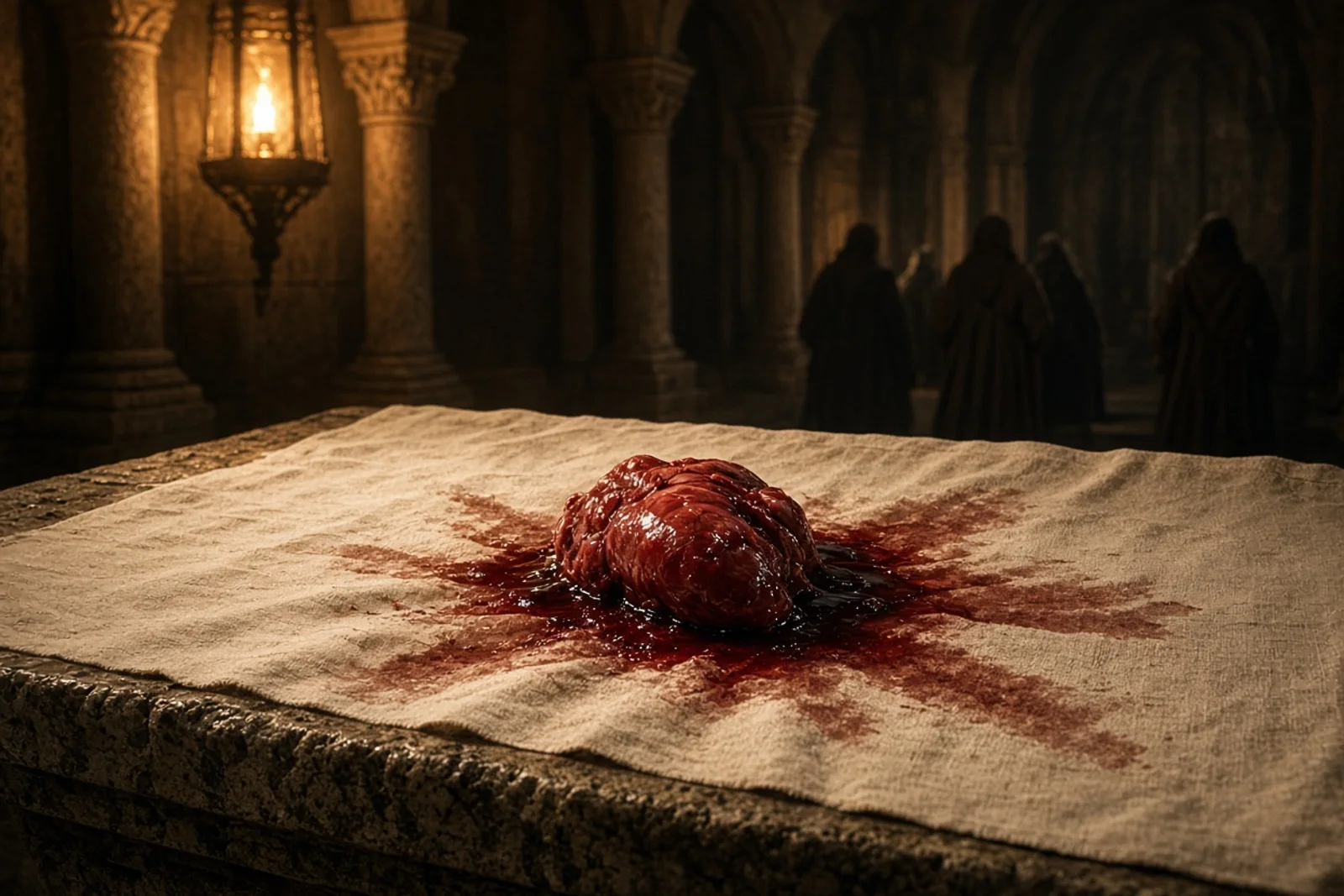
The priest’s voice cracked on the words of consecration. I stood three paces to his left in the side chapel of San Longino, my own hands still damp from the washing, and watched the bread lift between his fingers. He had spoken of his doubt the evening before, quietly, while we swept the refectory floor. Now the doubt lived in the air between us.
The host did not stay bread. It darkened at the edges first, then the center rose and thickened into a strip of tissue the color of fresh liver. The wine in the chalice darkened at the same moment and began to move. Five separate beads formed on the surface, each one rounding and settling as if poured by a steady hand.
No one in the nave breathed. The Basilian brother nearest the altar rail dropped to his knees so hard the stone rang. The priest lowered his arms. His mouth stayed open, but no sound came.
I stepped forward because someone had to. The tissue on the paten was warm when I touched the rim. A thin line of blood ran from its lower edge and met the first of the five beads in the chalice. The bead did not spread. It held its shape, darker now, the size of a small walnut.
The priest turned to the few lay people who had come for the early Mass. He told them to come closer, to see what had been given because he had not believed. His voice shook on the last words. One woman reached the rail and crossed herself three times without looking away.
Word moved through the street before the sun cleared the roof tiles. By midday the church held more people than it had on any feast. The archbishop’s messenger arrived while the fifth bead was still being measured against a set of bronze weights brought from the treasury. Each bead weighed the same as any other single bead and the same as all five together. The messenger wrote the numbers on a wax tablet and left without speaking.
The Flesh stayed where it was, pinned at the edges with thin bronze nails so it would not curl. The five beads were poured into a small glass vial stoppered with wax. For months no one touched either vessel except to carry them from the altar to a locked cupboard at night.
The Basilian community kept the cupboard key. When the order left Lanciano in 1176 the Benedictines took the key with them. They held it until 1252. The Franciscans who followed built the new church of San Francesco around the old walls and moved the vessels behind the high altar, where the marble ciborium stands now.
In 1574 another weighing was ordered. The five beads again balanced one against the other and against the total. The same result was noted in the margin of the record book. Eight centuries had passed and the surfaces showed no cracking or mold.