




Evelyn Waugh Reception into Church
Satirist becomes Catholic
FaithTap · Sep 23, 2026 · 11 min read
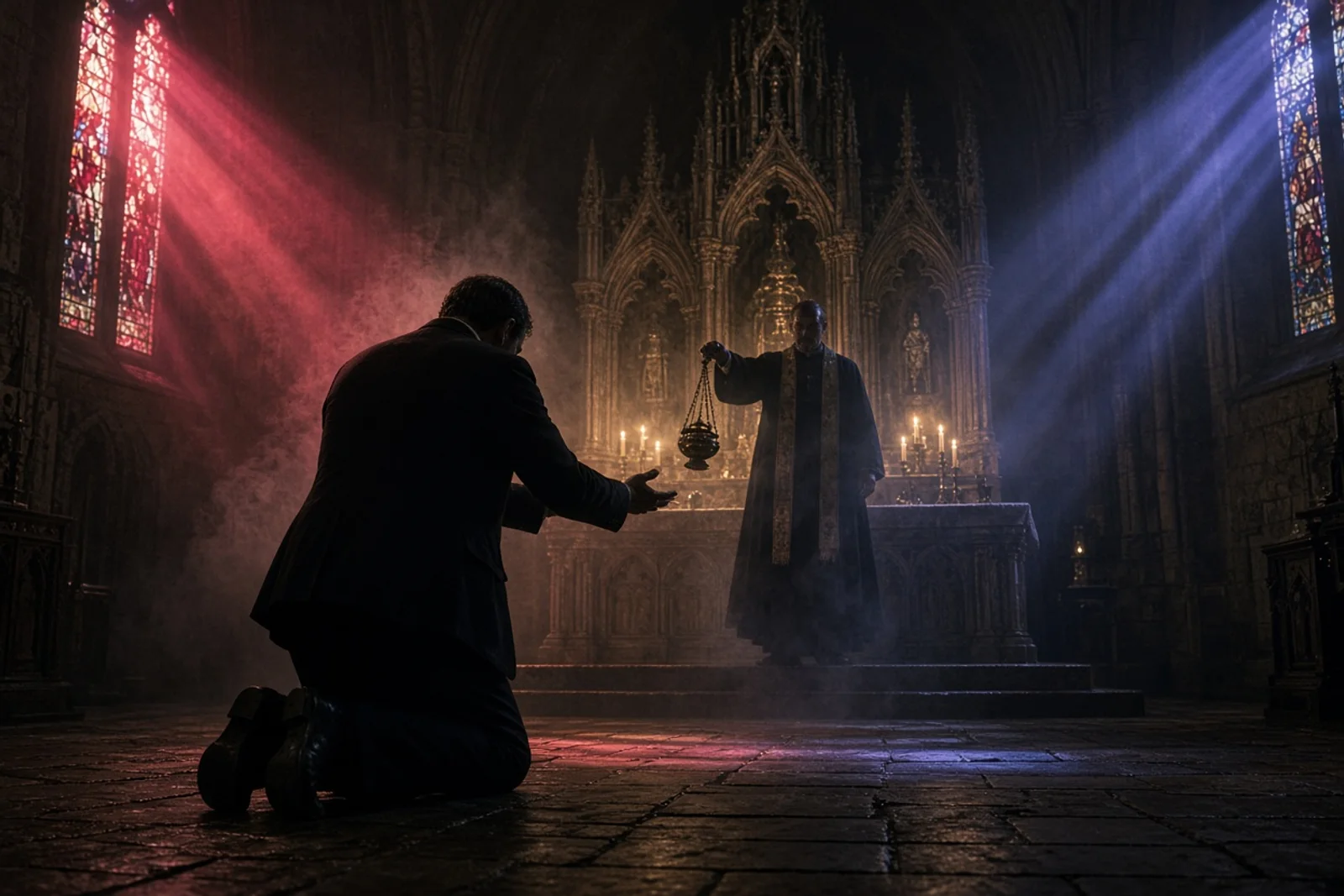
The rain had just stopped when the car pulled up outside the small church in the outskirts of London. I stood by the gate with a notebook in my pocket and a coat that still smelled of the train carriage from earlier that morning. A man in a dark suit stepped out first, then another. Evelyn Waugh followed, his face set the way it always was when he expected to be watched. He carried no umbrella. The pavement shone under his shoes.
Inside, the air felt cooler than the street. A few people already waited in the pews, mostly strangers to one another. Martin D’Arcy stood near the front, speaking quietly with the priest who would receive him. Waugh nodded once when he saw them and took a seat without removing his coat. I stayed two rows back, close enough to hear the low voices but far enough that no one asked my business.
He had spent the morning at his desk finishing the piece for the Daily Express. The editors wanted it fast because the gossip columns had already run three versions of the same question. How had the author of Vile Bodies turned toward Rome? Waugh had written the answer in his own hand and sent it over before he left for the church. He told no one in the room what he had put on the page.
D’Arcy came down the aisle and spoke to him for several minutes. The Jesuit’s voice carried the clipped rhythm of someone used to giving directions that must be followed exactly. Waugh listened without interrupting. When the priest approached, Waugh stood and they moved together toward the side chapel where the rite would take place. The rest of us remained seated. No one had been invited to stand closer.
The ceremony itself lasted less than half an hour. I heard the words of the profession of faith spoken once, then repeated. Water was used. A candle was lit and placed on the small table. Waugh’s answers came clearly, without the hesitation some converts show when they reach the final questions. After the last prayer the priest shook his hand and D’Arcy said something short that made Waugh smile for the first time that day. They walked back down the aisle together.
Outside again, the clouds had thinned. Waugh lit a cigarette and offered one to D’Arcy, who declined. They spoke for a few minutes about the train schedule and the need to get the essay into print before the weekend editions. Waugh mentioned the cost of the paper and the space the Express had given him. He said the full page would reach more readers than any sermon. Then he checked his watch and left for the station.
The article appeared on 20 October. It ran under the headline he had chosen and filled the space the editors had promised. In it he answered the three rumors that had followed the news of his reception. No Jesuit had cornered him. The ritual had not drawn him in by itself. He had not come looking for someone else to settle his mind. He wrote instead about the years between his sixteenth birthday and his twenty-sixth, the loss of the faith he had once recited without thinking, and the slow return to the conviction that the Church of Rome alone preserved the form of Christianity he could accept.
By the time the piece was in readers’ hands, the other papers had already run their own columns. One carried a reply from a Protestant politician. The next day a Jesuit priest was asked whether Britain was turning toward Rome. Waugh read none of them aloud when I saw him again, but he kept the cuttings in a folder on his desk. He said the folder would grow thicker before the year ended.
In the months that followed he returned to his desk each morning at the same hour. The novels he had already published still sold, yet the new work began to take a different direction. He spoke less about the parties that had supplied the material for Vile Bodies and more about the houses and families that had shaped the England he remembered from childhood. When Brideshead Revisited appeared five years later, the same critics who had questioned the conversion now questioned whether the book could be called modern. Waugh did not answer them in print.