




Father Damien Serves Molokai Lepers
Priest ministers to leper colony until contracting disease.
FaithTap · Sep 26, 2026 · 10 min read
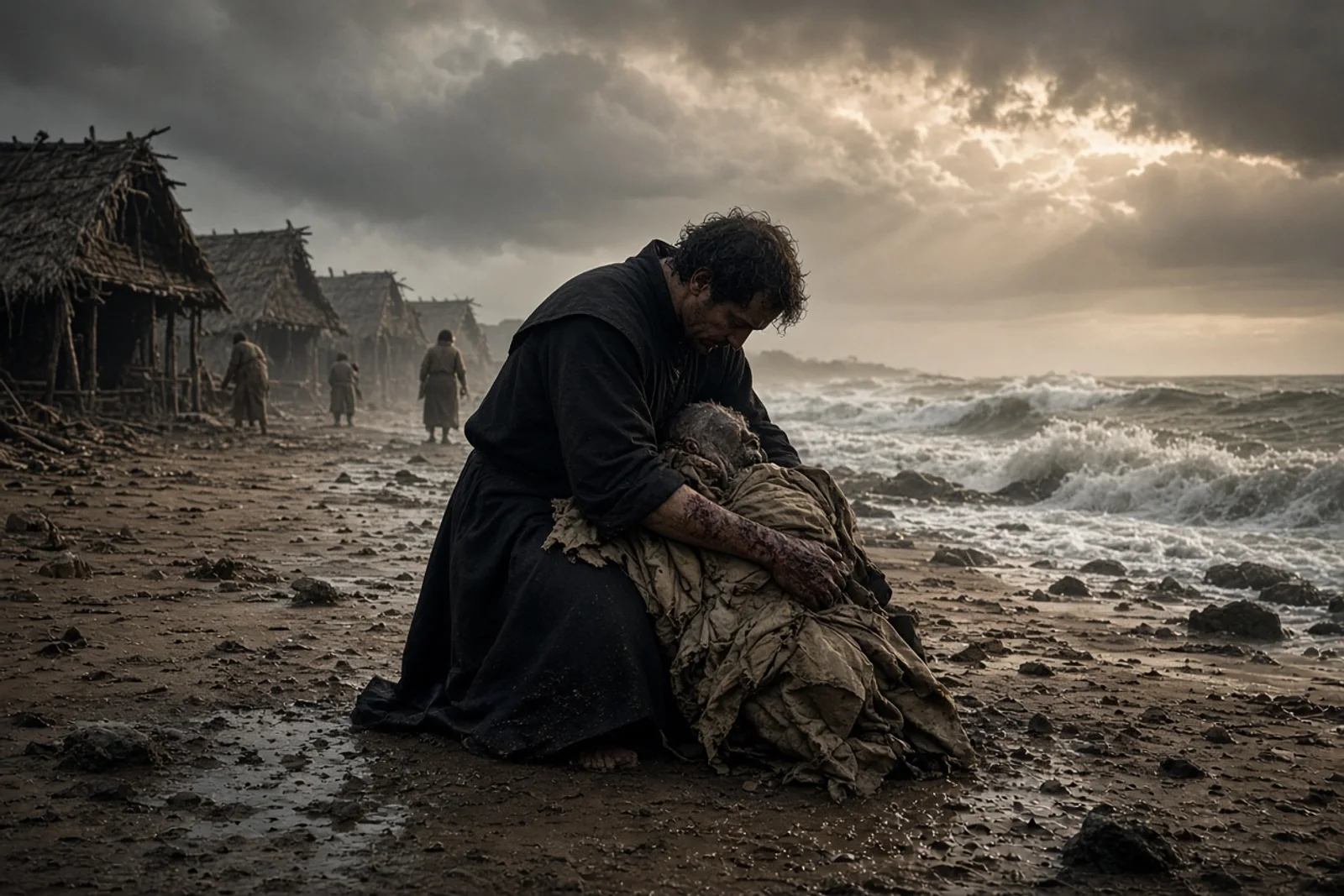
The bow dipped hard into a trough and the cattle bawled as the deck tilted. Salt spray cut across my face while the men ahead of me clung to the rail. One of them, the Belgian priest in the black cassock, kept his footing and watched the dark line of Molokai rise from the water. He had said little since we left Honolulu.
Rudolph Meyer met us at the landing with two wagons and a string of pack mules. He pointed up the trail toward the pali and told the priest the boundary was watched. Anyone who crossed it without papers was shot. The priest nodded, shouldered his bundle, and started walking. I followed because there was no other place to go that day.
The settlement sat in a narrow valley between two ridges. Six hundred people lived there in that spring of 1873, most of them in low huts of pili grass and scrap lumber. The air smelled of wood smoke and the sweet rot of open sores. A small wooden chapel stood near the center, its thatch torn and its door hanging loose on one hinge. The priest walked straight to it, set his bundle inside, and began pulling the thatch straight.
He worked without gloves. When a boy brought him a bowl of poi at midday the priest dipped his fingers and ate. The boy stayed. By evening the priest had him sweeping the floor and learning the responses for Mass. That night the boy slept on a mat by the door instead of wandering the settlement.
I stayed because Meyer needed another pair of hands unloading the monthly provisions. Each week I carried flour and salt pork up from the beach and watched the priest move among the sick. He measured out doses of the Chinese powder the Congregational doctor brought, then bandaged what the powder could not reach. The doctor stayed three months before he said the work was too heavy and left for Honolulu to marry.
Meyer kept the supply tallies. When the priest wrote to his brother about the shortages and the bodies left in the open, the letters reached the newspapers in Honolulu. The prime minister sent word that such talk harmed the government. The priest kept writing anyway.
Bishop Maigret came once on the government steamer. He would not set foot on shore. The priest rowed out in a small boat and spoke through the rail while the steamer rolled in the swell. The bishop gave absolution from the deck and the steamer turned back before dark.
Twelve years passed that way. The priest built more houses, laid pipe from the spring, and planted trees along the paths so the wind would not strip the soil. He dug graves when no one else could lift the tools. In 1885 the first dark patch appeared on his skin. He said nothing at first and kept working.
Joseph Dutton arrived the next year. He took over the ledgers and the heavy lifting. Mother Marianne Cope and two sisters came in 1888. They brought clean linens and order to the women’s wards. The priest’s hands were already stiff by then. He could still lift the chalice at the altar, though the boy who had once been his server now helped him dress.