




Florence Nightingale Reforms Battlefield Medicine
Nurse organizes sanitation saving thousands of soldiers
FaithTap · Sep 28, 2026 · 9 min read
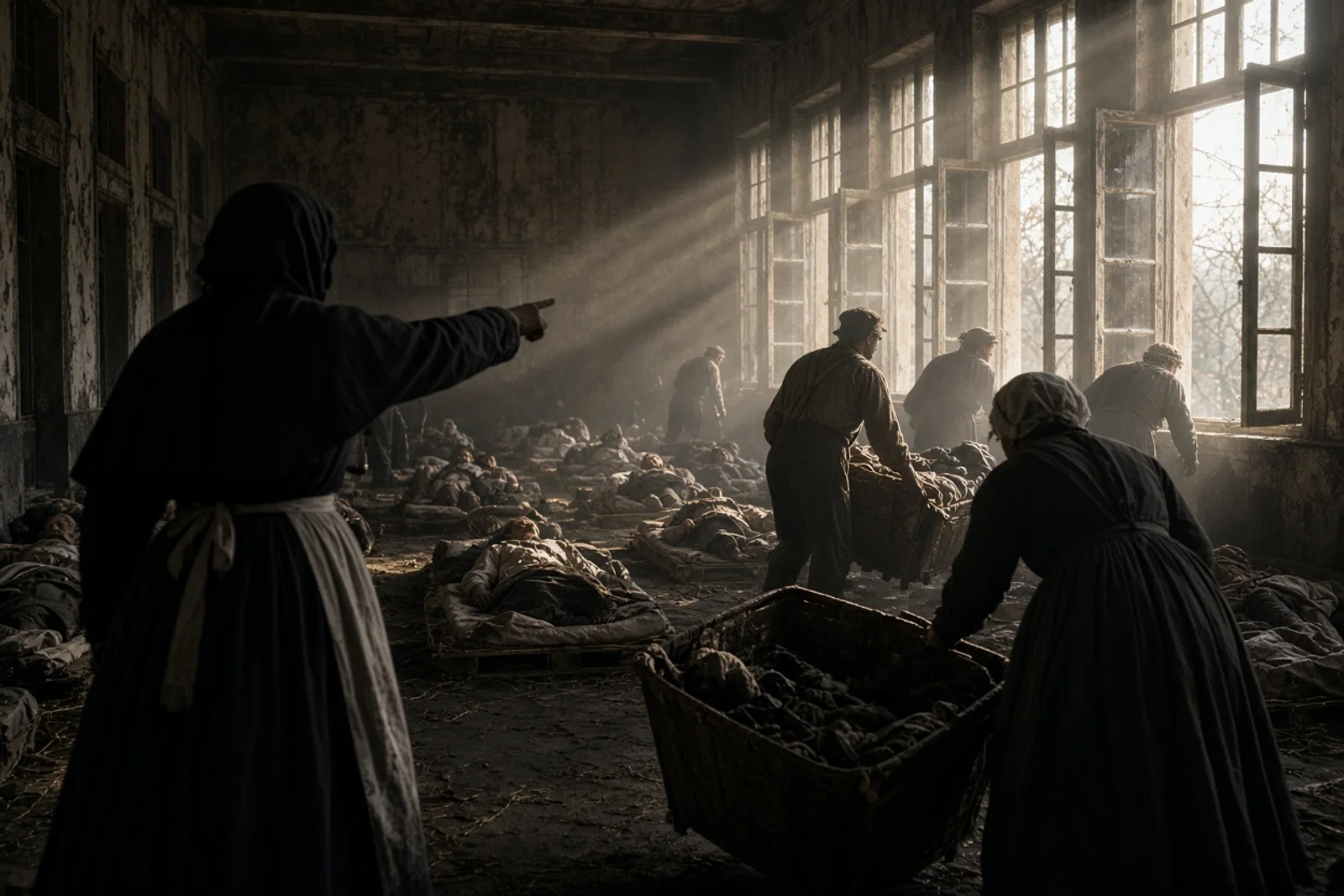
The gangplank creaked under our boots as we stepped onto the quay at Scutari. Salt wind mixed with the smell of open drains and unburied refuse. Thirty-eight of us had crossed from England with Miss Nightingale, plus fifteen nuns under Manning’s arrangement. Eliza Roberts walked ahead of the line, her shoulders squared against the stares from the orderlies already there. Mai Smith, Miss Nightingale’s aunt, kept close to the supply crates.
Inside the Selimiye Barracks the wards stretched in long, dim rows. Men lay on straw pallets without sheets. Some had no pallets at all. Flies covered the dressings that had not been changed in days. One soldier coughed blood into a tin cup and did not bother to wipe his mouth. We were told the surgeons had not asked for us and would not make room.
Miss Nightingale set her lamp on an empty crate and began counting beds that did not exist. She sent Roberts to the storeroom with a list. The storeroom held only rags and a few cracked basins. She wrote again to Sidney Herbert in London, asking for the government to act on the drains. The letter went out on the next packet. No answer came for weeks.
We started with the simplest order she gave. Every nurse washed her hands in a basin of chlorinated water before touching a wound and again after. The orderlies laughed at first. Then one of them watched a man whose arm had been amputated stop draining after three days of clean dressings. The laughter thinned.
Rats moved along the baseboards at night. We stacked the few blankets we had been given on the least injured men and left the rest to share body heat. Cholera cases doubled in the next fortnight. The dead were carried out on stretchers without names written down. Four thousand and seventy-seven British soldiers died inside those walls before spring.
Miss Nightingale walked the wards after midnight with her lamp shaded. She stopped at each pallet long enough to check the water cup and the position of the limb. Men who could still speak called her the Lady with the Lamp. She never corrected them. She only asked whether the last dose of opium had eased the pain.
In March the Sanitary Commission arrived. Their engineers traced the hospital’s water supply to a leaking cesspool. They opened the blocked drains and vented the wards. Within a month the new cases of typhus fell sharply. Miss Nightingale recorded every admission and every death in a ledger she kept on a folding table near the door. She drew circles on paper to show how many men had died from fever rather than from shot or shell.
By May she herself lay feverish in a side room. Eliza Roberts stayed at her bedside through the nights, forcing broth between her lips when she could swallow. The surgeons said it was Crimean fever. Roberts said it was exhaustion and would pass if the patient rested. It did pass, slowly.
The death rate inside the barracks dropped from forty-two in every hundred to two. Ten times as many men had been lost to the filth diseases as to battle wounds before the drains were cleared. After the commission finished its work the proportion reversed. Miss Nightingale made no speech about it. She only added the new figures to her ledger and sent copies to Herbert.