




Francis and Clare Establish the Poor Clares
Clare flees home to join Francis's vision of poverty.
FaithTap · Sep 27, 2026 · 10 min read
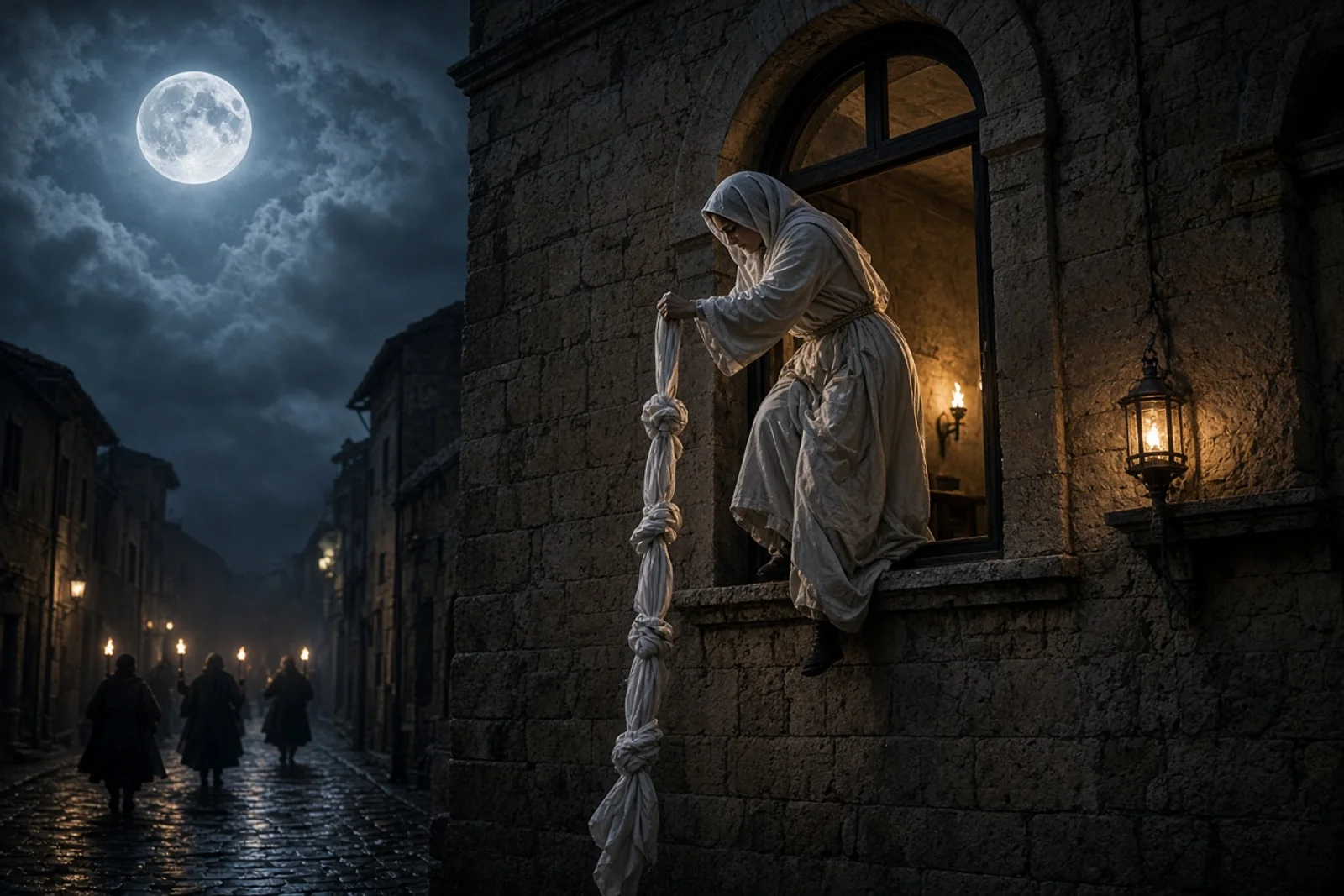
The palm was still green in her grip when she left the nave. I had seen the bishop step down to her, seen her fingers close around the branch without lifting her eyes. Outside the air held the last chill of March. She walked fast toward the western gate, cloak pulled tight, and I fell in behind because someone had to know where the night took her.
We kept to the edges of the road. Twice she stopped to listen for pursuit, once when a dog barked inside the walls, again when a cart creaked past. Her breath came quick but steady. She had told me only that Francis would know what to do with a woman who meant to keep nothing. The moon gave enough light to see the path turn toward the valley.
At the Portiuncula the brothers were still awake. Francis met her at the door with two others, each holding a taper that threw their faces into hard lines. She stepped inside without looking back at me. I stayed in the shadow of the porch and watched through the open frame. She laid the fine cloak on the stone before the altar of Our Lady. Francis took the shears. The first lock fell straight, then another, until the floor held a small dark pile. He gave her the coarse tunic and the cord. She tied it herself, hands sure. No one spoke above a whisper.
By morning she was gone from the chapel. Francis had sent her to the Benedictines at Bastia for safety. I walked the same road back to Assisi with the news already running ahead of me. Her mother’s people were out before noon, asking which way a girl in a plain habit might have gone.
They found her at Sant’ Angelo di Panzo two days later. Twelve men came, her uncles among them. I was at the gate when they pushed past the porter. Inside the chapel they took her by the arms. She locked both hands around the altar legs and would not let go. The cloth tore halfway down before they stopped pulling. One of them shouted that she had shamed the family. She answered that Christ had called her and she would have no other. They left her there, hair still short under the veil, but the bruises on her wrists showed dark by evening.
Her sister Agnes came the next week. Fourteen years old and already set on the same road. Francis gave her the habit as well. The uncles returned with more men this time. They dragged Agnes across the yard by her hair until she went limp. Clare reached her before they could lift her again. Between the two of them the men could not move either girl without drawing blood. The brothers watching from the wall said nothing. By nightfall the uncles rode away empty-handed.
Francis kept them moving. First back to Bastia, then to the small house beside San Damiano where the roof let in rain and the walls held the smell of old plaster. Clare swept the floor herself the first morning. She set the single bench against the wall and placed the wooden cross above it. No one brought money. Bread came from the town when people remembered. She ate what arrived and gave the rest to the brothers who came to pray.
Word spread that two women now lived as Francis lived. A widow from the lower street brought her daughter. Then a girl from the market whose father had promised her in marriage. They arrived at dusk, each carrying nothing. Clare met them at the door, took their bundles if they carried any, and showed them where to lay their cloaks. By the third month the house held sixteen.
Her mother Ortolana arrived last, walking the road alone. She stayed three days in the yard before she asked for the habit. Clare cut her hair in the same small room where she had cut her own. The older woman wept once, then was quiet. They slept on the same straw that night.