




Francis of Assisi Receives Stigmata
Saint embraces poverty and peace
FaithTap · Sep 23, 2026 · 10 min read
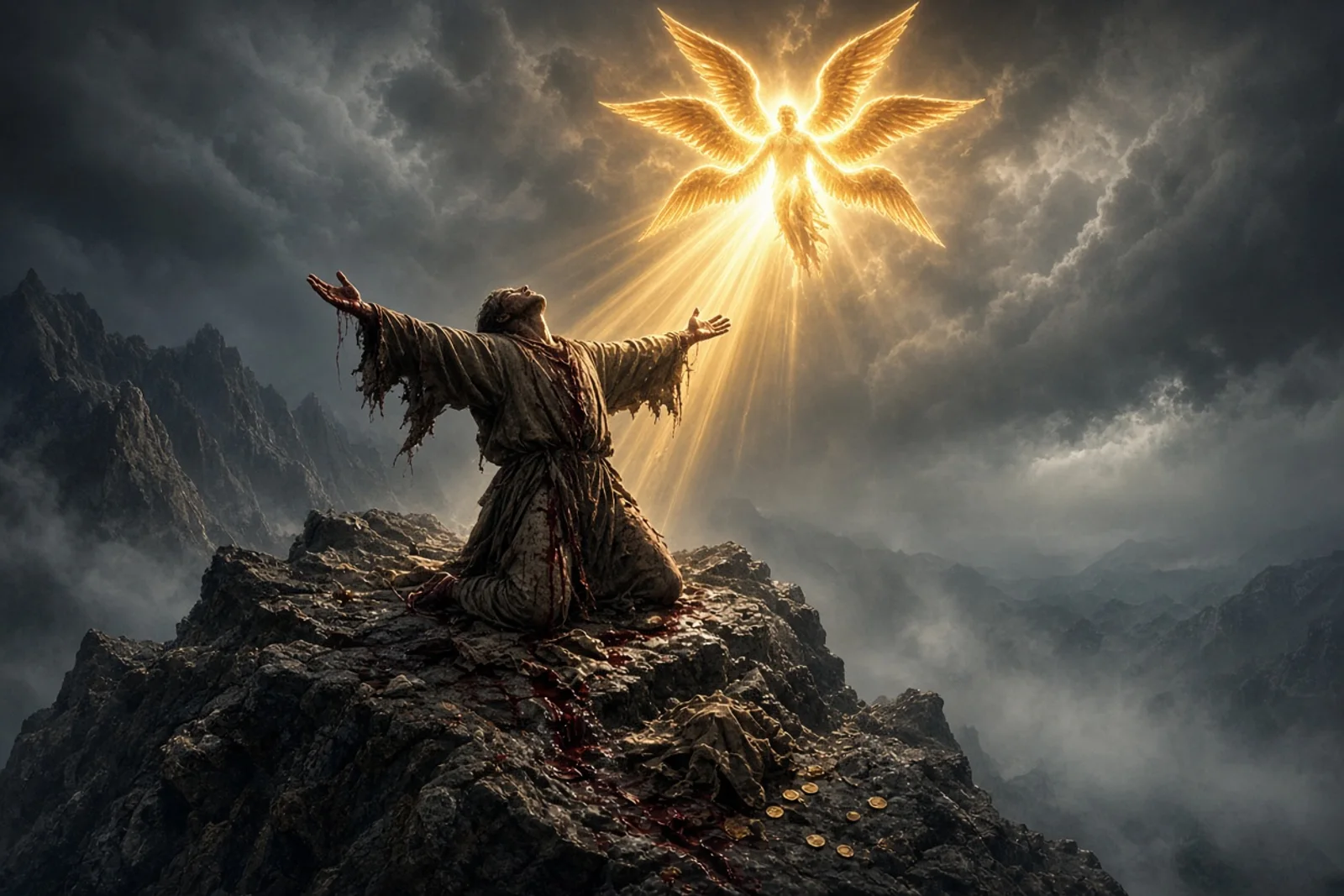
The rock face still held the day's heat when I climbed the last stretch behind him. Francis had gone ahead at dawn, his bare feet finding the same ledges he always chose, and I followed with the water skin and the small linen cloth he sometimes asked for. Below us the valley lay in shadow, the Tiber a dull thread. We had been on La Verna thirty-eight days. The fast had thinned every man among us, yet Francis moved as if the wind itself carried him.
He knelt on the narrow shelf where two pines leaned together. I stayed lower, out of sight, the way he preferred when he prayed alone. The air smelled of resin and dry stone. For a long time the only sound was the scrape of his breathing and the faint click of the beads he kept between his fingers.
A single gust came up from the east, stronger than the morning breeze. I looked up. Francis had lifted his head. Between the branches something bright moved, too slow for a bird, too steady for falling light. Six wings opened, each one the color of live coals. In the center of them a figure hung, arms and feet fixed as though to wood that was not there. The face was hidden, yet the posture left no doubt.
Francis made a small sound, not a cry or a word. His hands rose halfway and stopped. The wings beat once, soundless, and the figure came nearer. I saw the wounds in the hands and feet clearly then, dark against the brightness. Francis's shoulders jerked forward. He pressed both palms to the stone as if to keep himself upright.
The vision held. I could not count the moments. When the wings folded and the light thinned, Francis remained kneeling, head bent. Blood welled between his fingers where they rested on the rock. It ran in thin lines down the backs of his hands and dripped onto the ledge. He did not lift his head.
I climbed the last steps. His tunic was already dark on the right side, a spreading stain the size of a man's palm. When I reached him he turned his face toward me. The eyes were open but did not seem to see the slope or the trees. He spoke only once, asking whether the others had returned from the spring. I told him they had not. He nodded and looked again at his hands.
The marks were not torn skin. Small ridges of flesh stood out on the palms, rounded on one side and longer on the back, as though a nail head had pushed through and the point had bent. The same shape showed on the tops of his feet where the sandals had fallen open. Blood continued to move, slow and steady, soaking the cloth I wrapped around each hand.
We stayed on the ledge until the light left the valley. Brother Leo came up with the others at dusk. He carried the lantern we used for night prayers. When he saw the blood he set it down and knelt without speaking. Francis allowed us to help him to the shelter of the overhang where we had spread pine boughs. He would not let us wash the wounds. He said the one who had given them would decide when they closed.
That night the bleeding from his side slowed but did not stop. The linen we laid against it was soaked through by morning. Francis asked for the gospel book and opened it three times, the same way he had done every day of the fast. Each time the page showed the account of the nails and the spear. He closed the book and held it against his chest.