




G. K. Chesterton Accepts Orthodoxy
Essayist publicly affirms creed after debate.
FaithTap · Oct 3, 2026 · 11 min read
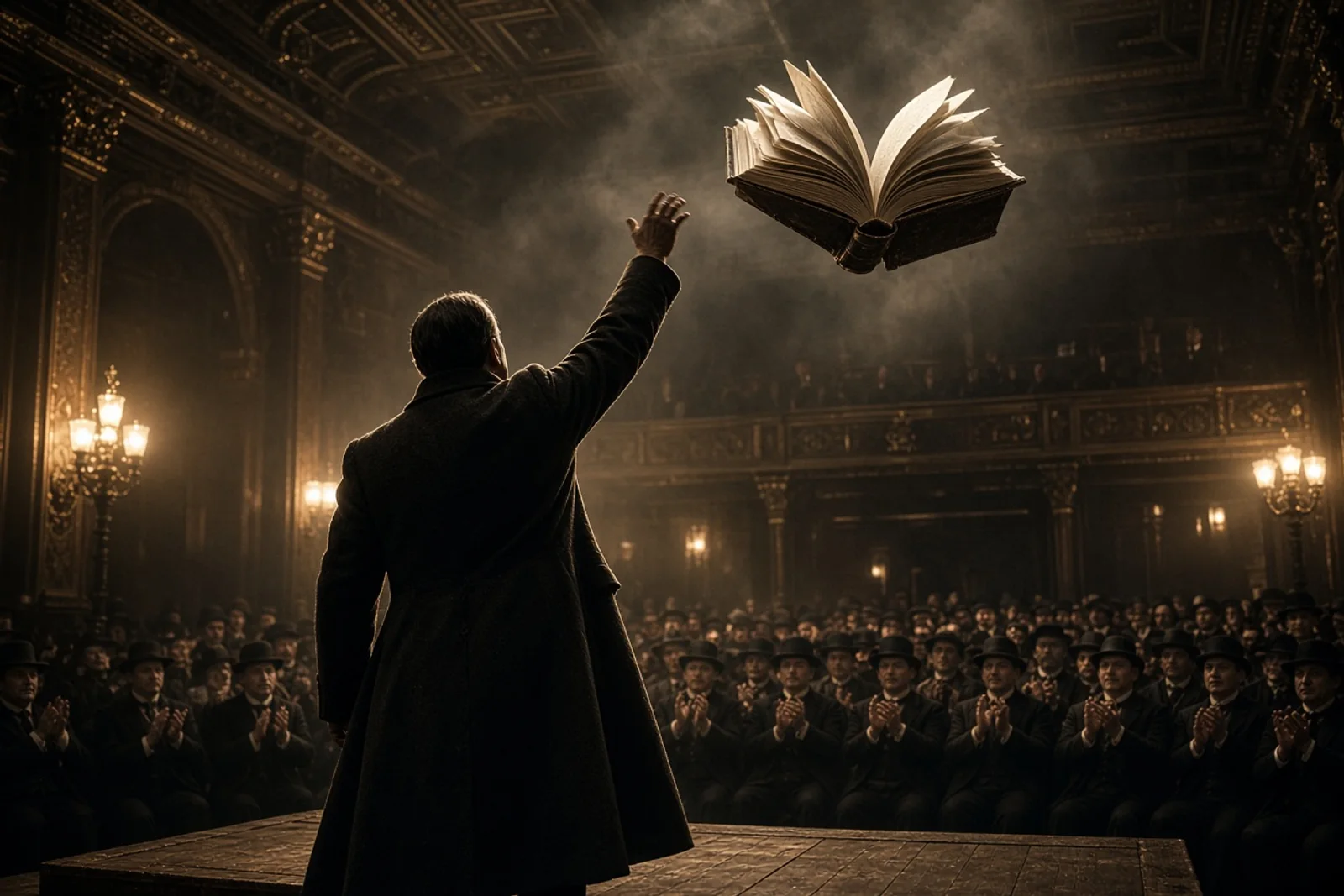
The ballroom at the Railway Hotel still carried the sour edge of last night's beer when we started shifting tables. I had come down from London the day before on a tip that something quiet was happening in Beaconsfield, and the Irish landlady had put me to work moving chairs so the space could serve as a chapel for a few hours. Corrugated iron overhead made every scrape of wood echo like a dropped coin. Bare planks ran along the walls where pictures had hung until that morning.
Chesterton had been a name in the papers for years by then. His columns reached four hundred thousand readers at their peak, and the book he called Orthodoxy had already pulled other men toward the same questions he kept turning over. He had defended the creeds in public while remaining outside them himself. People in the town knew his face from the train platform and the high street. They also knew his wife still kept to the older English prayers.
We finished clearing the floor by noon. The two priests arrived separately, one carrying a small case, the other already in his habit. They spoke little. Chesterton came later, coat open, hat in his hand, moving with the same heavy step that always made doorways look narrower. He nodded to the landlady and to me without asking names. The ceremony itself stayed short. No crowd, no announcements. Just the words that brought him inside the boundary he had circled in print for fourteen years.
Outside the hotel the afternoon stayed ordinary. A cart passed on the road. Someone hammered at a fence two gardens away. When it was done the priests left by the side door. Chesterton stayed a while longer, talking with the landlady about the weather and the state of the roof. He did not mention what had just happened. Neither did she.
Three weeks later the story reached the papers. By then Chesterton had returned to his desk and the weekly pieces kept coming, only now the arguments carried the weight of a finished step rather than a distant possibility. Readers who had followed him through the earlier books wrote letters. Some were surprised. Others said they had expected it sooner. A few admitted the same book that once kept them reading had now started them on their own road.
His wife remained where she had always been. She attended the same services she had known since their marriage. Four years passed before she crossed the same line. In the interval Chesterton never pressed the matter in public. He wrote instead about the things he had always written about: the shape of an argument, the weight of a single fact, the difference between a mood and a creed.
By the time the news had settled, the Railway Hotel ballroom had gone back to its usual trade. The landlady kept the small crucifix the priests had left behind, wrapped in cloth and stored above the bar. She showed it to me once when I passed through again on another assignment. The iron roof still leaked in heavy rain. The wooden walls had been painted over twice.
Chesterton continued to travel between London and Beaconsfield. He still rode the same trains, still filled the same notebooks. The difference showed in the way he spoke of final things. Where he had once presented possibilities, he now spoke of a place already reached. The essays kept their old speed and surprise, yet the center no longer moved.
Other writers began to trace their own steps to the same door. One man credited Orthodoxy with the first push. A canon in another city said the same arguments had settled questions that had kept him awake for years. None of them claimed the 1922 afternoon as their own. They only noted that after that date the voice they had followed no longer argued from outside the walls.