




Gabriel Gargam Healed at Lourdes
Paralyzed man walks after immersion
FaithTap · Sep 26, 2026 · 9 min read
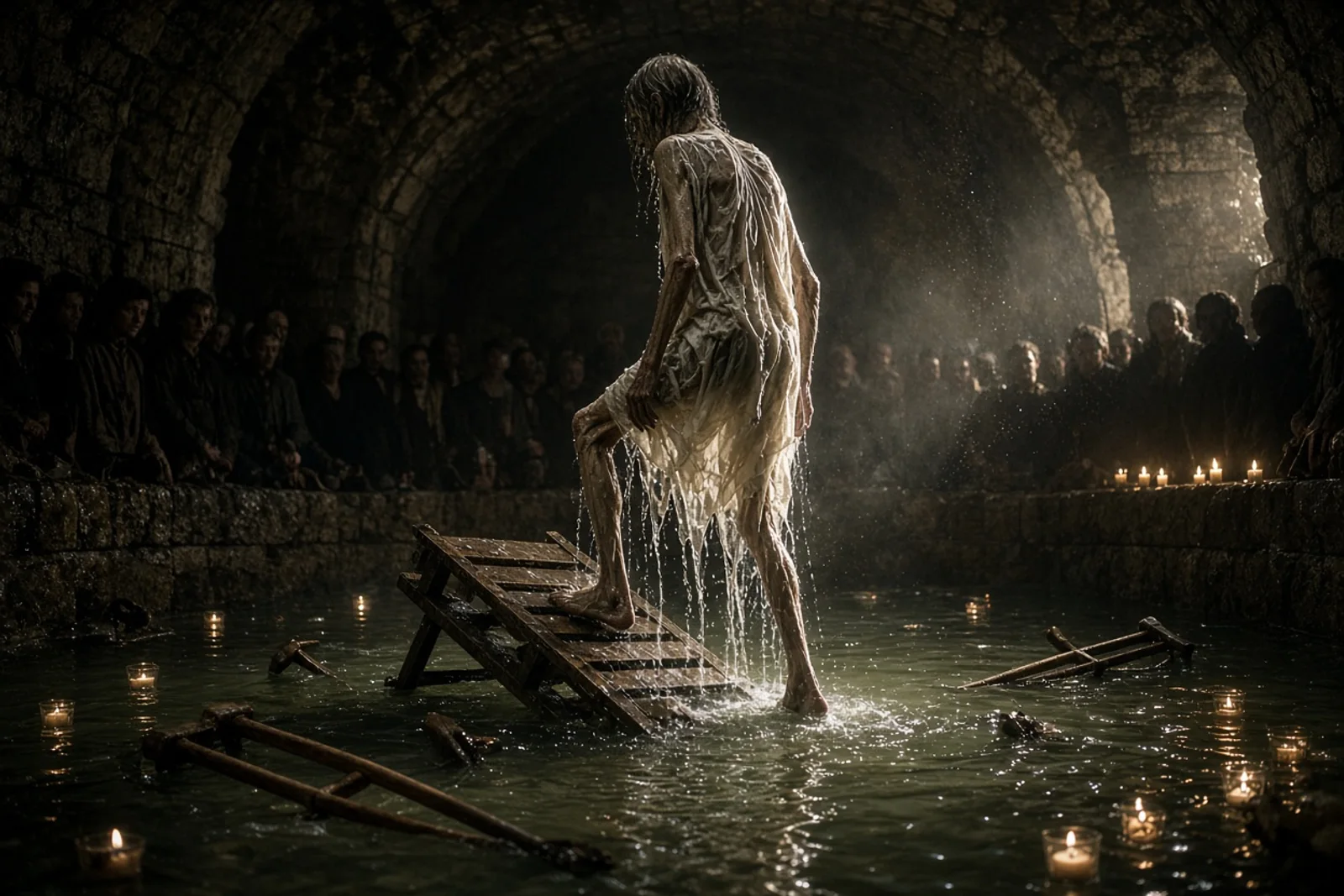
The stretcher tilted once more as we crossed the last stretch of gravel toward the pools. Four of us gripped the poles, careful not to jar the man lying under the blanket. He weighed almost nothing now, and the canvas straps had left red marks across his thin wrists. His eyes stayed closed. A nurse walked beside us with the esophageal tube coiled in a basin.
We lowered him into the water at seven that morning. The surface barely moved when his body went under. Two attendants held his shoulders and legs. When they lifted him out, his head fell sideways and the breath left him in one long, quiet rush. Someone shouted for a doctor. Hands pressed on his chest. Nothing answered. His mother took a cloth from her bag and laid it over his face. The crowd around the pool began to pull back.
The Eucharistic procession reached the square a few minutes later. We had to stop and move aside. The priest carrying the monstrance paused when he saw the covered figure on the stretcher. He turned, raised the Host, and traced the sign of the cross above the group. The cloth shifted. A hand came up and pulled it away. Gargam opened his eyes and looked at the people standing over him.
“Help me,” he said. “I can walk.”
The words were clear. He sat up without help. His legs, which had not moved in twenty months, swung over the edge of the stretcher. He stood. The blanket fell. He took three steps forward, then stopped and looked at his own feet as if they belonged to someone else. A woman near the front of the crowd began to cry. The priest remained where he was, the monstrance still raised.
We carried him straight to the Medical Office after that. Sixty doctors were already inside, some in white coats, others in traveling clothes. Dr. Boissarie stood at the table with a notebook open. They examined the skin first. Fresh scars showed where pressure sores had been. The feet that had shown signs of gangrene were warm and without discoloration. Gargam answered every question they asked. He ate a piece of bread someone offered him and kept it down. No tube was needed.
The examination continued into the next day. Doctors took turns testing reflexes and asking him to stand, walk, and lift objects. None of them could account for the change in muscle tone or the sudden return of sensation below the waist. A few of the men present had come as skeptics and said so aloud. They watched the same tests repeated and wrote nothing in their own notebooks. By evening the case was registered as observed.
Gargam stayed in Lourdes another week. Each morning he returned to the pools, but not as a patient. He began to help move the stretchers that arrived on the trains. The same poles that had carried him now rested on his shoulders. He walked the length of the square without tiring. His weight had already begun to rise.
In the years that followed he came back every summer. He wore the brassard of a brancardier and took his place in the line of men who lifted the sick from the carriages. The train crash that had thrown him fifty-two feet remained in the railway records, yet the man who now carried others showed none of the old injuries. The Medical Bureau kept the original notes. No later examination altered the finding recorded on the twentieth of August 1901.