




Gladys Aylward's China Orphan Trek
Gladys Aylward converts and leads orphans across mountains in wartime China.
FaithTap · Sep 23, 2026 · 12 min read
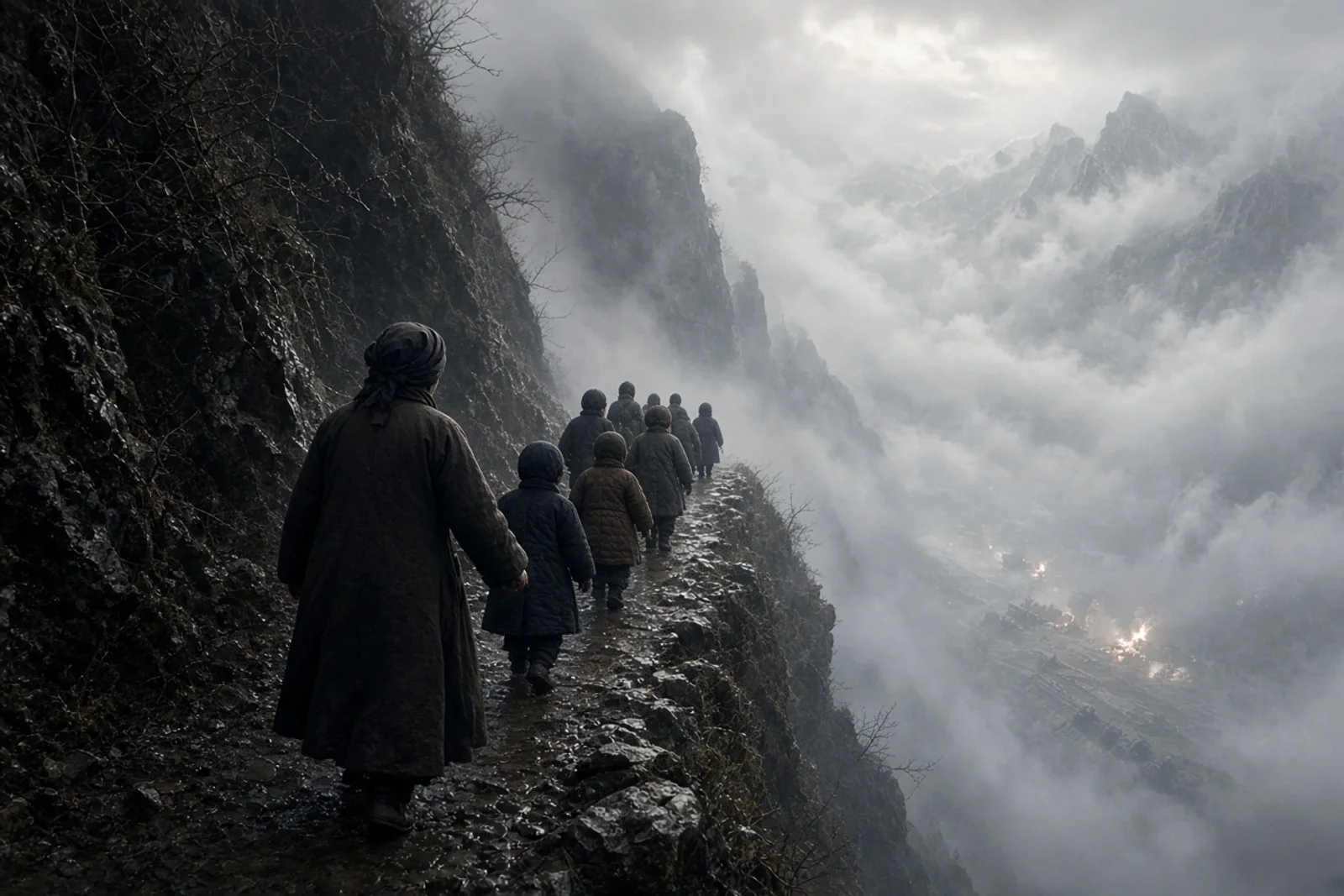
The children were strung out along the ridge when the first shell landed far below us in the valley. I counted the heads once more, the way I had each morning since we left Yangcheng, and saw the smallest ones already leaning against the older girls for balance. Gladys stood at the front with the oxcart driver we had hired two days earlier. She lifted one arm and pointed ahead without raising her voice.
We moved again. The path dropped into a narrow cut between two hills, and the sound of the children’s feet on stone mixed with the wind that came down from the north. I kept to the rear because the stragglers always needed an extra hand when the slope turned steep. One boy, maybe seven, kept stopping to look back toward the smoke we had seen at dawn. I told him to watch his feet instead.
She had come to us eight years earlier with nothing but a single suitcase and a letter from an old missionary woman named Lawson. The two of them opened an inn for muleteers at the top of the pass and called it The Inn of the Eight Happinesses. I swept the yard and carried water. At night, after the guests were fed, she would sit on the low bench outside the kitchen and tell anyone who would listen what had happened to her in England. She had been eighteen when she walked into a meeting she had not planned to attend. Someone at the door had taken her hand and said God wanted her. She believed it that same evening.
By the time the Japanese reached the next province, the inn was full of children whose parents had been killed or taken. Lawson was already gone. Gladys had taken Chinese papers in 1936 and walked the villages as an inspector of feet, telling the mothers that bound feet would leave their daughters unable to run when the soldiers came. Most listened. Some did not.
The trek began after the last of the mission houses in Yangcheng was hit. She gathered what food we could carry and told the older ones to pair with the younger. One hundred and two children left with us. We walked at night when we could and slept in dry stream beds when the planes flew over. She carried the smallest girl on her back for two full days after the child’s shoes split. On the third morning a stray bullet from a patrol we never saw caught her high on the shoulder. She kept walking until the bleeding stopped on its own.
We reached the river crossing on the tenth day. The ferryman demanded more money than we had. Gladys spoke with him for a long time in the dialect she had learned from the muleteers. He took what we offered and let the children board in two trips. On the far bank she counted heads again and found we had lost none.
The mountains after the river were colder. One night the smallest boy began to shake so hard he could not stand. She wrapped him in her own coat and held him until the shaking stopped. In the morning she gave the coat to an older girl and walked in her shirt. By then most of us were too tired to speak. She prayed out loud sometimes, not asking for rescue but thanking God that the children still had strength to put one foot in front of the other.
On the twenty-seventh day the land flattened into farmland we recognized. The walls of Hsing-P’ing came into view at dusk. She walked the last stretch with her hand on the shoulder of the tallest boy so she would not fall. When the gate of the Scandinavian mission opened, she stepped inside, said the children were safe, and dropped where she stood.
I stayed with the orphans while they took her to the hospital in Sian. The doctors said typhoid and the wound. For weeks no one knew her name. When they finally sent word back, she was already sitting up, eating rice broth. She told the nurse that God still had work for her and asked when she could return to the children.