




Hannah More Opens Schools for Poor
Writer educates the working class
FaithTap · Oct 4, 2026 · 11 min read
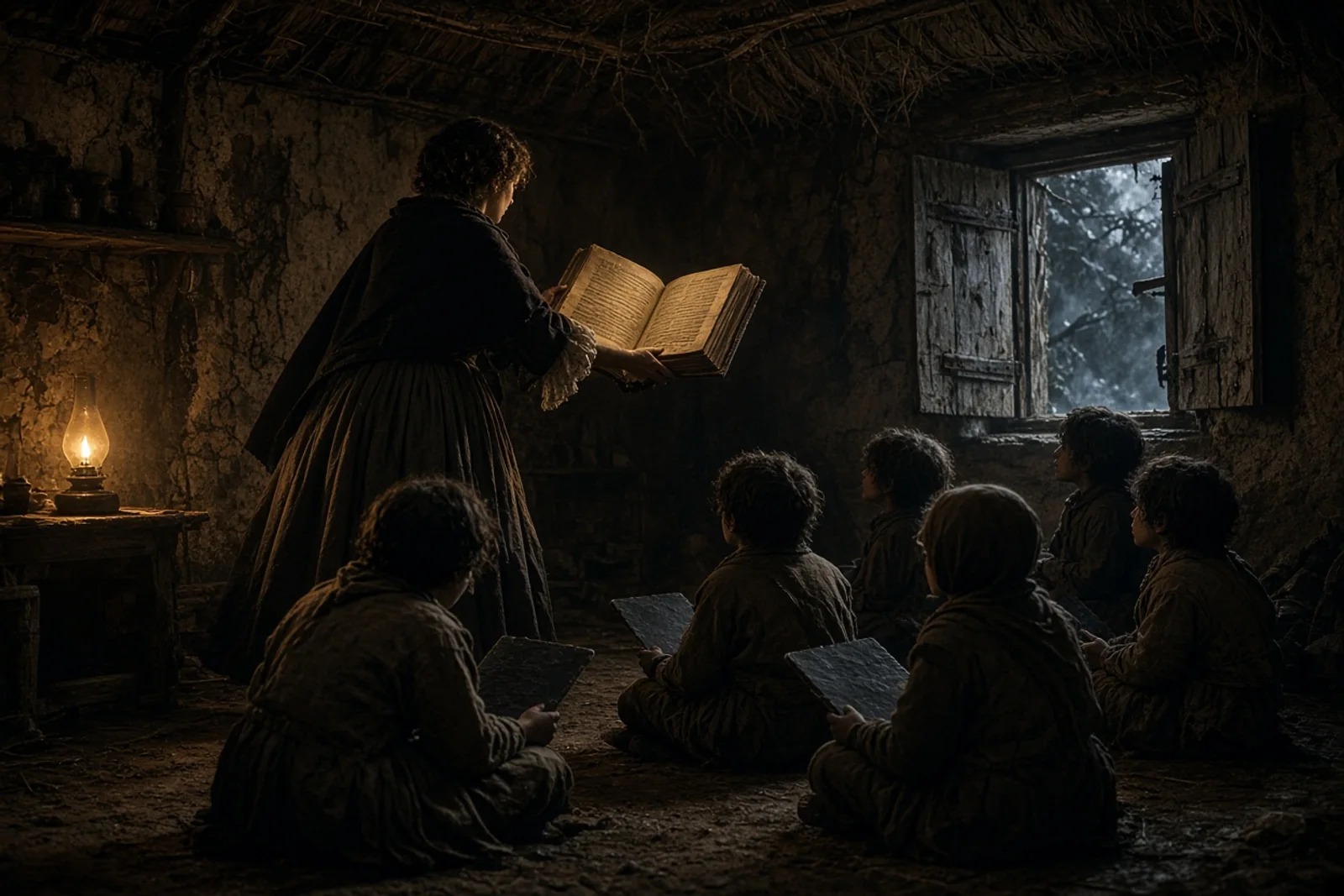
The cart wheel caught on a stone and the basket of slates nearly tipped. I steadied it with one hand while the pony blew steam into the cold air. We were still two miles from Blagdon, and the track climbed between blackthorn hedges that scraped the load. Patty More had sent word the night before that the room above the smithy was ready. Hannah wanted the slates there by midday so the children could begin copying their letters before the light failed.
I had walked the same track the week before with Hannah herself. She had stopped at the stile and pointed to the cluster of cottages below. “These are the glass-workers’ families,” she said. “Their children know the furnace whistle better than any bell.” Her sister Martha walked a pace behind, already listing names in a small notebook. Neither of them mentioned the cost of the slates or the benches that still needed carrying up the hill.
At the smithy the door stood open. Thomas, the blacksmith, had cleared the upper loft and laid planks across two trestles. Hannah was already there, sleeves rolled to the elbow, marking lines on a fresh board with a piece of chalk. She turned when she heard the cart.
“Set them here,” she said. “We will begin with the youngest at the front so they can see the letters.” Her voice carried the same even tone she used when speaking to the farmers about the benefit club. No one argued with that tone.
The first children arrived before the clock struck one. Most came barefoot, their mothers waiting at the bottom of the ladder. One boy, no more than seven, carried a piece of coal in his pocket and offered it as payment. Hannah took it, thanked him, and placed it on the windowsill without comment. She handed him a slate instead.
By the second week the loft held twenty-three children. Martha kept the register. She noted who could already trace the alphabet and who still held the chalk like a tool for digging. The glass-workers’ sons learned fastest; they were used to watching shapes form in the heat. The miners’ children arrived later, after the day shift, their faces streaked with dust that left pale rings when they wiped their eyes.
Finding someone to keep order proved harder than the slates. The local curate refused outright. He said the children needed work, not letters. Hannah wrote to Bristol and received three replies, each polite and empty. In the end she took on a man named Jones who had once preached at a Methodist meeting house. She told Martha she would watch him closely and say nothing unless he began to stray.
The first feast was held in the churchyard after the third Sunday. Patty More had arranged for bread, cheese, and small beer. The women of the new benefit club stood together near the wall, their aprons still damp from the wash-house. Hannah moved among them, asking after sick children and overdue rents. One woman asked whether the club money would be kept in a locked box. Hannah said it would, and the key would stay with the treasurer they elected themselves.
Winter brought rain that turned the track to mud. Several children stayed home. Hannah walked the cottages anyway, carrying extra copies of the tracts she had printed in London. She left them on windowsills when no one answered the door. The boy who had offered coal now came every week without fail. He could write his name by December.