




Healing of Anne-Marie Ménage’s Relative at Lourdes
Neurological symptoms vanish
FaithTap · Sep 22, 2026 · 10 min read
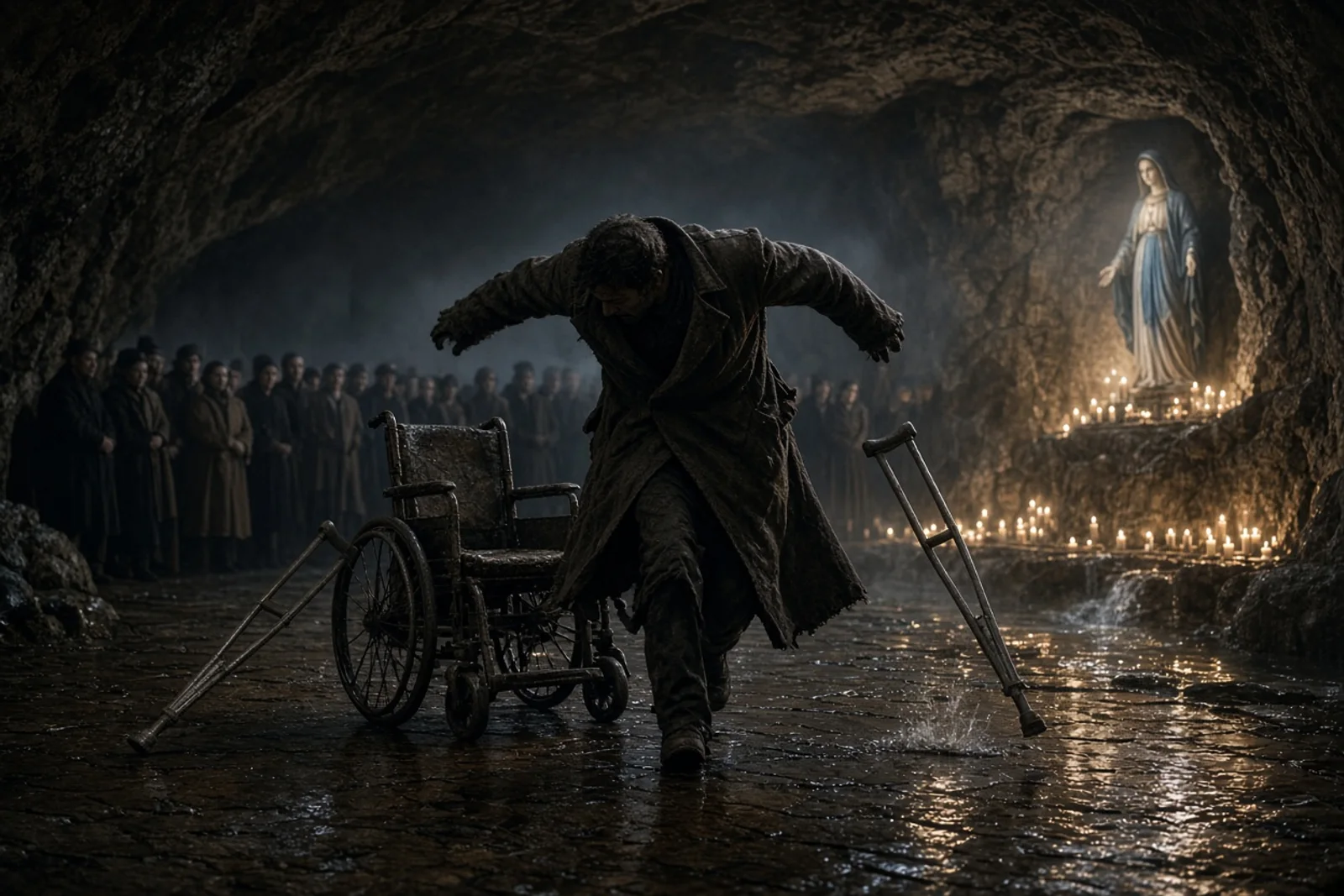
The wheels of the cart caught on a loose stone just as the monstrance turned the corner into the square. I leaned harder into the handle, feeling the jolt travel up my arms, and glanced down at the woman lying under the gray blanket. Marie Thérèse Canin had not spoken since we left the hospital train that morning. Her eyes stayed half-closed, the skin over her cheekbones stretched tight from the weight she had lost.
We had come with the Rosary pilgrimage out of Marseille, eight hundred of us packed into the special cars. Most days I moved between the carriages with basins and fresh linen. That afternoon the sky stayed low and the air smelled of wet dust and candle wax. The procession had already passed the grotto when the bearers slowed. The priest carrying the Blessed Sacrament stopped directly in front of our line. I heard the Latin words and saw the monstrance lifted. Marie Thérèse’s hand, resting on the blanket edge, twitched once.
She opened her eyes fully. For a moment she looked past me toward the raised host as if she had only just noticed it was there. Then she drew a breath that did not rattle. Her fingers closed on the blanket and she pushed herself upright on the cart. The blanket slipped to her waist. I reached to steady her, but she was already swinging her legs over the side. The other women on nearby stretchers turned their heads.
She stood. Her bare feet touched the gravel. She took one step, then another, toward the priest. No one shouted. The only sound was the continued murmur of the rosary from farther back in the crowd. She walked the remaining distance to the monstrance, knelt without help, and stayed there until the procession moved on. When she rose again she turned and looked at me as though she had forgotten my name but remembered my face.
We returned to the hospital section after dark. She asked for bread and stew and ate it sitting on the edge of her cot. The night nurse recorded the time: eight-forty. By morning her temperature had dropped to normal. She dressed herself and walked the length of the ward twice before the doctors arrived.
The Bureau des Constatations Médicales met in the small room behind the basilica at ten o’clock. Three physicians examined her spine and abdomen. They measured the fistulas that had drained for years and found the openings closed and dry. They asked her to bend forward and touch her toes. She did so without pain. One of the doctors, a man from Lyon who had seen her films from Marseille, left the room and returned with the radiographs taken two months earlier. He held them up to the window light and said nothing for a long time.
She remained in Lourdes two more days. Each morning she reported to the Bureau. Each morning the same three physicians checked the same places and wrote the same note: no sign of active disease. On the train home she sat upright by the window and watched the fields pass. She weighed thirty-eight kilograms when she left Marseille. By the following June the record showed fifty-five.
The archbishop of Marseille, Monsignor Jean Delay, opened the canonical inquiry in 1951. He called the physicians who had examined her at Lourdes and the surgeons who had performed the bone grafts in 1943 and 1945. Their testimony, together with the unchanged radiographs and the absence of any recurrence, formed the file that reached Rome. On the sixth of June 1952 the cure was formally recognized.
I saw her again only once, in 1954, at the Marseille railway station. She carried her own suitcase and walked without a stick. She did not recognize me until I spoke her name. We stood on the platform while the train to Lourdes was called. She said she went every year now, not as a sick person but to help with the stretchers. Then the whistle blew and she boarded with the others.