




Healing of Elisa Aloi at Lourdes
Bone tuberculosis healed
FaithTap · Sep 21, 2026 · 11 min read
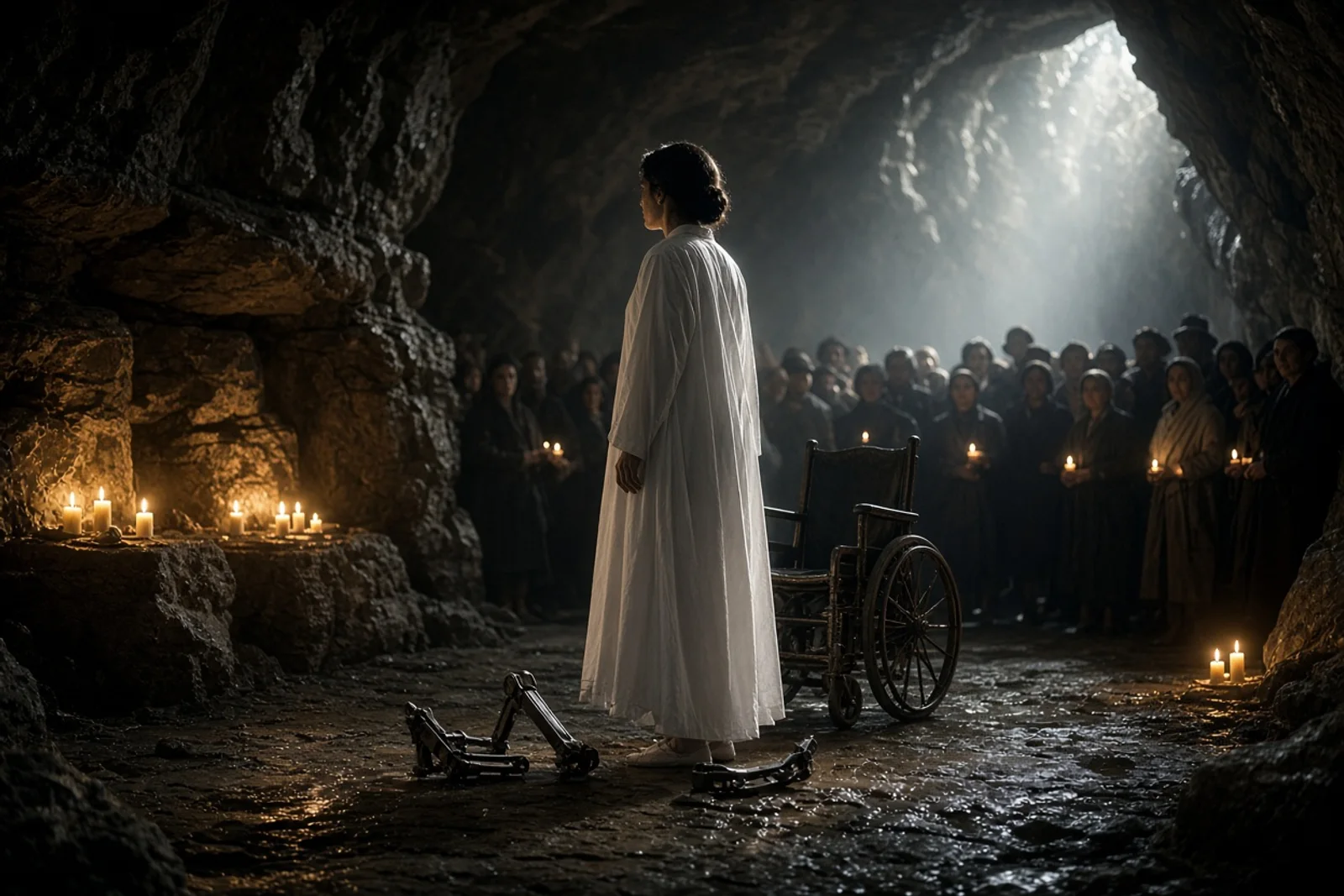
The stretcher tilted as we reached the last ramp before the pools. I gripped the handles tighter, my palms slick from the June heat, and glanced down at Elisa Aloi. Her face was the color of old linen, eyes half-closed against the fever that never left her. The plaster cast ran from her neck to her right thigh, cut with four small windows for the drains. Giovanni walked two steps behind, one hand on the rail, the other ready if she slipped.
The priest at the head of our group, the one who had carried her most of the way from the train, stopped and turned. “Elisa, do you want to go in?” he asked. She opened her eyes. “Yes,” she said. “Take me to the swimming pools.” We lowered the stretcher to the water’s edge. Two attendants lifted her. The cold hit her at once. She drew a sharp breath but did not cry out.
When they brought her back up, she lay still for a moment. Then her right foot twitched inside the cast. I saw the blanket move. She looked at me, then at the priest. “Sir, what a suggestion,” she said. “Take away this thought of being able to move your legs.” The foot moved again, stronger. She called for Doctor Zappia.
He came from the line of stretchers on the esplanade. She lifted the blanket herself. “Doctor Zappia, I move my legs inside the plaster.” He bent over her, lifted the edge of the cast, and froze. The four fistulas were closed. The gauze squares were dry and clean. The drainage tubes lay beside her leg, empty. He sent a runner for the Bureau Médical.
They took her there after the evening procession. The doctors examined the skin, the closed wounds, the absence of discharge. They asked her to name the surgeon in Messina who had cut away ten centimeters of bone from her right leg years earlier. She gave the name. They wrote it down and told her the cast must stay until her own physicians removed it. She asked them to take it off then and there so she could walk. They refused.
We returned to Messina three days later. The radiologist in the hospital set up new plates before they touched the plaster. When the films came out of the developer, the bone that had been removed was present again, continuous, without the old line of resection. The professor who had performed that operation stood at the light box for a long time. He said the bone he had taken out with his own hands had grown back. He did not question the films or the radiologist’s report.
Elisa asked again for the cast to be cut. They removed it on the ward. She sat up, swung her legs over the side, and stood. The muscles that had not borne weight in years trembled, but they held. She took four steps to the window and back before anyone stopped her. The nurses on the floor came to the door and watched.
Word reached the Unitalsi section in Sicily within the week. Antonio Diella, who would later become national president, read the medical notes and said nothing for several minutes. Nunzio Faranda, then a young member of the Messina group, asked if the case would be sent to Lourdes for review. It was.
The Bureau Médical examined her again in 1965. They compared the 1958 films with new ones, interviewed the surgeons who had operated on her thirty-three times, and reviewed the temperature charts kept during the pilgrimage. On May 26 they declared the cure inexplicable by natural means. The Church accepted the finding the same year.