




Healing of Francis Pascal at Lourdes
Infantile paralysis cured
FaithTap · Oct 3, 2026 · 11 min read
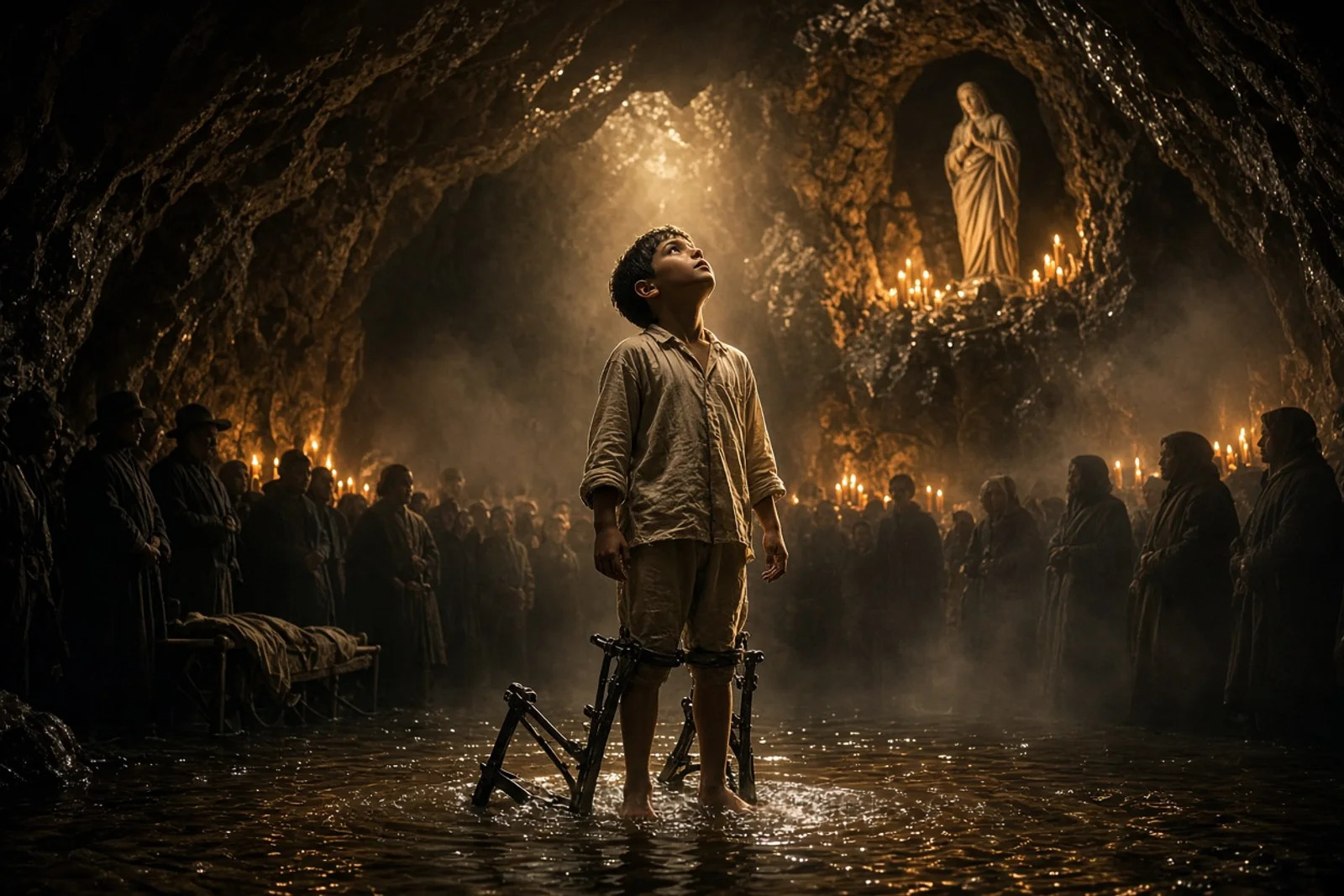
The stretcher bearers moved slowly along the flagged path toward the baths, the child’s weight no more than a bundle of blankets. I kept one hand on the rail of the wooden frame so the thing would not tilt on the uneven stones. Francis Pascal lay on his back, eyes closed, legs slack under the sheet. His mother walked beside us without speaking. She had not let go of the edge of the blanket since we left the hospital ward.
The water in the first pool had already been changed that morning. Steam rose in thin threads from the surface. Two attendants lowered the frame until the boy’s body touched the cold. He did not flinch. His arms stayed folded across his chest the way they had been placed. After a minute the bearers lifted him again and wrapped him in fresh linen. His mother dried his face with the corner of a towel. We carried him back to the row of benches where the other sick waited their turn.
By midday the crowd had thinned. Most pilgrims had gone to the esplanade for the blessing of the sick. I stayed near the bureau table because the doctor on duty wanted someone to note times and names. The Pascal case had already been registered the day before. Twelve physicians in Beaucaire had signed the certificates that came with the family. The diagnosis was fixed: blindness and flaccid paralysis of both legs following meningococcal meningitis.
On the second afternoon the mother asked again for the baths. The same stretcher was brought out. This time the water felt colder against the skin. The attendants submerged the child to the shoulders and held him for the usual count. When they raised him, one of the men stepped back suddenly. The boy’s right foot had moved. It scraped against the wooden side of the frame and stayed there, toes pointed.
The mother put her hand on the leg. The foot did not fall away. She called the attendant’s name. Another attendant came over, then a third. Someone sent for the doctor who had examined the child on arrival. By the time he reached the pool the boy had opened his eyes and was turning his head toward the sound of running water. He blinked at the light coming through the open doors. The left leg was drawn up under the sheet.
The doctor asked the mother to step aside. He tested the knee reflexes with the handle of his stethoscope. Both legs responded. He held a hand in front of the boy’s face and moved it from side to side. The eyes followed. The child began to cry, a thin, ordinary sound. The doctor wrote the time in his notebook and sent a messenger to fetch the bureau president.
Word traveled quickly along the line of benches. Pilgrims who had stayed behind gathered at a distance. No one pushed forward. The president arrived with two other physicians. They repeated the same tests, then asked the mother to walk the child a few steps on the stone floor. Francis stood with help, knees locked, then took three short steps before sitting again. He asked for water. Someone brought a cup.
The family remained at the bureau for the rest of the afternoon while statements were taken. The original certificates from Beaucaire were read aloud and compared with the new observations. The doctors noted the absence of any residual weakness in the arms and the return of full visual acuity. No further treatment was ordered. The child was allowed to return to the hotel with his mother.
On the train home the boy sat upright by the window. He pointed at fields and asked the names of stations. His mother kept one arm around his shoulders. The paralysis did not return during the journey. At Beaucaire the local physicians who had signed the earlier prognosis examined him again. They recorded the same findings: normal gait, normal vision, no sign of the previous contractures.