




Healing of Lydia Gouardo at Lourdes
Multiple sclerosis healed
FaithTap · Sep 22, 2026 · 10 min read
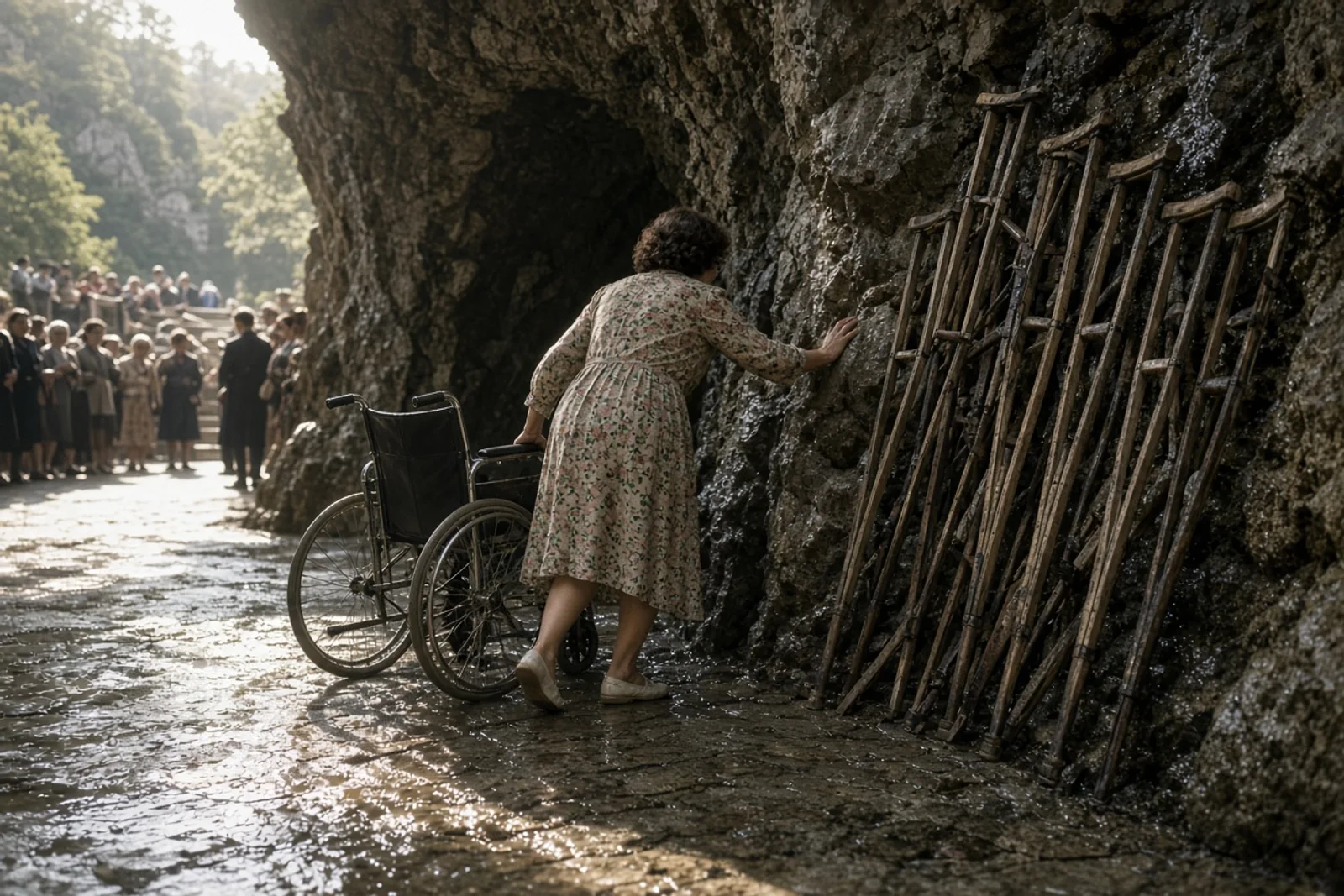
The train from Paris had carried the worst of the heat into the station at Tarbes. I stood on the platform with the other stretcher bearers, shirts already damp, watching the pilgrims step down. Most walked. A few were helped into the blue-and-white buses that would take them the last kilometers to the domain. One woman stayed on her cot. She did not lift her head when the light changed. Her name was given as Lydia Gouardo, twenty-three, from the south. The tag on the rail said multiple sclerosis, advanced, no remission for three years.
We loaded her into the ambulance with three others. The road ran straight between fields of maize. Inside the vehicle the only sound was the creak of the straps and the driver’s radio turned low. At the grotto the volunteer nurses moved quickly. They took her to the piscines, the cold pools fed by the spring. The water stood at fourteen degrees. Two attendants lowered her on a sheet. She did not speak. When they lifted her out her legs remained slack, the left foot turned inward.
The Medical Bureau occupied a low building near the basilica. Doctors came and went all day. That afternoon three of them examined her in turn. One tested the reflexes with a hammer. Another asked her to push against his hand. She managed only a tremor. They wrote the findings on separate sheets and compared them. No one claimed improvement. The notes were filed under the date 21 July 1978.
She returned the next morning. The same attendants carried her down the steps again. This time she asked for the water to be poured over her head as well. It ran into her eyes and she blinked but did not wipe it away. When they raised her, the left foot was no longer turned. The nurse holding the sheet noticed first. She said nothing at the moment. They wrapped her and brought her to the bureau once more.
The same three physicians were on duty. They repeated the tests. The left leg now resisted pressure. Sensation returned in patches along the shin. They asked her to stand. She could not yet, but the tremor in the attempt was different, more like ordinary effort. They kept her under observation through the afternoon. By evening she could flex the toes on command. The doctors recorded the change without comment beyond the measurements.
Word spread among the volunteers. People stopped at the door of the small ward where she rested. No one prayed aloud. One of the Italian nurses stayed late to change the linen. She later told the bureau that the patient had slept without the usual spasms. The next day Lydia Gouardo sat on the edge of the bed for twenty minutes. She asked for bread and ate half a roll. The doctors returned. They tested coordination, then balance. She stood with support for the first time in three years. They wrote the hour: ten-seventeen in the morning.
The International Medical Committee reviewed the dossier in Paris the following spring. Professor Salmon presented the summary. The committee noted the absence of any recorded improvement in the preceding months and the sudden, complete resolution of motor and sensory deficits within forty-eight hours. They found no physiological explanation consistent with the prior diagnosis. The file was forwarded to the diocese.
Bishop Elchinger of Strasbourg received the report in 1980. His canonical commission questioned the original neurologists and the Lourdes examiners separately. The commission concluded the facts were as stated. On 16 March 1984 the bishop declared the cure of Lydia Gouardo miraculous.
She returned to Lourdes once more, in 1986, walking unaided. The nurses who had carried her stretcher eight years earlier stood at the same gate. She spoke with them briefly, then continued toward the grotto. The foot that had been turned inward left a normal print in the gravel. No further cases were certified by the bureau after that summer.