




Healing of Marie Bailly at Lourdes
Advanced peritonitis cured
FaithTap · Sep 28, 2026 · 11 min read
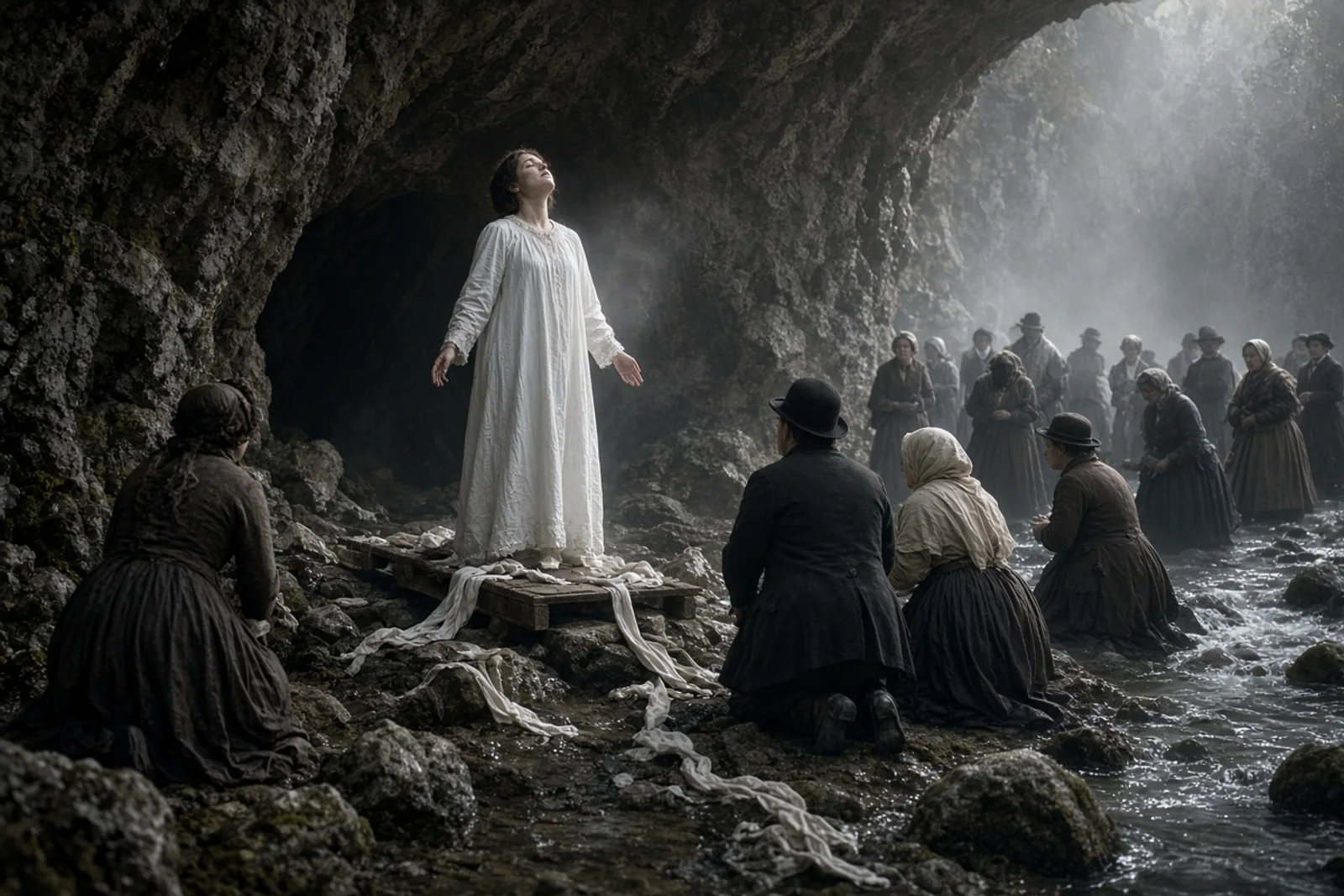
The carriage lurched again and the metal basin slid toward the aisle. I caught it with one hand and held it steady while the woman beside me pressed her face into the rim. The air smelled of damp wool, sweat, and the sharp vinegar someone had used on the floors that morning. Carrel stood two rows ahead, coat open, stethoscope already around his neck. He moved without hurry, the way he always did when the train pitched.
Marie Bailly lay on the bench seat nearest the window. Her abdomen rose under the blanket like a drum left too long in the sun. The skin above her collarbone showed the same tight shine I had seen on other patients who did not last the week. Carrel lifted the blanket, pressed two fingers along the curve of her ribs, then listened. He said nothing for a full minute. When he straightened he only nodded once toward the aisle and kept walking.
We reached Lourdes after dark. The station platform was wet and the lamps threw long shadows across the stretchers already lined up. Carrel stayed with the train until the last patient had been moved. He asked me to note the time on the chart for Bailly and to mark that her pulse remained thready. Then he walked toward the town with the other doctors, hands in his pockets.
By morning the square in front of the grotto was already crowded. I helped carry Bailly on a canvas stretcher, two men at each end. The blanket had been changed but the smell of illness stayed with her. Carrel met us at the steps that led down to the pools. He watched while the attendants lowered her into the water. She made no sound. When they lifted her out again the blanket clung flat across her middle where it had been tight before.
Carrel stepped closer. He placed his hand on her abdomen without asking. The skin gave under his fingers the way ordinary skin does. He kept the hand there for several seconds, then withdrew it and wiped it on his coat. A priest standing nearby asked whether he wanted the chart updated. Carrel said the chart could wait.
That afternoon he returned to the train compartment where we kept the medical supplies. He wrote for nearly an hour without looking up. When he finished he folded the paper and placed it inside his notebook rather than in the official file. He told me to make sure Bailly received the evening meal if she asked for it. She did ask. She ate half a bowl of broth and asked for bread.
The return journey took three days. Bailly sat upright for longer stretches each morning. On the second day she asked for the name of the town we were passing. Carrel answered her. He did not examine her again on the train.
Years later I read that he had received the Nobel Prize for work on blood vessels. The article mentioned his time at Lourdes only in passing and got the year wrong. I kept the note he wrote that afternoon in Lourdes. It recorded her temperature, her pulse, and the measurement of her abdomen taken before and after the pool. The numbers after the pool were ordinary. He had underlined the word “ordinary” twice.
Bailly lived another forty years. She worked in a laundry near the shrine and sometimes helped with new arrivals who could not stand. Carrel never returned to Lourdes. He kept the piece of chicken-heart tissue alive in a flask for decades and showed it to visitors who wanted to see how long cells could be made to last outside a body. He spoke of the train journey only when asked directly, and then only about the rate at which certain wounds closed.