




Healing of Rose Verrechia at Lourdes
Pott's disease healed
FaithTap · Sep 24, 2026 · 11 min read
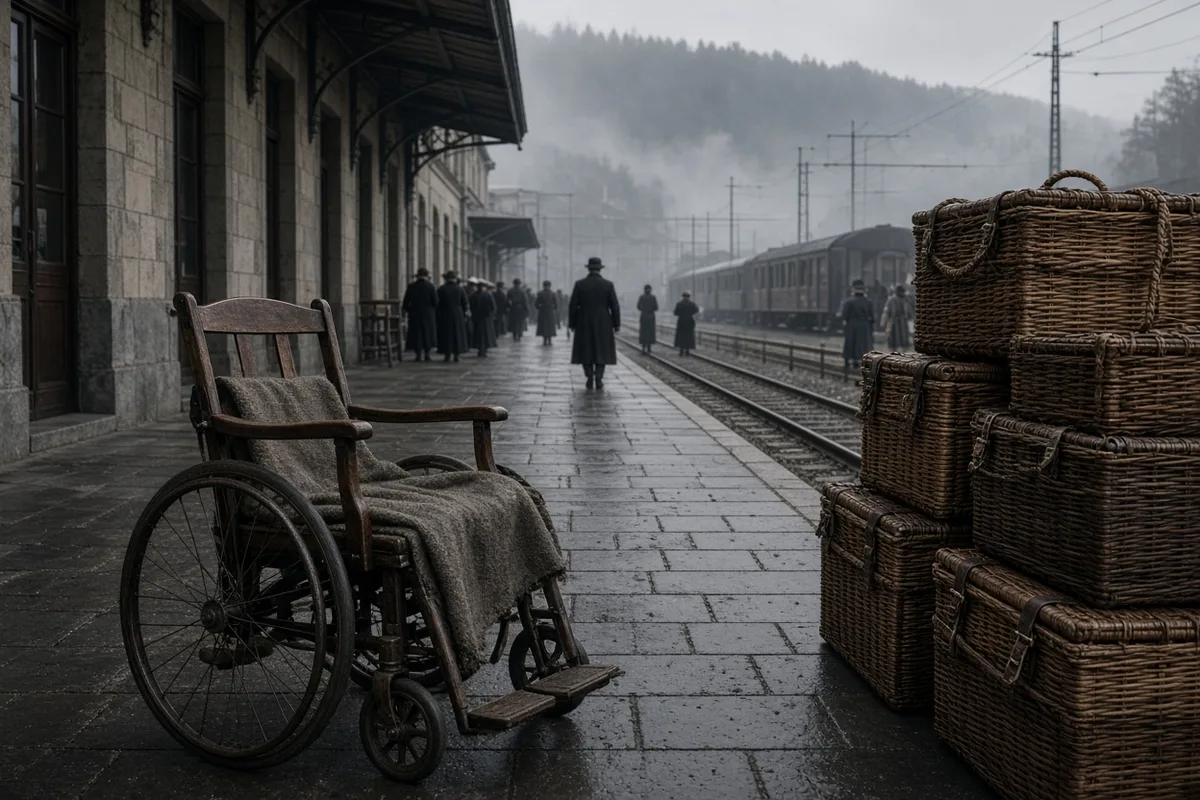
The train from Nice had rattled through the night with the smell of coal smoke and wet wool. I sat across from her on the wooden bench, watching the way her head stayed fixed inside the plaster collar, the leather straps biting at her jaw. Henriette Bressolles had not moved her own neck in six years. At each station the carriage jolted and she bit down on whatever sound tried to rise. The pension papers in her bag listed total paraplegia and double incontinence, one hundred twenty-five percent disability from service in the army hospitals. She kept the papers folded inside a small tin box so they would not crease.
We reached Lourdes just after midday. The air outside the station carried the metallic edge of the river and the dust from the charabancs. Volunteers lifted her couch from the train and set it on the platform. Her eyes stayed open, tracking the movement of the handlers the way a person tracks a threat. When they wheeled her toward the Domain she asked only that the route pass the Grotto before the hotels. The request was granted. By three o’clock she lay on the same couch beneath the Blessing of the Sick, the sun hot on the white sheets.
The priest moved along the line of stretchers. When he reached her he raised the monstrance and the shadow of it crossed her face. She closed her eyes. A moment later her right hand, the one that had lain palm-up for years, clenched. The fingers dug into the sheet. She made a sound that was not prayer. The sound stopped. Then she said, clearly, that something had cracked inside her spine.
Two stretcher-bearers helped her sit. She remained upright without support for the first time since 1918. The plaster collar still circled her neck but the muscles beneath it answered. She turned her head left, then right. The movement was small and the pain showed in the set of her mouth, yet the motion was her own. People around the couch stepped back a pace. One of the volunteers crossed himself and walked away without looking back.
She was taken at once to the Medical Bureau. The room smelled of iodine and the starch from the doctors’ coats. Three physicians examined the spine. They found no tenderness along the old track of the disease. When they asked her to flex forward she did so until her forehead nearly touched her knees. The lower limbs stayed stiff, as they had been, but the upper body moved without the old guarding. The doctors recorded the findings and told the stretcher-bearers to bring her again the following morning. They wanted the opinion of her regular physicians in Nice before any further statement.
That night she slept in the hospital ward without the retaining straps that had held her to the couch. In the morning she asked for a chair. She was helped into it and remained seated through the second examination. The physicians from the Bureau tested sensation in the legs again. Nothing had returned below the waist, yet the incontinence that had required constant catheterization had ceased. They noted the change and asked her to return in three months with letters from the surgeons who had treated her in the army hospitals.
She left Lourdes on the fourth of July. The return journey was made in an ordinary railway carriage, not the hospital train. At home the three physicians who had signed her pension papers examined her in September. Each wrote a separate certificate stating that the spinal lesion no longer produced pain or deformity, that the cure had remained stable, and that the improvement had occurred at Lourdes. The auxiliary bishop of Nice permitted a service of thanksgiving before Christmas. Henriette attended without the collar or the corset.
The case stayed on the books of the Medical Bureau. In 1954 the Canonical Commission in Tarbes reviewed the original notes, the three certificates from Nice, and the testimony of the doctors who had examined her at the Bureau in 1924. They found no medical explanation for the sudden release of the spinal fixation. On the twenty-fourth of October they forwarded their conclusion to the bishop. Three years later, on the fourth of June 1957, Bishop Paul Remond of Nice declared the cure of Henriette Bressolles miraculous.
She lived another four years. In 1961 she died in Lyon from an unrelated cardiac condition. The Medical Bureau kept the file open until her death so that any recurrence could be recorded. None appeared. The spine that had been fixed in plaster for six years remained mobile until the end.