




Healing of Sister Mary of the Presentation at Lourdes
Advanced cancer disappears
FaithTap · Sep 30, 2026 · 10 min read
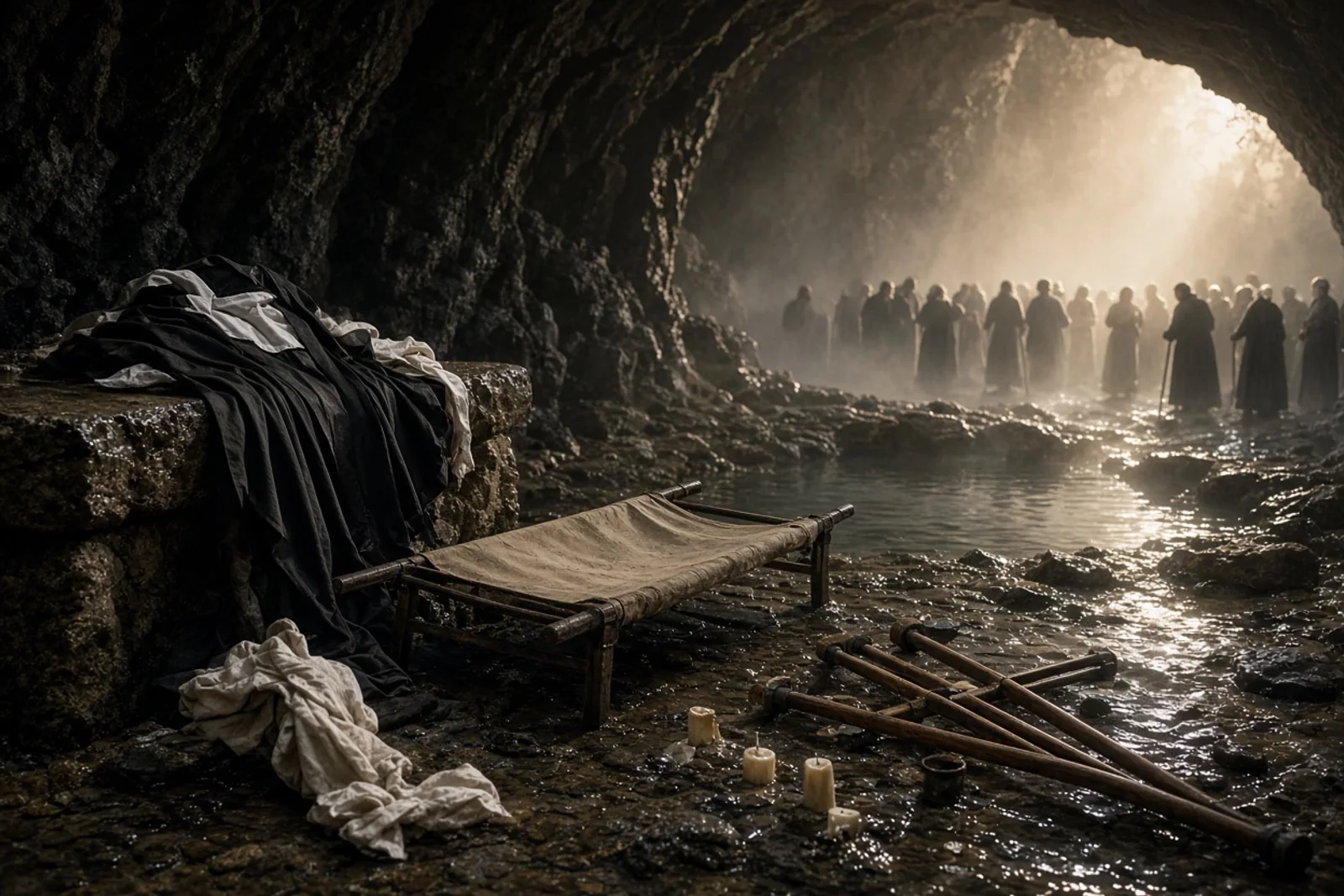
The carriage swayed hard on the northern line, wheels hammering the rails as we left Lille behind in the gray light. Sister Marie sat propped against the window, her face the color of old linen, eyes half-closed from the pain that had gnawed at her for twelve years. I kept one hand on the blanket across her lap, feeling the faint tremors that ran through her whenever the train jolted.
She had insisted on the journey even when the doctor shook his head and her own family stopped arguing. Two full days of travel lay ahead, and none of us expected her to reach the end of the first. The Franciscan house had packed what little she could still swallow, though most days she kept nothing down.
By the second morning the motion of the train seemed to ease something inside her. She asked for a piece of bread and managed a few bites without the usual retching. I watched her chew slowly, surprised at how steady her hands had become. The other sisters in our compartment glanced at one another but said nothing.
We reached Lourdes in the late afternoon of the twenty-ninth. The air smelled of dust and river water. A handcart took her the short distance to the Rosary church while the rest of us walked alongside. She asked to be left near the front, where the light from the high windows fell across the benches.
Inside, the space felt cooler than the street. She knelt as best she could, head bowed, lips moving through the familiar words. Then her body tightened. Both hands pressed against her middle as if something had torn loose. The sound that came from her was low and sudden, not the usual complaint but something sharper. I moved closer, ready to call for help, yet she stayed upright.
The pain lasted only minutes. When it passed she remained kneeling, breathing evenly for the first time since I had known her. She looked at the altar, then at her own hands, turning them over as though checking for a mark that should have been there. Color had returned to her cheeks.
We stayed in the church until the lamps were lit. She walked back to the lodging without support, stopping once to drink from the fountain outside. The water tasted ordinary to me, but she finished the cup and asked for another. That night she ate a full meal with the rest of the group, speaking between bites about the train ride and how the fields had looked from the window.
Back in Lille the community watched her resume duties she had not performed in years. The chronic symptoms that had defined her days simply did not return. She wrote a brief account for the house records, stating only what had changed and when. The local physician examined her twice and noted the absence of the earlier signs, though he offered no explanation.
Years passed. Pilgrims continued to arrive in Lourdes each summer, and the Medical Bureau recorded cases as they came. In 1908 the diocese of Cambrai took up her file. Monsignor François Delamaire, coadjutor to the bishop, reviewed the statements from the train, the church, and the return to Lille. On the fifteenth of August he declared the cure authentic after the required examinations.