




Healing of Suzanne Aubry at Lourdes
Bone disease cured
FaithTap · Sep 26, 2026 · 11 min read
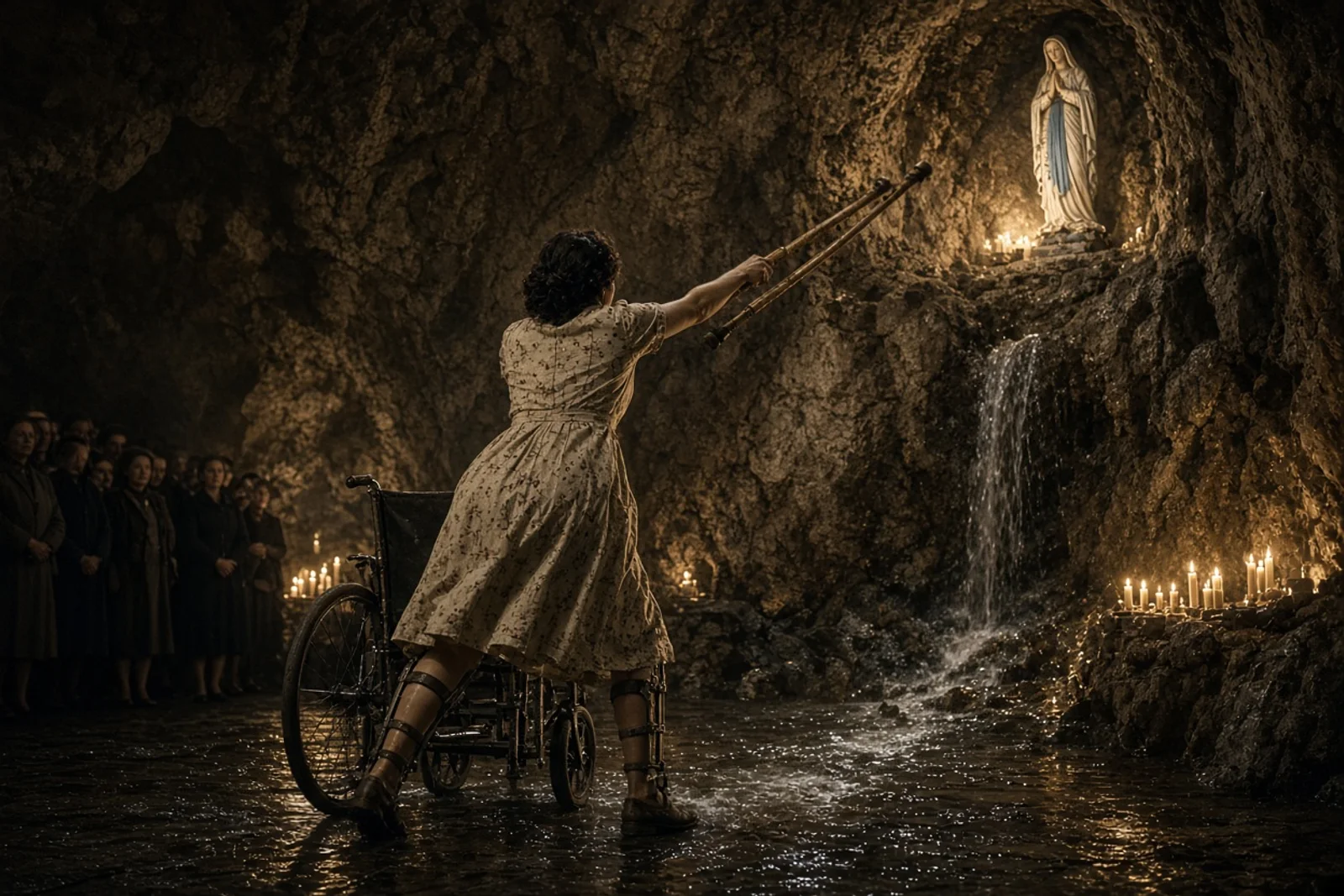
The train from Paris had rattled through the night, and I stood on the platform at Lourdes with a basin of damp cloths when the first stretchers came off. Pilgrims pressed close, their voices low, some already praying the rosary. A woman in a blue headscarf asked if I had seen the Medical Bureau open yet. I said the doctors would arrive after the nine o’clock Mass.
By midday the square outside the grotto was thick with the sick. I carried water to the pools and watched the attendants lower a man whose legs were strapped to a board. He did not speak. Later I helped a girl in a plaster shell from Sicily sit upright on a bench while her mother changed the dressings. The girl’s name was given as Elisa, though I did not learn the surname until the bureau clerk wrote it down. Four fistulae drained through the cast. The linen was already dark again by the time the priest passed.
I was not a doctor, only a nurse seconded from the hospital in Tarbes for the summer season. My orders were simple: note what the patient said before immersion, note what changed after. The bureau had a table under the awning. Physicians came and went, some in soutanes, others in civilian suits. They measured pulses, asked about pain, and wrote in ledgers. When they disagreed they sent for another opinion. No one hurried.
On the third morning of that pilgrimage a new case arrived. The woman lay on a canvas stretcher, her name recorded as Suzanne Aubry. She had come with the diocesan group from the north. Her history sheet listed bone lesions and repeated operations. The surgeon who travelled with her group stayed at the table and read the notes aloud. Two other doctors listened, one from Lyon, one from Rome. They examined the radiographs that had been brought in a cardboard tube. The films showed destruction at the pelvis and femur. The woman herself said little. She kept her eyes on the roof of the awernacle.
They took her to the pool at four. The water was cold. Attendants supported her head while the priest poured from a jug. She shivered once, then was still. When they lifted her out, the surgeon asked her to move the right leg. She did. He asked again, louder. She flexed the knee. The movement was small but clear. The surgeon stepped back and told the clerk to mark the time.
The bureau met again the next day. They called the same doctors plus two more who had examined her the week before departure. The radiographs were compared with fresh plates taken that morning. The lesions appeared unchanged in outline, yet the woman walked between parallel bars without the previous spasm. Pain scores dropped from eight to two on the scale they used. One physician from Paris said the improvement could be hysterical. Another answered that hysterical contractures do not alter radiographic density in two days. They recorded the disagreement and sent the dossier forward.
I saw her again three weeks later at the verification session. She stood without support while the international committee reviewed the file. The secretary read the original diagnosis and the post-pilgrimage findings. No one claimed the bone had regenerated overnight. They noted only that function had returned and that the discharge from the sinuses had ceased. The committee voted to transmit the case to the bishop. The woman thanked them and left for the train.
Years later the same file came back stamped with the canonical declaration. By then I had stopped working the season and kept only a few letters from colleagues who still attended the bureau. The letter that mentioned Suzanne Aubry said she had married and borne children without complication. The surgeons who had operated on her earlier wrote confirming letters. The record closed there.
The square is quieter now in winter. The medical table is still set up each summer, though fewer cases reach the final vote. The process remains the same: measure, photograph, wait, measure again. The water in the pools stays the same temperature. Pilgrims still ask the nurses what they have seen. I answer that the ledgers hold the names and the dates, and that the rest is left for others to weigh.