




Healing of Vittorio Traverni at Lourdes
Paralysis from polio reversed
FaithTap · Sep 29, 2026 · 11 min read
The train from Turin rattled through the night with the sick in the forward cars and the rest of us crammed behind. I was twenty-two then, assigned as an orderly for the Italian military pilgrimage, and my job was to keep the stretchers from sliding when the brakes caught. One of them held a soldier named Vittorio Micheli. He lay on his right side because the left buttock and hip gave him no peace. A plaster cast ran from waist to knee. Every time the car swayed he shut his eyes and the tendons stood out along his neck.
We reached Lourdes before dawn. The air smelled of wet stone and coal smoke from the station. Micheli’s brother, the priest, had come with their mother. She walked beside the stretcher repeating the same short prayers under her breath. Doctors at the northern Italian hospital had already told them there was nothing left to try. The biopsy had shown sarcoma eating through the ilium and the roof of the acetabulum. No radiotherapy. No chemotherapy. They had sent him home to die.
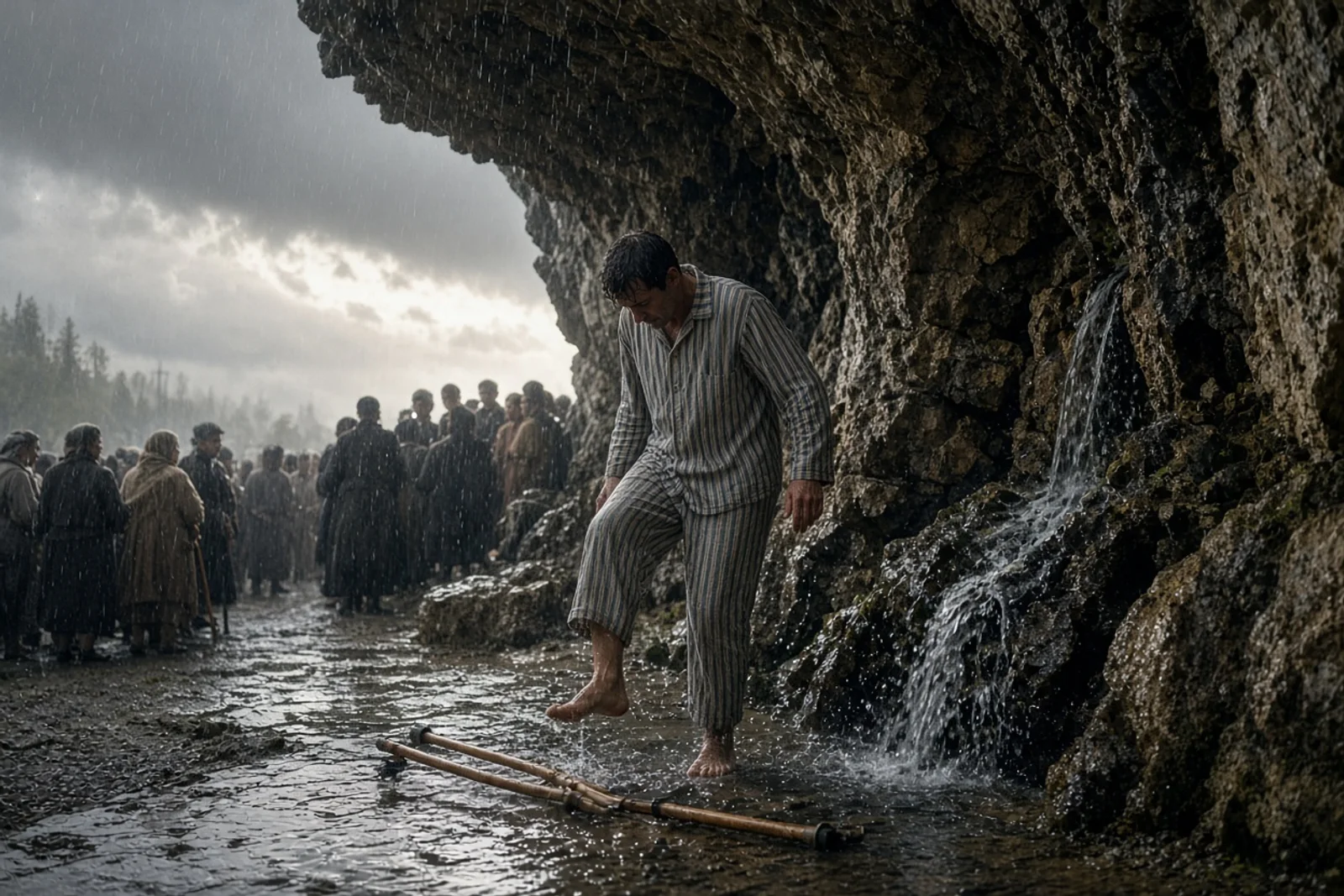
On the second morning I helped lift him into the underground baths. The water was cold enough to make a healthy man gasp. Micheli’s lips were already blue before we lowered him. He said nothing while we immersed the cast and the ruined hip. When we brought him up again his face had changed color but he still could not put weight on the left leg. We dried him and carried him back to the esplanade where the other stretchers waited in rows.
That afternoon he joined the procession of the Blessed Sacrament. Someone had rigged a small platform so he could lie flat and still see the monstrance pass. I walked on the left side of his stretcher, one hand on the rail. He kept his eyes on the canopy. When the blessing reached him he lifted his right hand an inch or two, then let it fall. Afterward he asked for water. He drank the whole cup without spilling and said the pain had moved, not disappeared, but moved to a place he could bear.
We returned to Italy three days later. At the military hospital the staff barely looked at him. They had seen too many men come back unchanged. Micheli asked for crutches anyway. He began to stand for a few minutes at a time, the cast still on, the left foot barely touching the floor. The nurses noted that he no longer asked for morphine at night. He started finishing his meals.
Three weeks after the trip an orderly wheeled him to radiology because he complained the cast felt loose. The films showed the osteolytic area filling in. The radiologist ordered another set the next day, then called for outside consultants. They came, examined the old plates and the new ones, and left without speaking to the patient. Micheli was discharged with a note that said spontaneous regression of sarcoma. He walked out on crutches.
The case file traveled to the International Medical Committee in Lourdes in 1969. Seven years had passed. The members reviewed every X-ray, every biopsy slide, every hospital record. They found no medical explanation for the bone regeneration or the disappearance of the tumor. They met again in 1971 and reached the same conclusion. In 1976 the bishop of Tarbes and Lourdes declared the cure the sixty-third official miracle recognized at the shrine.
Micheli went back every year after that. For more than a decade he served as a brancardier, carrying other men down the same steps to the baths where he had gone. One summer he met a woman among the volunteers. They married. He never returned to active duty; the army pension and odd jobs kept them. When he turned eighty he still made the trip, though now he used a cane instead of crutches.
I saw him once more in 1985 on the esplanade. He was helping a woman with advanced arthritis into the line for the pools. He moved without hesitation on the left side. The afternoon sun hit the white stone and turned the puddles silver. He looked up, noticed me, and lifted his hand the same small distance he had lifted it the day the monstrance passed. Then he turned back to the woman and steadied the stretcher again.