




Henry IV Walks to Canossa
Henry IV seeks forgiveness at Canossa in snow.
FaithTap · Sep 23, 2026 · 9 min read
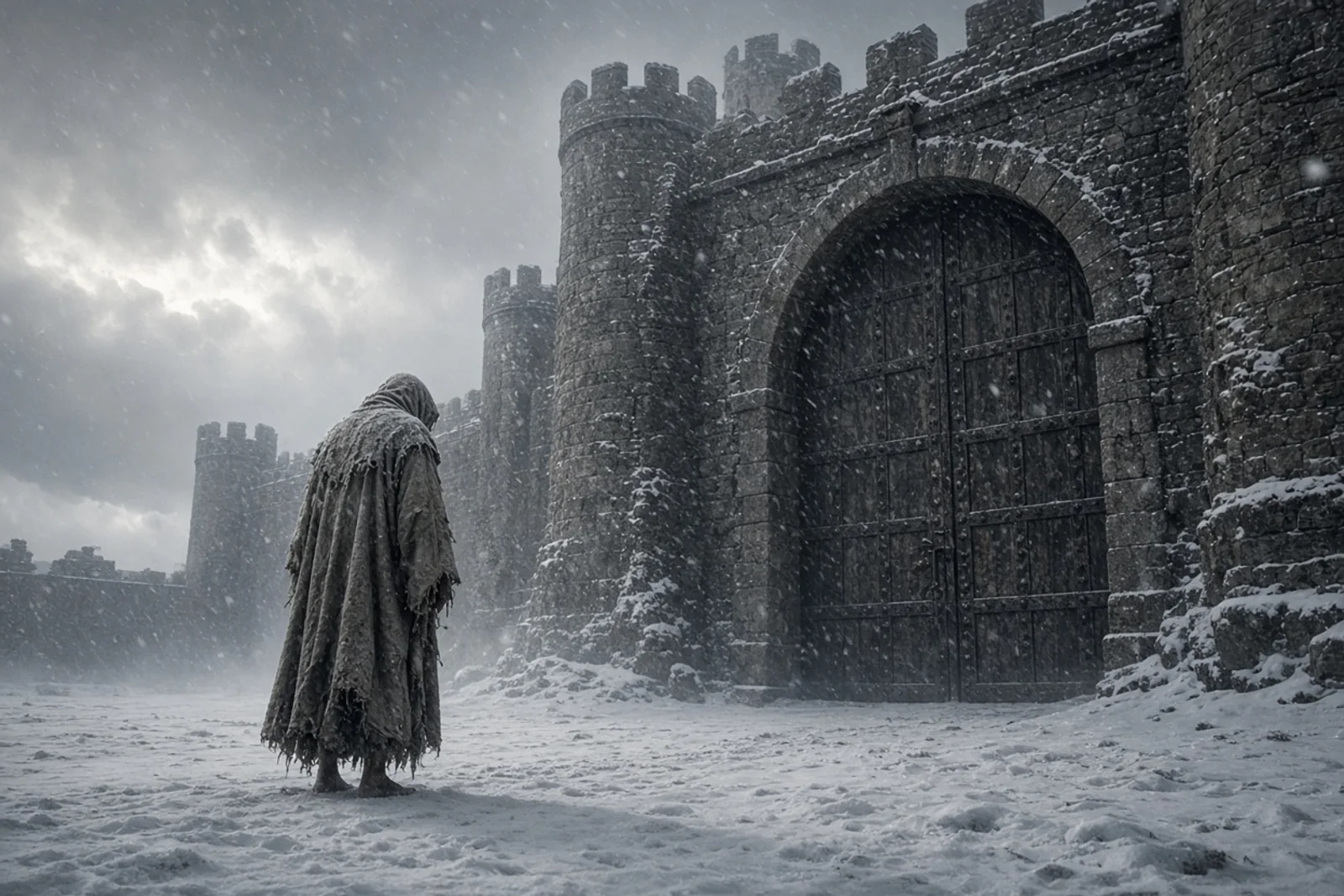
Snow packed hard against the outer gate when the first rider came in shouting that the king’s party had crossed the ridge. I was hauling water from the lower well when the call went up, and the bucket swung against my knee as I turned. Inside the hall the fires already burned low against the wind that had followed us from the valley. Matilda stood by the long table with Adelaide, both of them still in travel cloaks, while Abbot Hugh spoke quietly with two of Gregory’s clerks. None of them raised their voices, yet the air changed at once.
Word reached us that Henry had sent legates ahead promising full satisfaction. Gregory received the messages in the upper chamber and gave no answer for a day. We watched the road from the wall walk. The snow lay deeper than a man’s forearm and the cold bit through wool and leather alike. On the second morning a small group appeared below the castle, no banners, no horses draped in royal cloth. Henry walked at the front. He had set aside every mark of kingship and wore only a coarse wool tunic that reached his ankles. His feet were bare on the frozen track.
We counted the hours by the changing light on the mountains. He stood the first day without shelter, sometimes on one foot, sometimes on the other, shifting when the numbness grew too great. A few of his companions tried to bring him a cloak at dusk; he sent them back. The second day the wind rose and drove pellets of ice against the stones. From the parapet I could see the red marks the cold had raised on his skin. People inside the walls began to speak of it. Some said the king would not last another night. Others said Gregory would not open the gate even if he froze where he stood.
On the morning of the third day the snow fell again, light and steady. Henry remained at the outer gate. He had stopped calling out and now only bowed his head each time a figure passed on the wall above. The tears on his face froze before they reached his chin. Word spread through the courtyard that Matilda had gone to Gregory and asked for audience. Adelaide followed soon after. Abbot Hugh joined them in the chamber where the pope kept his letters. The three of them stayed inside for most of the morning.
I carried bread and ale to the men on the gate. They let me stand a while in the shelter of the arch. Through the narrow slit I watched Henry. He did not look up. His lips moved, but the wind took the sound. One of the guards muttered that no man should be made to do this for any crown. Another answered that the crown was no longer the question.
By midday the three intercessors came down the stairs together. Matilda walked first, her face set. She spoke to the porter and the bar was lifted. The gate opened only wide enough for a single man to pass. Henry entered alone. His feet left dark prints on the stone floor of the passage. He was brought to the chapel where Gregory waited. The absolution was given that afternoon. The chain of the anathema was declared loosed, and Henry received communion from the pope’s own hands.
Afterward the king remained inside the castle for several days. He ate at the common table and slept in a chamber without hangings. No one restored his royal garments. Gregory prepared letters to the German princes explaining what had been done. He named the sponsors who had stood for Henry: Matilda, Adelaide, Abbot Hugh, and certain bishops and lay lords present at Canossa. The letters were sealed and carried south by trusted riders.
The snow did not stop. On the morning Henry left, the path down the mountain had been cleared only by the feet of those who had come up with him. He walked at the head once more, still without crown or mantle. From the wall I watched until the last figure disappeared behind the shoulder of the ridge. The gate was barred again. Inside the hall the fires were built higher, yet the cold that had settled during the three days stayed in the stones for weeks.
Matilda returned to her own lands soon after. Adelaide crossed the Alps with the pope’s party when spring allowed passage. Abbot Hugh went back to Cluny carrying copies of the letters. Gregory himself remained in Italy longer than he had planned, waiting for the escort that never arrived in full strength. The princes in Germany received the news of the absolution without uniting behind any single decision. Henry kept the peace he had sworn for a time, then the old disputes over bishops and appointments rose again.