




Hudson Taylor's Inland China Vow
Missionary candidate surrenders fully during prayer.
FaithTap · Oct 4, 2026 · 11 min read
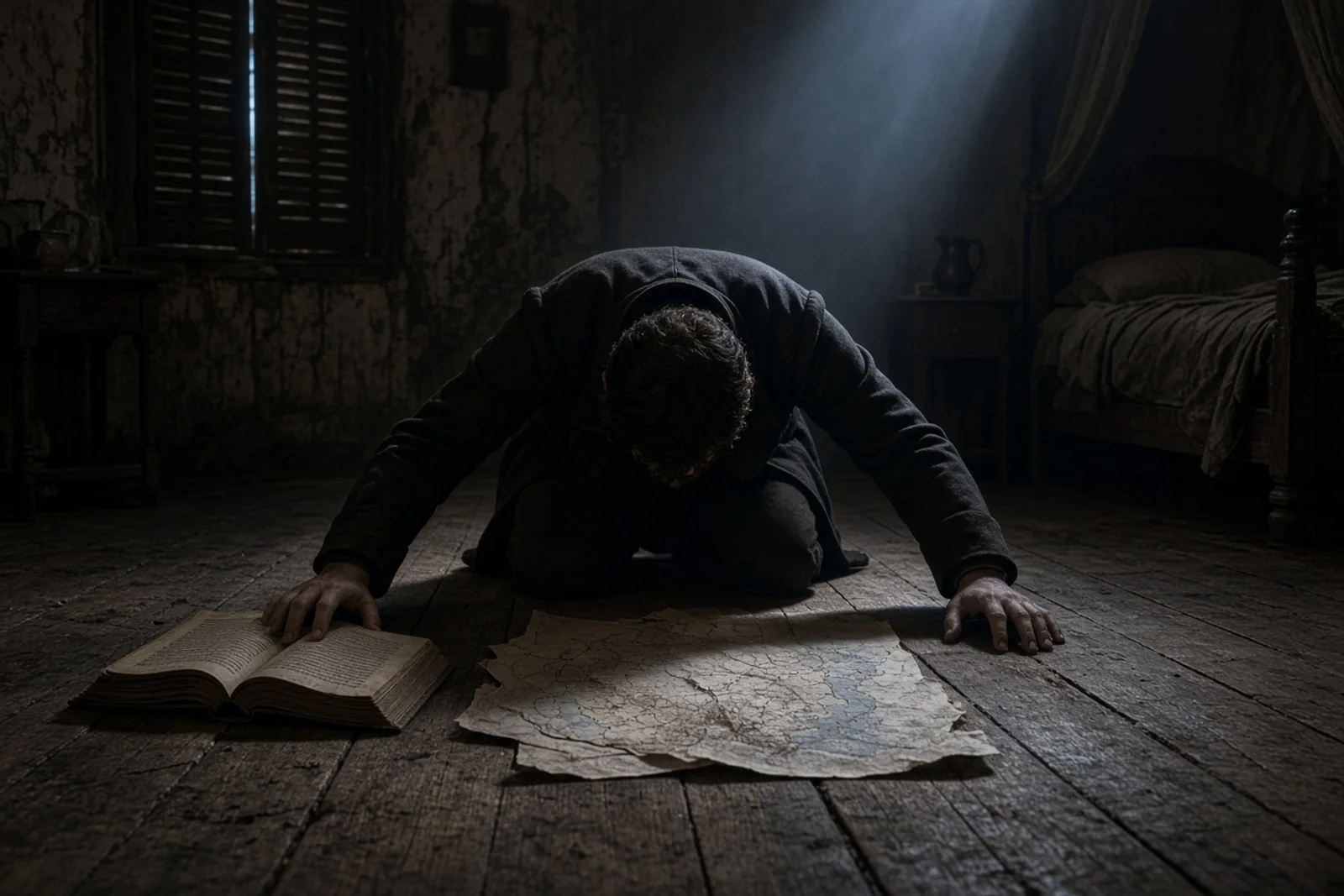
The candle had burned low on the table between us. I had come over after supper to help him pack the last of the medical books, but the work stopped when he dropped to his knees without a word. The floorboards were bare and cold. He stayed there, forehead against the edge of the chair, while the clock on the mantel ticked past ten.
I sat on the low stool by the window and waited. Rain tapped the glass. Somewhere below, a cart rattled over the cobbles on its way to the docks. He did not move. After a while his shoulders began to shake, not from cold but from something deeper. I had seen him pray before, short and steady, the way a man checks a map before he steps outside. This was different. This was a man emptying himself.
He had already told the committee he would sail on the Dumfries in September. The Chinese Evangelization Society had accepted him. Passages were booked. Trunks stood open along the wall, half-filled with the things a young doctor takes to a place no one in his family had ever seen. Yet the real decision still hung in the air like smoke. The treaty ports were open. The interior was not. Everyone knew the difference.
His breathing grew slower. The room grew still enough that I could hear the fire settle in the grate. Then he spoke, not to me, not even quite aloud at first. He asked for the strength to go where no foreign missionary had stayed. He named the provinces the maps marked only with blank space. He said the words as if he were handing over a title deed he had tried to keep hidden in his own pocket.
I kept my hands on my knees and my eyes on the floor. The night stretched. Once he lifted his head and looked toward the window, though there was nothing to see but the dark. His face was wet. He lowered it again. The only sound was the rain and the small creak of the chair under his weight.
Near midnight he stood. His legs were stiff. He walked to the table, took the pen from the stand, and wrote a single line across the back of an old envelope. I did not read it then. He folded it, placed it inside the top of the largest trunk, and closed the lid. When he turned around his eyes were clear in a way I had not seen since the day he first spoke of leaving England.
We did not speak of what had happened. He asked if I would help him tie the straps on the smaller case. We worked in silence until the candle guttered out. I left him standing in the doorway, the lamp in his hand, and walked home through streets already empty.
Three weeks later the Dumfries slipped her moorings at Liverpool. I stood on the quay with his mother and watched the sails fill. He leaned over the rail, waved once, and was gone. Letters came from Shanghai the following spring. He wrote that he had left the city and was living in a Chinese house, wearing their clothes, eating their food. The committee in London grew uneasy. They had expected reports from the treaty ports, not from villages two hundred miles inland.
He never mentioned the envelope again in any letter I received. Yet the work he began carried the same mark as that night on the bare floor. When the China Inland Mission was formed years later, the first party sailed under the same rule he had written for himself: no salary guaranteed, no appeal for funds, only the promise that the interior would be reached. Men and women went out two by two, living on what came in answer to prayer. The map that had once shown blank spaces now carried the names of stations he had walked to on foot.