




Ignatius Loyola's Sickbed Vow
Wounded soldier Ignatius reads saints' lives and dedicates himself to Christ, founding the Jesuits.
FaithTap · Sep 29, 2026 · 11 min read
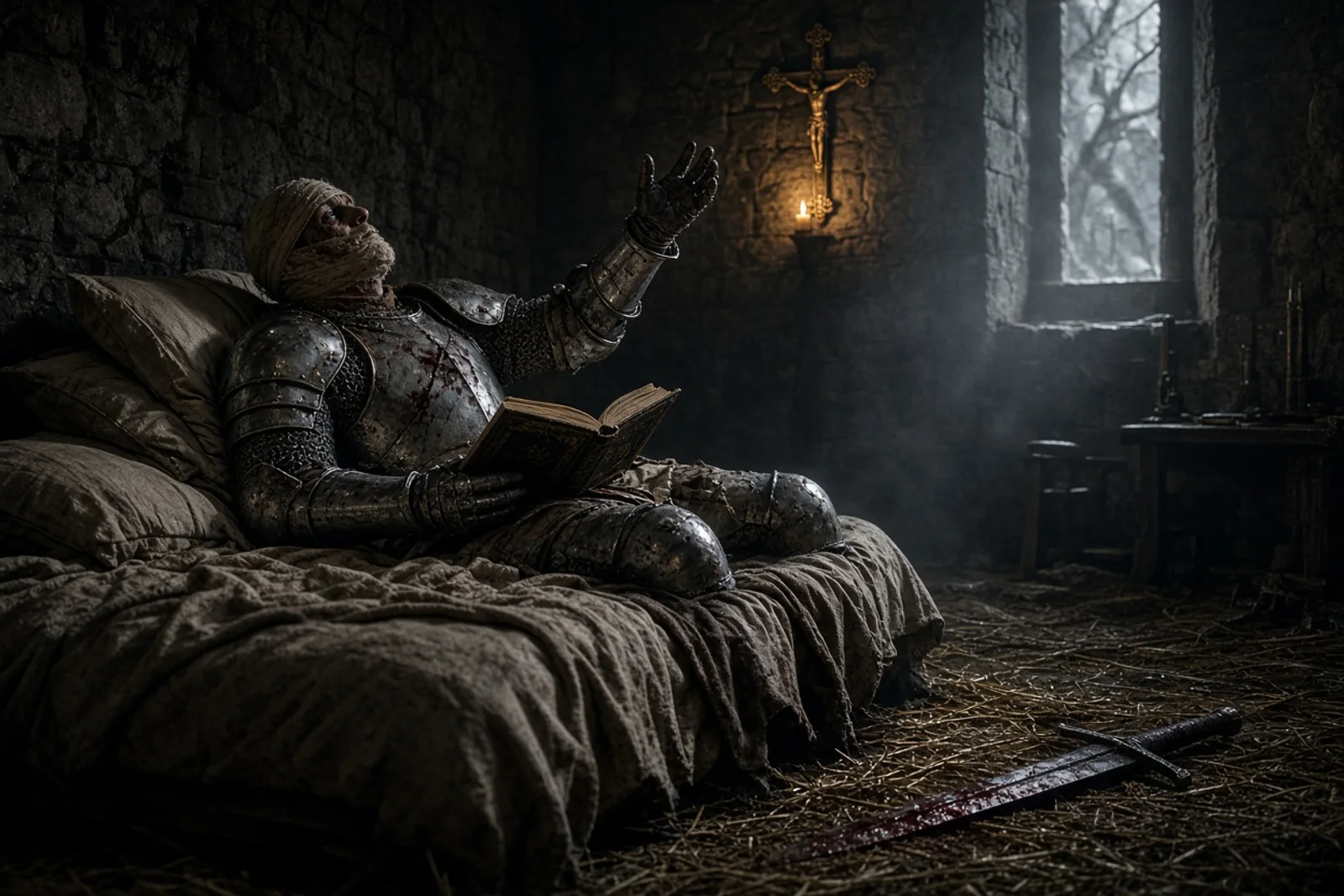
The cannon had already taken the wall when I reached him. Dust still hung in the air like fog off the river, and the French were shouting their terms from the breach. Ignatius lay where he had fallen, one leg bent wrong under him and the other torn open at the shin. He would not let the men lift him until the commander signed the surrender. I stayed with him through that, holding his shoulders while the bones ground. He spoke only once, to ask whether the powder stores were still dry.
They carried him on a litter the next morning. The French surgeons bound the legs straight and gave him wine, but the ride to Loyola took two days over the mountain road. Every jolt set the broken bone sliding. I rode beside the litter and watched his hands. They never opened from fists. At the castle his brother met us at the gate and had the bed prepared in the upper room where the light came through the narrow windows.
For weeks the fever held him. The surgeons came from Pamplona and from Azpeitia. They said the bones had set crooked and must be broken again. Ignatius listened, then nodded. The elder brother turned away when they brought the saw and the wedges. I stayed in the room because no one else would. They cut the flesh first, then drove the wedges under the bone. The sound was like green wood splitting. He made no sound beyond the breath through his teeth. Afterward they stretched the leg with weights and cords tied to the foot of the bed. He lay three weeks that way, the cords tightening every morning.
When the danger passed he asked for the old books of chivalry that had always been kept in the chest by the stair. The housekeeper said there were none left in the house. She brought instead the volume of the Carthusian on the life of Christ and the small book of saints' lives that had belonged to their mother. He took them because there was nothing else. At first he read only at the hours when the pain kept him awake. I saw him turn the pages with one hand while the other gripped the edge of the blanket.
He read slowly. Some nights he stopped at a chapter about Francis and read it twice. Another night he read the account of Dominic until the candle burned out. In the mornings he asked me to open the shutters earlier so the light would reach the page. The leg was still bound, but the swelling had gone down enough that he could sit propped against the pillows. He began to mark places with threads pulled from the blanket fringe.
One evening after the household had gone to supper he called me in and told me to take the romances away if they were ever found. He said the saints had done more with their lives than any knight in the old stories. He spoke quietly, as if testing the words. Then he asked whether a man could still make such a life if he had already given years to the court and the wars. I had no answer. He turned back to the book and did not look up again that night.
The next morning he asked for paper and ink. He wrote nothing long, only a few lines that he folded and placed under the pillow. Later I learned they were promises to visit Jerusalem and to live as the saints had lived. He did not speak of them to his brother. When the elder brother came to sit with him he talked instead of the harvest and the tenants. Ignatius listened and nodded at the right places, but his eyes stayed on the wall above the door.
The cords came off the leg at the end of August. He could stand, though one leg was shorter and he needed a stick. He walked the corridor each morning and returned to the room to read again. The housekeeper noticed the romances were never requested. She asked me once what he did with the long afternoons. I told her he read the saints. She crossed herself and said nothing more.
By September he had decided to leave. He told his brother only that he meant to go to Barcelona and then farther. The brother argued for two days, then gave him money and a mule. Ignatius refused the mule. He took only the clothes he wore and the two books wrapped in cloth. On the morning he left I walked with him as far as the first turn in the road. He did not look back at the castle. The stick tapped steadily on the stones. When the path bent out of sight I waited a while longer, though there was nothing left to see.