




Ignatius of Antioch Writes Letters from Prison
Bishop faces martyrdom with courage
FaithTap · Oct 2, 2026 · 10 min read
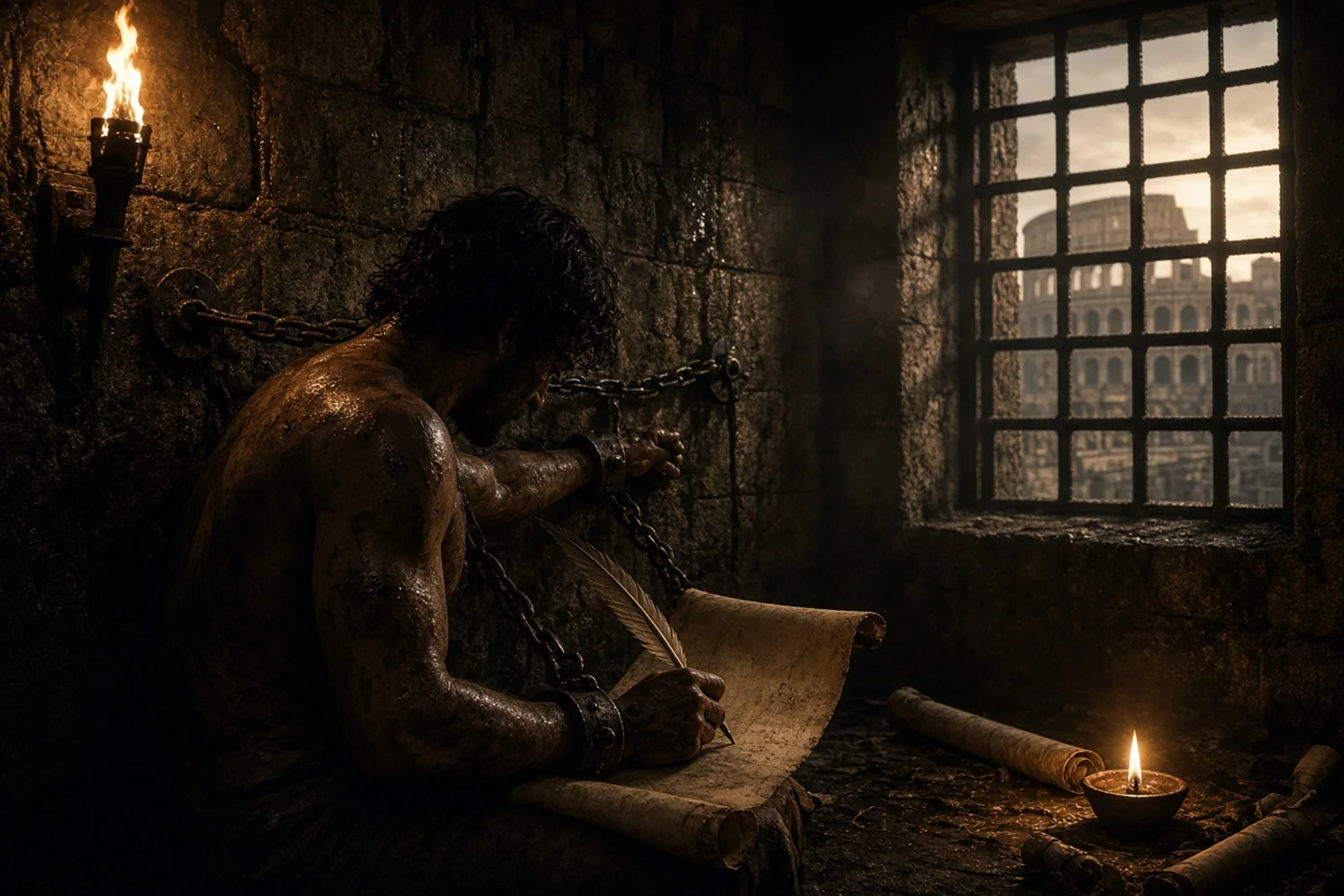
The road north out of Antioch still carried the dust of the legions when the soldiers loaded the bishop into the cart. I walked behind with Philo, both of us carrying the small bundle of parchment and ink the centurion had allowed after Ignatius promised he would not use it to send appeals. The chains were already on his wrists, heavy enough to pull his shoulders forward, yet he sat upright and asked for the first sheet before the wheels had turned a full mile.
We stopped that first night at a way-station where the water troughs were still warm from the cavalry horses. Ignatius asked for light. The guard gave him a stump of tallow and watched while he wrote to the churches ahead, telling them he would pass through their cities but wanted no rescue. His hand moved steadily despite the iron. When he finished the first letter he rolled it, sealed it with the wax the centurion provided, and handed it to me to carry forward on foot so it would reach Ephesus before we did.
Days later the column entered Smyrna. Polycarp met us at the gate. The two men embraced without speaking for a long time, the soldiers standing back because the bishop’s reputation had already traveled the road. That evening Ignatius dictated again, this time to the Romans, asking them not to stand between him and the arena. He wrote that he was God’s wheat and would be ground fine by the teeth of the beasts so he might become pure bread. The words were spoken quietly, as if he were giving directions to a servant rather than addressing the capital of the empire.
We left Smyrna at first light. The soldiers had begun to call him Theophorus among themselves, half in mockery, half because they had heard him answer Trajan that way. One of them, a man from Thrace, asked what it meant to carry God inside the chest. Ignatius told him it meant the demons had already fled and there was no room left for fear of beasts. The soldier did not ask again.
At Troas the wind off the strait was cold. Ignatius wrote three more letters in a single night while the rest of us slept on the stone floor of the barracks. He sent one to Philadelphia, one to Smyrna again, and one to Polycarp himself, urging the younger bishop to stand firm and to hold the churches together around their own overseers. When he sealed the last roll he looked at the remaining parchment and said there would be no more after Rome. The centurion took the ink away the next morning.
The sea crossing was rough. Ignatius was seasick yet continued to speak the words he wanted remembered, and Philo wrote them down on the back of a military dispatch the soldiers let us keep. He told us the living water inside him kept saying “Come to the Father,” and that perishable food no longer interested him. The guards listened because there was nothing else to do on the rolling deck.
We reached Rome in the heat of late summer. The crowds already knew a bishop was coming to the beasts. People lined the road from the port, some jeering, some silent. Ignatius walked the last stretch on foot because the cart could not pass through the narrow streets near the barracks. The chains had rubbed his ankles raw; he did not limp.
On the morning they took him to the arena he asked the soldiers to let me stand close enough to see. The beasts were two leopards brought from the eastern cages. They had not been fed for two days. Ignatius stood in the sand, arms lifted, and the first leopard took him at the throat before the second reached him. The crowd noise changed from shouting to a single drawn-out sound, then fell away.
Afterward the bones were collected by the two companions who had walked the whole road with him. They wrapped what they could carry and began the return journey the same week. The letters he had sent ahead had already been read aloud in the churches. In Antioch the new overseer kept one copy in the treasury, and travelers still asked to hear the words about the wheat and the bread long after the arena sand had been raked clean again.