




Ignatius of Loyola Begins Spiritual Exercises
Wounded soldier turns to prayer and discernment.
FaithTap · Sep 23, 2026 · 12 min read
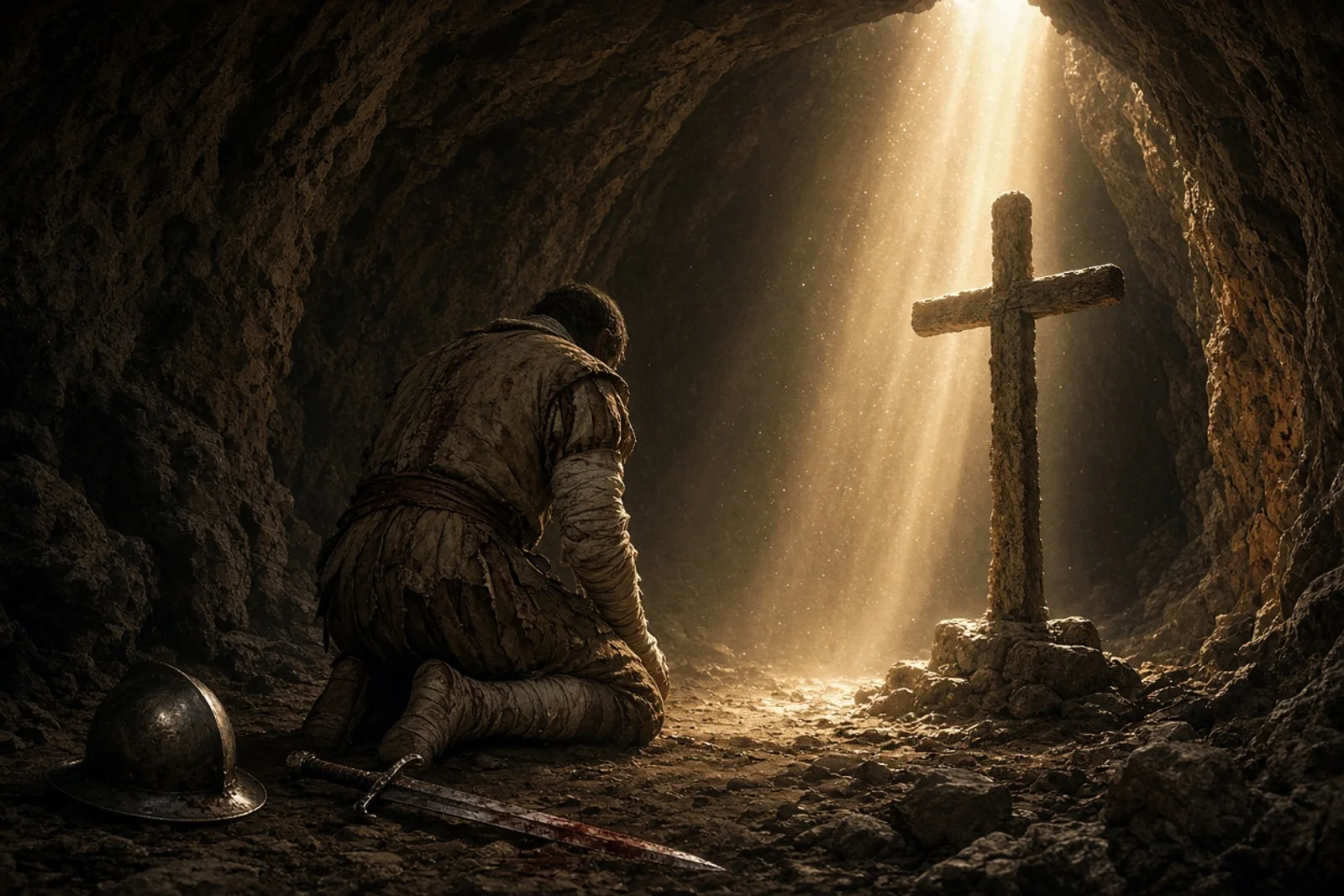
The litter swayed between us on the mountain track, his body strapped tight against the jolts. I walked at the rear, one hand steadying the pole, watching the blood seep through the wrapping on his right leg. He did not speak. The French had left him with a clean shirt and a flask of their wine. At the castle gate his brother met us, and the women took over with basins and fresh linen.
They laid him in the upper room where the light came through the narrow slits. The surgeons came from Azpeitia first, then from further off. They set the bone, then broke it again when it knit crooked. He gripped the frame of the bed and kept his eyes on the ceiling beams. After the last cutting he lay three days without food. On the eve of Saints Peter and Paul the priests gave him the oils. At midnight the fever broke.
When he could sit again he asked for the old stories of knights. There were none in the house. His sister-in-law brought instead the book of Christ’s life and the lives of the saints. He read them by the hour, the pages weighted with a stone against the draft. At night he stared at the wall. In the mornings he told me the difference. The thoughts of banners and courts left him restless once they faded. The thoughts of the saints left him quiet, as if something had been settled inside the silence.
He began to walk the short length of the room, dragging the shorter leg. One morning he said he would go to Jerusalem. He spoke of it as a settled thing, not a plan. He had seen the Virgin in the night, holding the child, and the sight had stayed with him after the light returned. He packed little. A staff, a change of shirt, the cloak of rough cloth he had asked for.
I walked with him as far as the ridge above the valley. He moved slowly, testing the leg on each slope. At Montserrat he stopped. The Benedictines took his confession over two days. He gave his good clothes to the beggars at the gate and kept the sack garment. On the night of the vigil he hung the sword and dagger on the altar rail and stayed until the bells for lauds. I waited outside with the other travelers. When he came out his face was set, the way it had been the day the cannon took him.
From there he went down to Manresa. I had work at the hospital and met him again when he came for bread. He slept in the cave above the river and came down each morning for whatever tasks they gave him. He prayed seven hours most days, sometimes more. The cave stayed cold even when the sun stood high on the rocks. He ate what the hospital gave and nothing else.
One afternoon he told me about the other vision, the one that came in daylight. A shape like a serpent with bright points along its length hung in the air near him. It brought a sweetness while it stayed, then left him empty when it vanished. He said he had learned to mark the difference the same way he marked the difference in his reading. After that he kept a small book and wrote in it each evening, scratching with a piece of charcoal on the folded paper.
He began to speak of a method for ordering the day. Not rules shouted from a pulpit, but steps a man could follow alone. He tested them on himself first, then on the few who came to the cave asking what he was doing there. The words were plain. He wrote them again and again until the order felt right under his hand.
Months passed that way. The leg never lengthened. He limped down the path to the hospital and back up again. The pages he carried grew thicker, the charcoal marks darker. One morning he showed me the first page where he had drawn the shape of a week divided into days and hours. He did not explain it. He simply pointed to the lines and said a man could walk through them the way a soldier walks a measured ground.