




Ignatius of Loyola's Vision at Manresa
Wounded soldier experiences profound spiritual conversion
FaithTap · Sep 24, 2026 · 11 min read
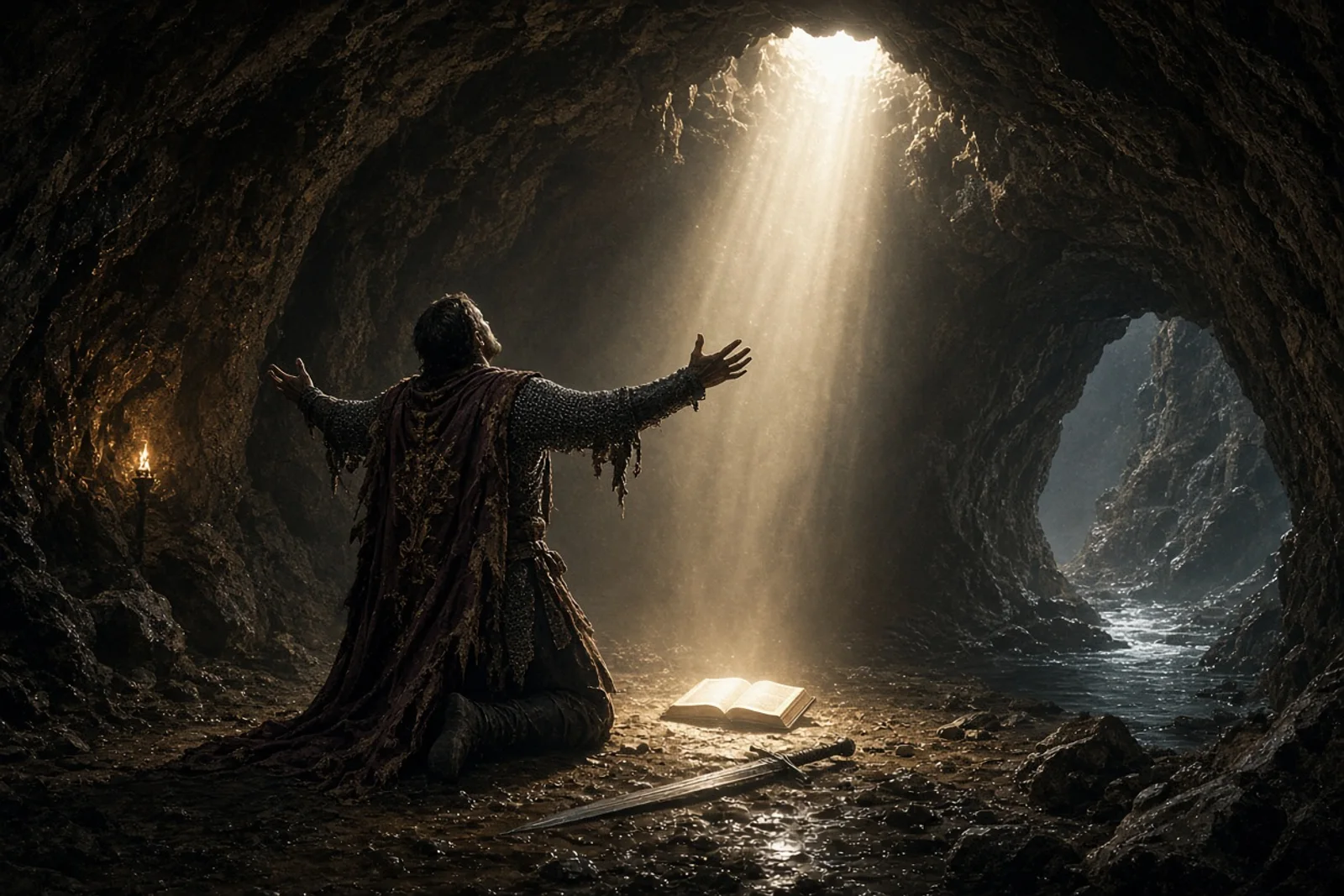
I was hauling two empty buckets down the slope behind the hospital when I saw him. He moved slower than the other pilgrims who passed through Manresa that year, one leg stiff from an old break. He carried nothing but a staff and a sack of rough cloth. He stopped at the edge of the river where the bank flattened into a shelf of rock. The water ran high from spring melt, brown and loud. He sat with his back to the town and his face toward the current.
I set the buckets down and watched. He stayed there through the heat of the day. At dusk I went back up the hill. The next morning he was already at the same place. He did not beg. He did not speak to anyone who crossed the footbridge. After a week the hospital cook sent me with a bowl of thin broth and a crust. I left it beside him. He ate without looking up.
He began to appear at the hospital door each evening for the scraps the sisters set aside. He swept the yard when the sisters asked. He never took more than he was offered. One night he told the cook he had given his sword to the Virgin at Montserrat. The cook nodded and handed him an extra onion. After that he worked longer shifts, carrying soiled linens to the river to beat them clean.
The nights grew colder. He stopped eating meat even on Sundays. His hair lengthened and his nails darkened with dirt. He walked the fields at dawn collecting bitter greens. Sometimes he returned with scratches on his arms from the brambles. The older woman who lived near the chapel spoke to him once in the yard. She said the Lord might show himself if the man kept his eyes open. He answered nothing.
I followed him one afternoon when the sisters sent me to gather reeds for the beds. He sat again on the same shelf of rock. The river was lower now. Sunlight struck the water in flat sheets. He kept his hands on his knees and his eyes on the far bank. I stayed upstream, hidden by a stand of willows, and washed the reeds.
Without warning he straightened. His shoulders lifted. He did not stand. He did not raise his arms. The air around him seemed to hold still even though the wind moved the leaves above my head. I could not see what he saw. I only saw the change in the set of his jaw and the way his fingers pressed into the cloth of his knees. He remained that way until the light left the water. Then he rose and walked back toward the hospital without hurry.
After that day he stopped fasting past the evening meal. He accepted the bread the sisters offered without argument. He cut his hair with a borrowed knife at the well. The older woman noticed first and told the cook. The cook said nothing but added an extra ladle of stew to his bowl.
He still went to the river, but now he carried a small book the sisters had lent him. He sat and turned the pages slowly. Sometimes he closed the book and simply watched the water. The limp remained, yet he covered more ground each day. He began to speak with travelers who stopped at the hospital gate. He asked them about roads to Barcelona and the ports beyond.
One morning he left the town with only the staff and the sack. He walked north along the road that followed the river. I watched from the hospital wall until he was small against the fields. The sisters said he meant to reach Jerusalem. The cook shook her head and went back to stirring the pot.