




Jim Elliot Surrenders All
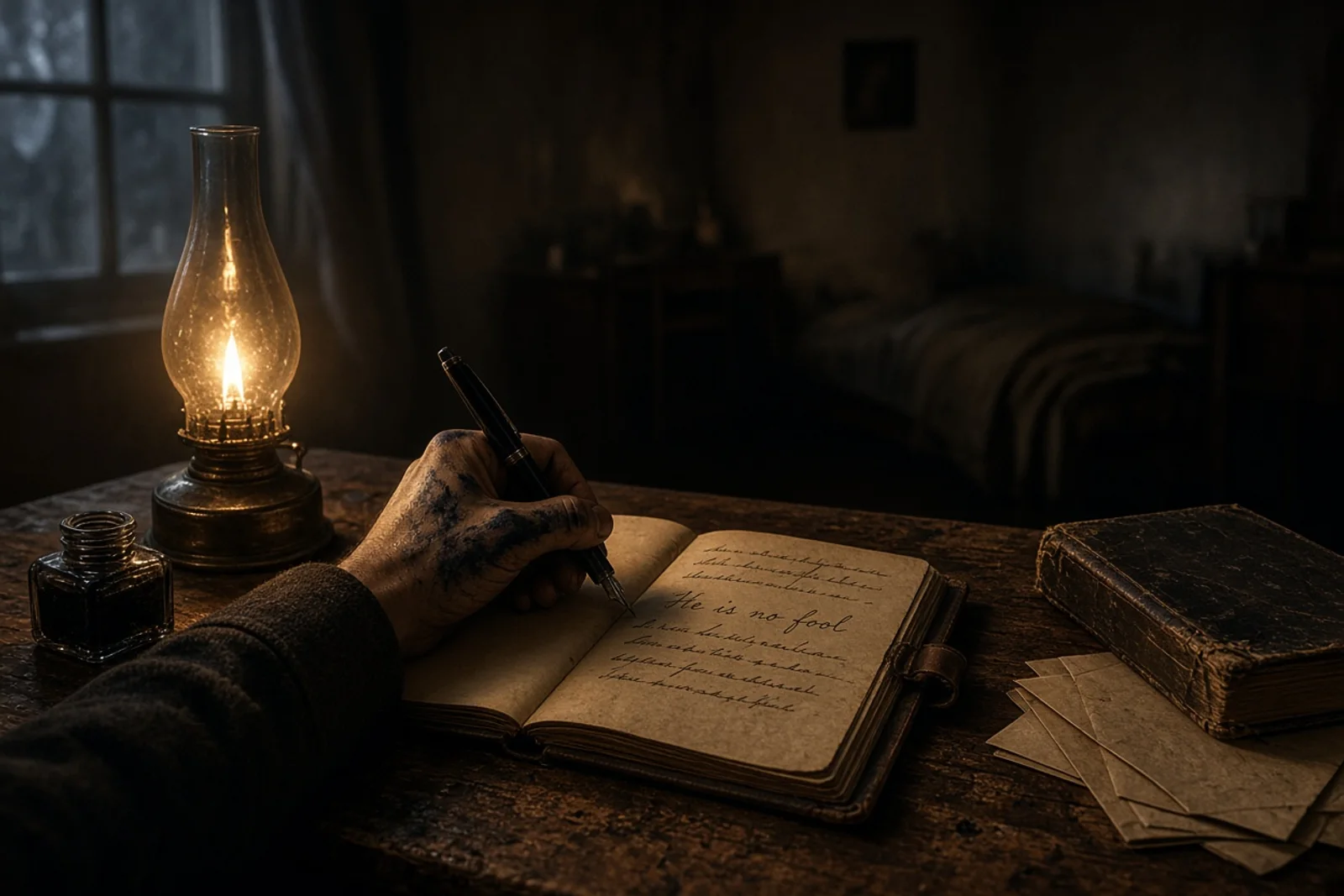
College student writes 'He is no fool' in journal.
FaithTap · Sep 27, 2026 · 11 min read
The gym mat still held the heat from the afternoon drills when I dropped onto the bench beside him. Jim Elliot sat with his back against the cinder-block wall, elbows on his knees, staring at the empty circle where the next pair would grapple. Sweat darkened the collar of his singlet. He had pinned a heavier man in under two minutes, then said almost nothing on the walk back to the locker room.
We had come to Wheaton the same fall. He studied Greek and the languages that would take him overseas. I studied history because it kept me on campus and out of uniform. Most evenings we ate together in the dining hall, and most nights the lights in his room stayed on past midnight. He kept a notebook open on the desk, the pages already soft at the corners from being turned again and again.
One October evening the notebook lay on the windowsill while he read aloud from Brainerd. The words about riding through snow and preaching to people who answered with stones came out slow, as if he were measuring each one against something he had already decided. When he finished he closed the book, picked up his pen, and wrote without looking up. I saw the line form under his hand: He is no fool who gives what he cannot keep to gain what he cannot lose. He left the pen where it fell and walked to the window. Outside the maples were losing their leaves in a thin wind.
He never talked about the sentence afterward. Instead he began to carry a different kind of list. Names of tribes. Distances to ports. Costs of passage measured in months of support. He asked me once if I thought a man could plan his life so tightly that God would have no room to change it. I said I did not know. He nodded as if the answer had already been settled somewhere else.
By spring he had met Elisabeth Howard. She came from a family already committed to mission work. The two of them spoke in the library stacks or on the path that ran behind the gymnasium, always with books between them. He told her he would not marry until he knew where he was going and whether she could come. She answered that she would not ask him to wait if the call was clear. Their letters crossed the campus in the hands of friends who knew better than to read them.
Graduation scattered most of us. Jim stayed on to finish extra language work, then took a job with a mission board that needed someone who could handle both Greek and the practical business of shipping crates. He wrote from Portland, from Los Angeles, from the deck of a freighter bound south. The letters were short and full of lists: supplies received, passages booked, verses that had held during the crossing. He never mentioned money except to say it had arrived on time.
In Ecuador the work settled into the pattern he had described years earlier. Language study in the mornings, contact with the Quechua in the afternoons, evenings spent copying notes by kerosene light. He married Elisabeth in 1953 at a small ceremony in Quito. Their daughter was born the following year. The letters that reached us now included drawings of the child and descriptions of the river that ran past their house.
The plan to reach the Auca began as a series of flights over forest clearings. Nate Saint kept the plane low enough for gifts to be dropped. Jim and the others watched the figures below pick up machetes and cloth, then retreat. On the sixth of January 1956 the first Auca man stepped onto the sandbar they called Palm Beach. He rode in the plane for a few minutes and laughed when the wheels left the ground. Two days later the same clearing held the bodies.
The men who flew in to recover what could be recovered brought back Jim’s watch and a notebook whose pages had been washed by rain. Elisabeth kept both. She moved with the child into the Auca village three years later and stayed long enough to see some of the same men who had carried spears begin to clear ground for houses instead. The letters she sent described the work in the same measured sentences Jim had used, as if the notebook had simply changed hands.