




Joan of Arc Leads Relief of Orléans
Teenage girl turns tide of war
FaithTap · Oct 8, 2026 · 11 min read
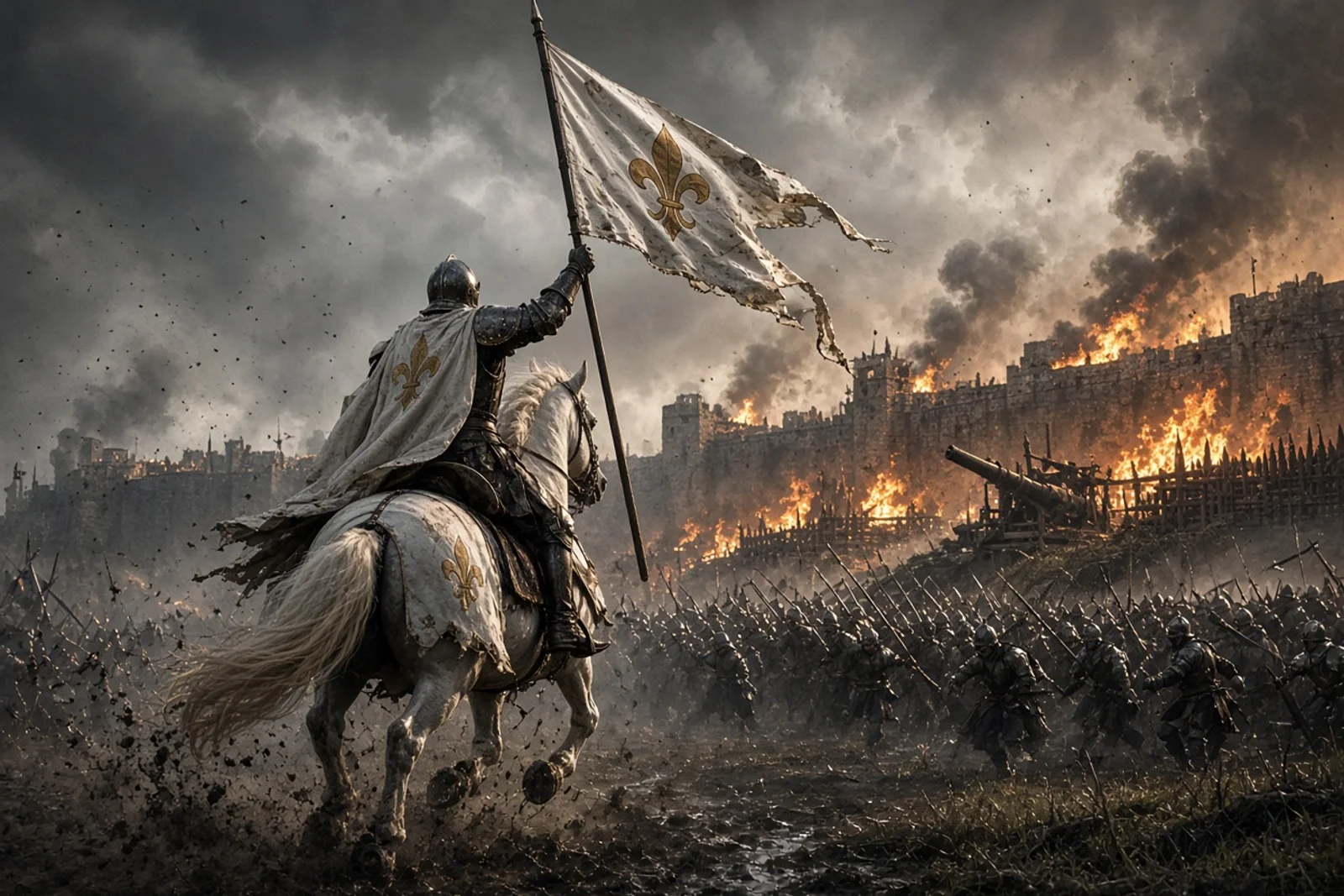
The river ran low that morning and the flatboats scraped bottom half a mile short of the eastern gate. I was in the third boat with two barrels of salt pork between my knees and a crossbowman cursing the mud. Up ahead the city walls showed pale in the early light, and from the western side came the sound of trumpets and the crack of powder. The sortie had begun exactly when the captains said it would. English arrows lifted in long arcs over the roofs and fell into the river behind us.
We grounded and waded the last yards. The gate opened only wide enough for one man at a time. A sergeant with a torn sleeve pulled me through by the strap of my pack. Inside the streets were crowded with people who had not seen fresh meat in weeks. They reached for the barrels as we passed. I kept my head down and followed the line of soldiers ahead of me until we reached the open square before the cathedral.
She was already there, standing on the steps with her banner planted beside her. The banner showed the world and the two angels. She wore the white armor they had given her at Chinon, though the breastplate was still too large across the shoulders. Her page held the horse. She did not look at the crowd. She watched the western sky where the smoke from the sortie rose in a single column.
By midday the English had pulled back from their western positions and the city gates were shut again. We stacked the supplies in the old market hall. The crossbowman who had cursed the mud found a corner and slept with his bow across his chest. I sat on an empty sack and listened to the captains argue over how many men could be spared for the next push. No one mentioned her name until a priest came through asking for volunteers to carry messages to the bastions still held by the English.
She rode out on the third day after our arrival. I was part of the escort that followed her along the riverbank toward the English fort called the Tourelles. The ground between the city and the fort was open and cut by ditches. She kept the banner high so the men on the walls could see it. An English gunner on the far bank tried a ranging shot that threw up water fifty paces short. She did not turn her horse.
On the morning of the seventh the attack went in at first light. I carried a scaling ladder with three other men from my company. She was already at the foot of the Tourelles rampart when the first English stones came down. The ladder was too short by a foot. We jammed it against the stone and held it while men climbed. An arrow struck the man above me and he fell across my shoulders. I dropped the ladder and pulled him clear.
She was hit just after noon. The arrow took her above the shoulder where the armor plates did not quite meet. She staggered but stayed on her feet. Two men tried to lead her back toward the city. She shook them off, broke the shaft with both hands, and had the wound bound with a strip from her own banner. Then she turned and walked back to the fighting line. The men who had begun to fall back saw her and stopped. They went forward again without orders.
By evening the English had lost the outer works of the Tourelles. Their dead lay in the ditches where the water had turned red. We found one of their captains still alive but unable to stand. He asked for water. The man next to me gave him the last of his flask and then sat down and did not rise again. I stayed with the wounded until the surgeons came from the city with torches.
On the eighth day the English camp was empty. Their tents stood with the flaps open and the cooking fires gone cold. From the walls we watched their columns form on the north road and move away in good order. No one cheered at first. The only sound was the river and the creak of the gate chains as the eastern gate was opened again for the first time since we entered.