




Johannes Gutenberg Prints the Bible
The first printed Bible makes Scripture widely available.
FaithTap · Sep 22, 2026 · 11 min read
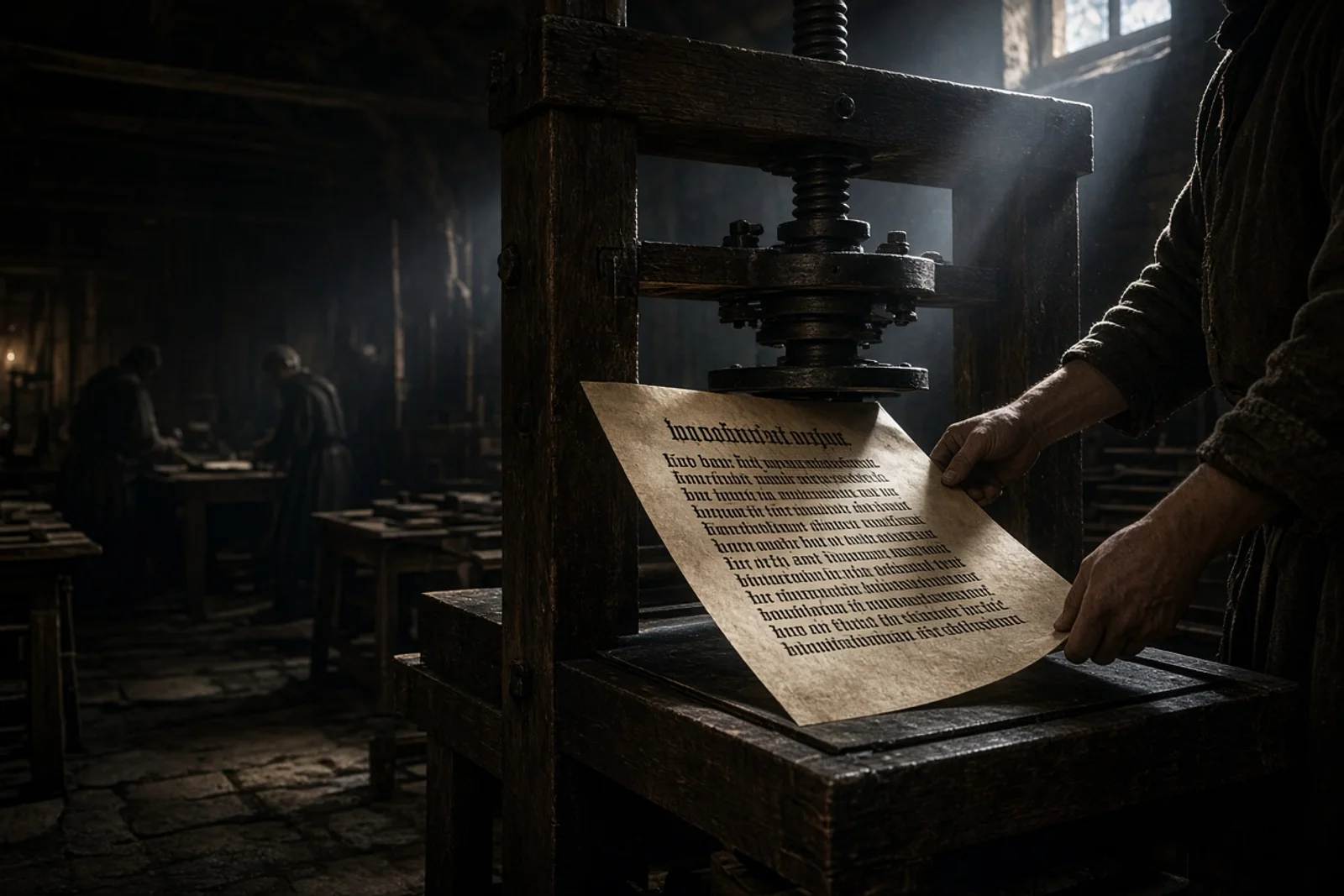
The press handle resisted at first, then gave with a crack that ran through the beams overhead. I leaned my weight into it again, feeling the oak bite into my palms, and the platen descended. Ink squeezed between the type and the vellum sheet, a dark bloom I could smell even through the open shutters. Schöffer stood at the composing table behind me, sorting the last line of the forty-second page. His fingers moved without looking, the same way a scribe finds the next letter on a ruled page. Gutenberg watched from the doorway, arms folded, saying nothing.
We had worked through the night again. The lamps were guttering, their smoke mixing with the sharp tang of boiled linseed and soot. Outside, rain tapped on the tiled roof of the Hof zum Humbrecht. Inside, the only sounds were the soft clack of type being lifted from the galley and the creak of the press screw turning back. Fust’s second loan had bought the vellum, enough for the three copies he insisted we keep perfect. The rest of the run would go on paper, but these sheets had to carry every line without a hair’s difference.
I pulled the printed sheet free and carried it to the drying rack. The letters stood slightly proud, still wet. Forty-two lines, two columns, the same measure we had used since the first gathering. My eyes had grown used to counting them at a glance. A single extra space would have meant resetting the whole page, and we could not afford the time. Schöffer had designed the type narrow enough to fit the columns yet wide enough that the eye did not tire. He tested each new punch on scraps before he let it near the forms.
Gutenberg crossed the room and lifted one corner of the sheet with a clean fingernail. He studied the impression the way a mason studies a joint. Then he nodded once and moved on. He rarely spoke during the run. The words he had spent years shaping were now locked in metal, and speech seemed unnecessary. I had seen him, months earlier, bent over the hand-casting mold for hours, adjusting the matrix until the letters dropped true every time. The same mold had produced every sort we now used.
By mid-morning the rain stopped. We opened the larger shutters and let daylight fall across the finished pages laid out on the long table. The capitals still waited for the rubricator who would come later, adding red and blue by hand. For now the text stood plain, black on cream vellum. I walked the length of the table once, checking for smudges or offsets. None appeared. The press had held its register across every sheet of the gathering.
Fust arrived while we were eating bread and cheese at the bench outside. He wore the short cloak of a merchant who expected to be paid. He asked how many sheets remained and whether the ink would hold on the last quires. Gutenberg answered with numbers, nothing more. The two men stood apart while they spoke, voices low. I heard the word “account” and then the sound of coins counted onto wood. Fust left without looking at the printed pages.
Schöffer returned to the type cases. He had begun as a scribe in Paris and still carried the habit of checking each letter against the light before he set it. When he placed a new sort into the composing stick, he tapped it once with the back of his thumbnail, listening for the fit. The rest of us followed his pace. If he worked quickly, the formes filled faster; if he slowed, the press waited. Today he moved steadily, the same rhythm he had kept since the first book of Genesis.
The workshop smelled of wet leather and hot metal by afternoon. We had cast fresh sorts the day before, and the cooling dross still lay in a pan near the furnace. I swept the floor between pulls so that stray type would not find its way underfoot. A single piece of metal under the press could ruin a forme and the sheet beneath it. We had learned that early.
Near dusk Gutenberg called us to the press again. The final sheet of the last volume lay ready. He took the bar himself and turned it with both hands, slow and even. When the platen rose, the page showed the complete colophon in its proper place. No one spoke. We carried the sheet to the rack and weighted its corners with clean stones so the vellum would dry flat. Then we cleaned the type with rags and oil while the light failed.