




John Bunyan Hears the Voice in Bedford Gaol
Tinker John Bunyan reads Luther's commentary and turns from profanity to writing Pilgrim's Progress.
FaithTap · Sep 23, 2026 · 11 min read
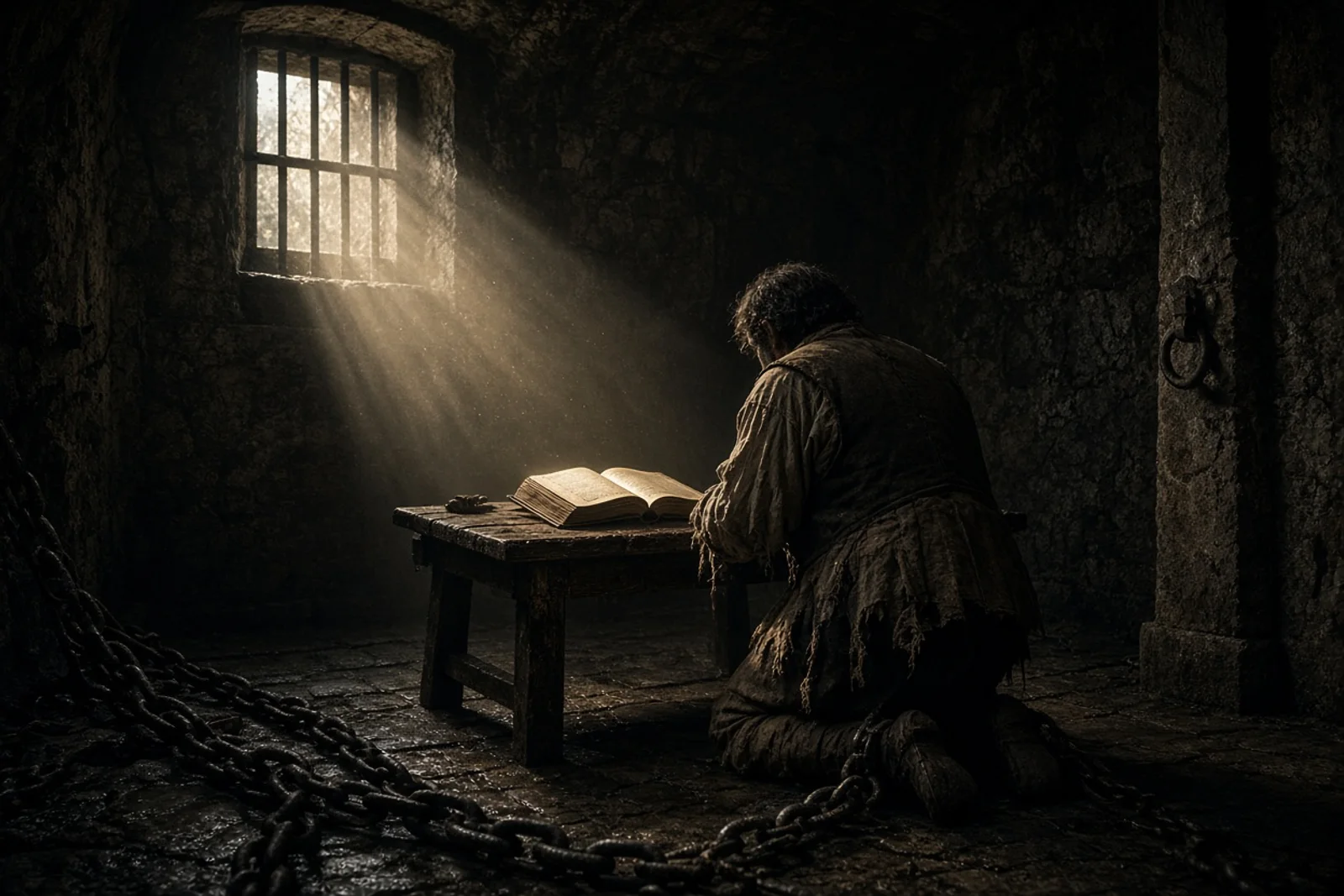
The prayer had just begun when the door slammed back against the wall. Cold air from the lane poured in with the constable and two of his men. Their boots left wet prints across the packed earth floor. I kept my head down but watched the circle of men and women still kneeling, Bibles open on their knees. The constable stopped short, lantern raised, as if he had expected pikes instead of open pages.
Bunyan stood first. He had been the one leading us into the words. He set his own Bible on the bench without hurry and turned to meet the officer’s eye. The constable read the warrant aloud, voice cracking on the justice’s name. Francis Wingate wanted him brought in at once. No one else was named.
Outside the cottage the watch had already formed. Lanterns bobbed along the hedge line. I heard the low mutter of neighbours who had come out to see what the noise meant. Bunyan walked between the two constables without looking back. One of the women tried to press a cloak into his hands; he shook his head once and kept moving.
We followed at a distance as far as the crossroads. He did not speak until they reached the cart that waited on the Harlington road. Then he turned to the smaller group of us who had kept pace and said the meeting must go on another day. The words carried the same even weight he used when he preached. The constable told him to keep quiet. Bunyan climbed into the cart without being forced.
I reached Bedford two days later with a bundle of bread and a letter from his wife. The gaol stood on the river side of the bridge, its lower windows barred and half under water at high tide. The keeper let me in after counting the loaves. Bunyan sat on a bench against the back wall, straw scattered around his feet. He looked smaller inside the stone room than he had in the cottage.
He took the letter but did not open it at once. Instead he asked whether any of the others had been taken. I told him the watch had scattered once he was gone. He nodded and set the letter on his knee. For a while neither of us spoke. Water dripped somewhere above us and ran down the wall in a thin line.
On the third morning the keeper brought him before Wingate. I waited outside the justice’s house with two other men from the congregation. Bunyan came out again within the hour, hands still unbound. He told us the justice had offered freedom if he would promise not to preach. He had answered that he could not make such a promise. The keeper led him back across the bridge without further words.
Weeks passed. I brought what food I could spare and whatever news reached the town. Bunyan asked each time about the meetings. Had they continued? Were the people still meeting in the fields when the weather allowed? I said they were. He seemed satisfied and asked nothing more about his own case.
One afternoon the gaol door opened and a different visitor entered. The clerk of the peace carried a paper and spoke in a low voice, offering terms again. Bunyan listened without rising. When the clerk finished, Bunyan answered that he had already given his reply to the justice. The clerk folded the paper and left. The straw on the floor had been changed that morning; the new layer still smelled of the field.