




John Eliot Prints Algonquian Bible
Missionary translates Scripture for Native Americans.
FaithTap · Oct 2, 2026 · 11 min read
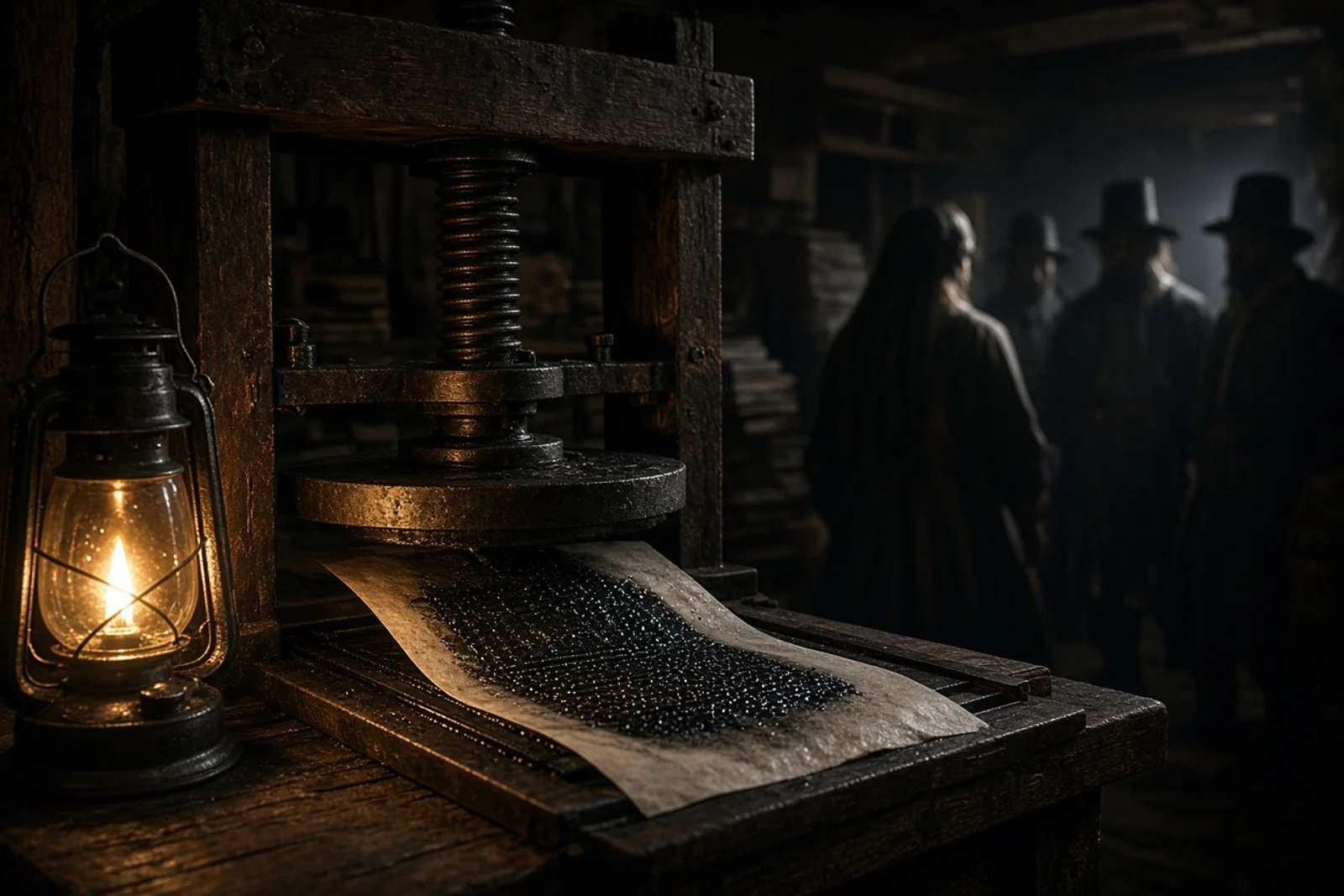
The press creaked under my hands again, the same stubborn oak bar I had leaned on since dawn. Samuel Green stood at the far bench, wiping ink from his knuckles with a rag that had long since turned black. The new type lay sorted in its cases, sent from London with the young man who still slept upstairs. We had no time for his rest. The sheets had to move.
James Printer bent over the composing stick, his fingers moving quicker than any of us expected. He set the Algonquian letters one by one, the strange clusters of consonants that Eliot had hammered into shape over years. The room smelled of damp paper and linseed. Outside, the Charles moved slow under the September light, carrying the same mist it always did this time of year.
Eliot arrived before noon, cloak folded over one arm. He carried no book this time, only a single sheet covered in his own hand. He laid it beside Green without speaking. Green read the lines, nodded once, and passed the sheet to James. The Indian convert studied it, then looked up at Eliot.
“You will want the verse numbers set smaller,” James said.
Eliot smiled at that, the quick, tired smile of a man who had already spent ten years inside the language. He left without waiting for the proof. We worked the rest of the day in near silence, the only sounds the thunk of the type and the drip of water from the cooling vat.
By the second week the second press arrived. It came crated like a piece of artillery, and the four of us needed most of a morning to wrestle it upright. Green walked around it twice, testing the joints. He said nothing, but his face had the same look I had seen when we first opened the cases of type. We now had two wooden presses and three men who knew how to run them. The young printer from London watched everything and said little.
The paper stack grew shorter each week. We printed one side, hung the sheets on lines strung across the shop, then turned them and printed the other. The work moved at the pace of one form a day when the weather held. Rain slowed us. Cold slowed us more. Eliot came every few days, always at the same hour, and stood with his hands behind his back while we pulled the first proof of a new gathering.
James Printer corrected most of the errors before Green even saw them. He had learned the press as fast as he had learned English. When the type for the word “kummogkodonattoottummooetiteanongannunnonmash” had to be set twice because the first form was too tight, James reset it without complaint. The word filled nearly a whole line. Green muttered that no English reader would ever need such a thing, then went back to locking the chase.
Winter came early. The ink thickened in the cold and had to be warmed on the stove before each pull. Eliot brought extra wood one morning and stayed to feed the fire while we worked. He asked James about a particular phrase in the Psalms, and the two of them stood at the window turning the words over until the light failed. I kept the press moving. The rhythm of the bar and the thud of the platen kept the room from going completely still.