




John Eliot Translates Bible for Native Americans
Missionary completes Algonquian Bible
FaithTap · Sep 27, 2026 · 12 min read
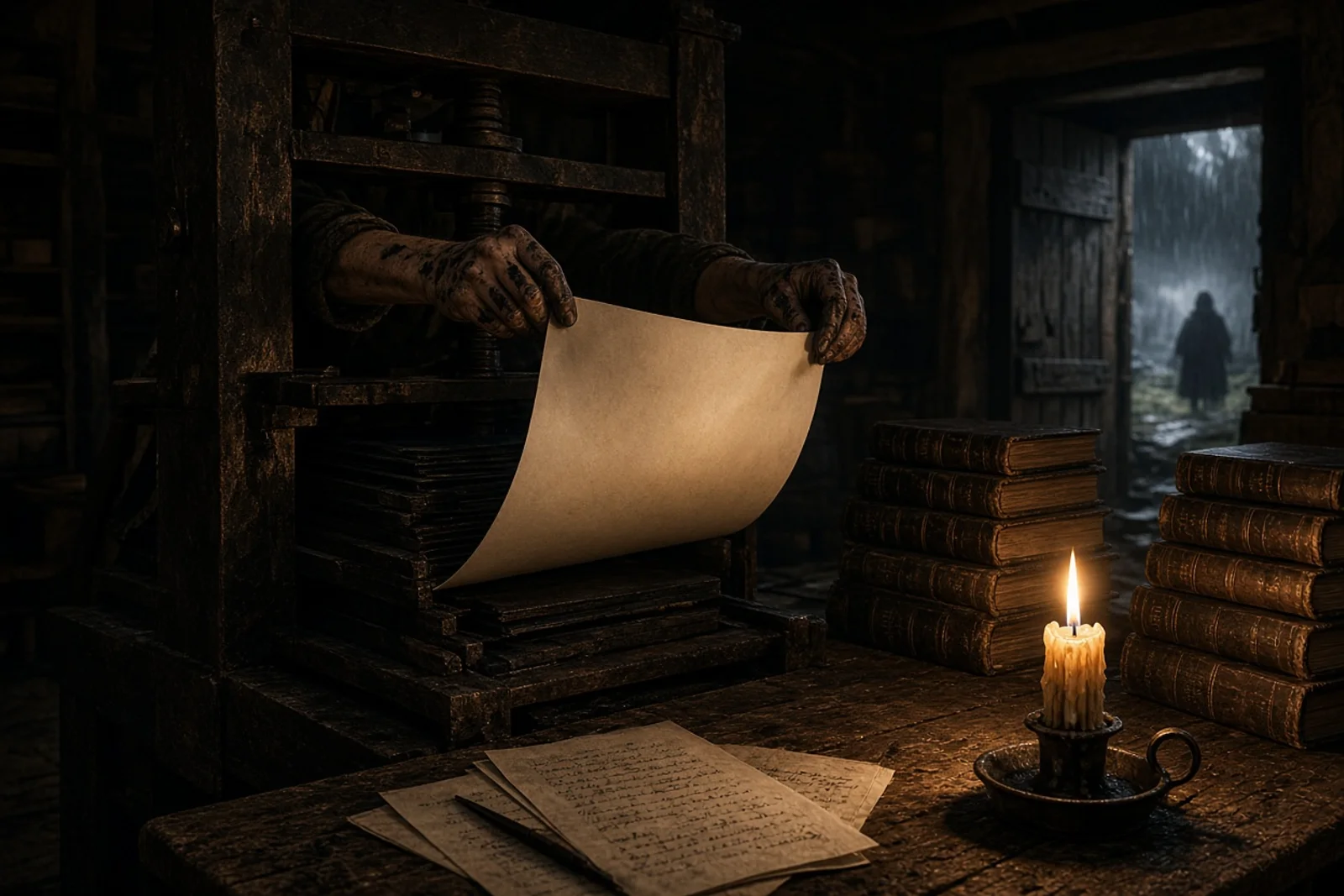
The press creaked under the weight of the last forme. I had been feeding the damp sheets since dawn, my fingers black with ink that never quite washed off, and now the smell of it mixed with the woodsmoke from the hearth where the compositor warmed his hands between pulls. Eliot stood at the long table near the window, the manuscript spread before him in his careful hand. He turned each page slowly, his lips moving without sound as he checked the Algonquian against the English column he kept open beside it. Outside, the Charles moved gray under a low sky, and the bell from the college tolled once for the hour.
He had carried those pages from Roxbury on his own back more times than any of us could count. The trail was familiar to him, the same one he took when he first tried the words on the praying Indians at Nonantum. Some nights he would arrive after dark, set the bundle down on this same table, and ask only for a lamp and a quiet corner. We learned not to speak while he worked. The language came in pieces, he said, the way a man learns the shape of a new field by walking its edges again and again.
The first sheets had gone through two winters earlier. We had run off the Gospel of Matthew on paper sent from England, the same stock used for the college laws. Eliot watched every impression. When a line of type slipped and the words crowded together, he made us stop and reset the entire page rather than accept the fault. He told us the Indians would read it by firelight in wet seasons, and a blurred letter could turn a promise into a lie.
By the time we reached the Old Testament the shop had grown crowded with other work. Students came for their disputations, merchants for broadsides, but Eliot’s Bible stayed on the bench nearest the light. The native men who helped him sat on the bench outside when they came with questions about a word. One of them, a man called Job, would point to a line and speak the sound again until Eliot wrote it down in the margin. Job had learned English at the trading post before the sickness took most of his family. He never stayed long inside the shop. The smell of the ink seemed to trouble him.
We pulled the final sheet on a morning when frost still lay on the grass. Eliot did not smile. He laid his hand on the stack of finished quires and asked only whether the paper would hold the fold without cracking. We bound the first copy that afternoon, sewing the gatherings by hand and pressing them between boards until the leather could be fitted. The book was thick, heavier than any psalm book we had made. Eliot carried it to the window and opened it to the first chapter of Genesis. He read the Algonquian aloud, the words rising and falling the way the Indians spoke when they told stories by the river.
That copy went to the governor. Others followed to the ministers who had given money for the press. The rest were packed in chests for the Indian towns. Eliot rode with the first load himself. He returned three days later with mud on his boots and a list of corrections already forming in his mind. A word in the book of Job had been set too close to the margin and might be lost when the pages were trimmed. We reset it before the next batch went out.
The work left its mark on him. His shoulders had grown stooped from leaning over the manuscript for so many years. When he walked the trail now he no longer composed psalms aloud. He listened instead to the wind in the oaks and the sound of his own footsteps on the packed earth. The Indians at Natick asked him to preach from the new book on the Sabbath. He stood before them with the volume open on a rough table, turning the pages carefully so the light would fall on the right column. Some of the younger men followed the words with their fingers. Others watched his face.
One winter the press stood idle for weeks because the ink had frozen in the pot. Eliot came anyway, carrying a single sheet he had written by the fire at home. He wanted to add a note at the end of the New Testament explaining how certain words had been chosen. We set the type by candlelight and ran off a dozen copies to insert by hand. He stayed until the last one dried, then wrapped them in cloth and left before the snow began again.
The books traveled farther than any of us expected. A copy reached a village beyond the Connecticut River where no Englishman had preached. A runner brought word back that the people there had gathered to hear it read. Eliot received the news without surprise. He said only that the words had been given for that purpose and must now do their work without him. He continued his visits to the praying towns, carrying a smaller book of selections he had made for those who could not yet manage the whole volume.