




John Newton Leaves Slave Trade
Captain's storm at sea prompts lifelong repentance.
FaithTap · Sep 21, 2026 · 10 min read
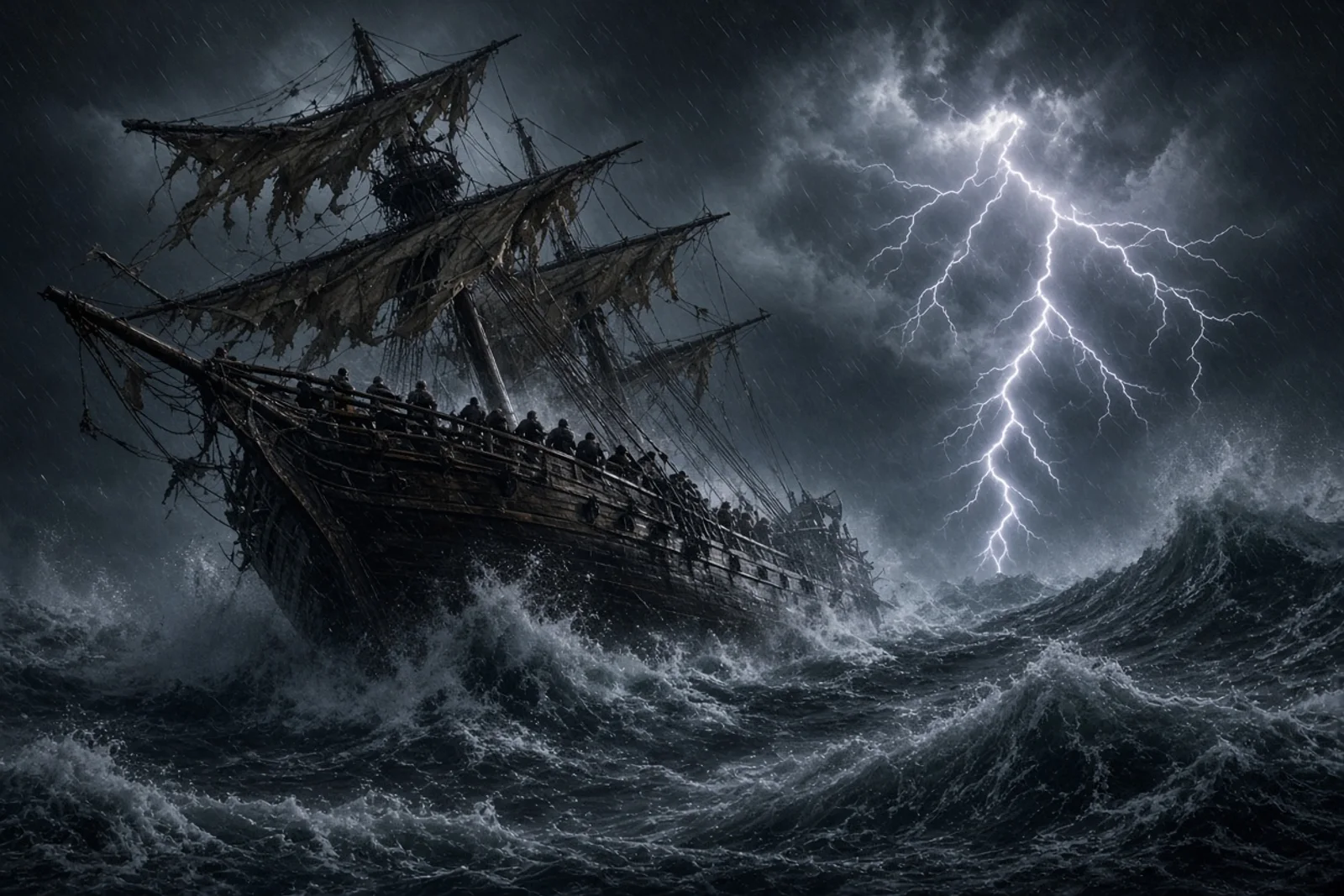
The pump handle bit into my palms as the Greyhound rolled hard to port. Water had already reached our knees on the deck. I had lashed myself to the upright with Newton, the two of us working the levers in turns while the rest of the watch bailed from the waist. The wind came in straight off the North Atlantic and carried salt so thick it stung the eyes shut.
Newton had been at the wheel earlier. A man named Evans stood in his place for a moment of rest and was gone in one wave, board and all. Newton came back without comment and took the spokes again. When the captain ordered us to the pump he followed without argument. We worked until our shoulders burned. Between strokes he kept his face turned toward the rail as though listening for something beyond the roar.
After several hours he paused, rope still around his chest, and said the words loud enough for me to hear over the wind. Then he returned to the handle. We stayed there until the light changed and the sea began to ease. The captain came aft once, checked the lashings, and left us to it.
Two weeks later the Greyhound made Lough Swilly with her foretopmast gone and the crew living on biscuit dust. Newton went ashore with the others but kept to himself on the return leg. He had a small book he read by the binnacle light when the watch allowed it. I saw the spine once. It was the same volume he had carried since the last port in England.
He stopped cursing the watch below. That was the first change anyone noticed. The men who had traded insults with him now found him silent at meals. He still stood his turns at the wheel and at the pump, but the songs he had made up about the officers were finished. When a man asked him why, he answered only that the sea had given him enough to consider.
We reached Liverpool in May. Newton left the ship and went to see the Catlett family. He spoke of marriage to their daughter Polly and asked for work that would let him stay near the coast. Within a year he was back on a slaver, this time as mate. I signed on the same vessel for one voyage. He kept his word about the language, but the rest of the trade went on as before. He measured the holds, checked the chains, and recorded the purchases at the factories. At night he wrote in a journal by lantern.
Three voyages later he was given his own command. He married Polly in 1750 between trips. I saw him once on the dock in Liverpool before he sailed again. He looked thinner. The fever that took him off the sea came in 1754 while the ship was still fitting out. He never boarded for that fourth voyage.
After he recovered he took work as a tidesman in the customs house. He studied Latin and Greek at a table in the evenings. Friends urged him toward the Church. He applied for orders and was refused the first time. He tried again. In 1764 he was ordained and sent to Olney as curate. I heard of him there through men who had sailed with us both. He preached in the same plain manner he had used on deck, telling his own record without varnish.
He met William Cowper in that village. The two of them wrote hymns for the Wednesday meetings. One of them, written for New Year’s Day 1773, began with the line about amazing grace. It was sung from sheets passed hand to hand in the church. Newton never claimed it would travel farther than the parish.