




John Wesley Begins Field Preaching
Anglican priest reaches the poor
FaithTap · Oct 5, 2026 · 12 min read
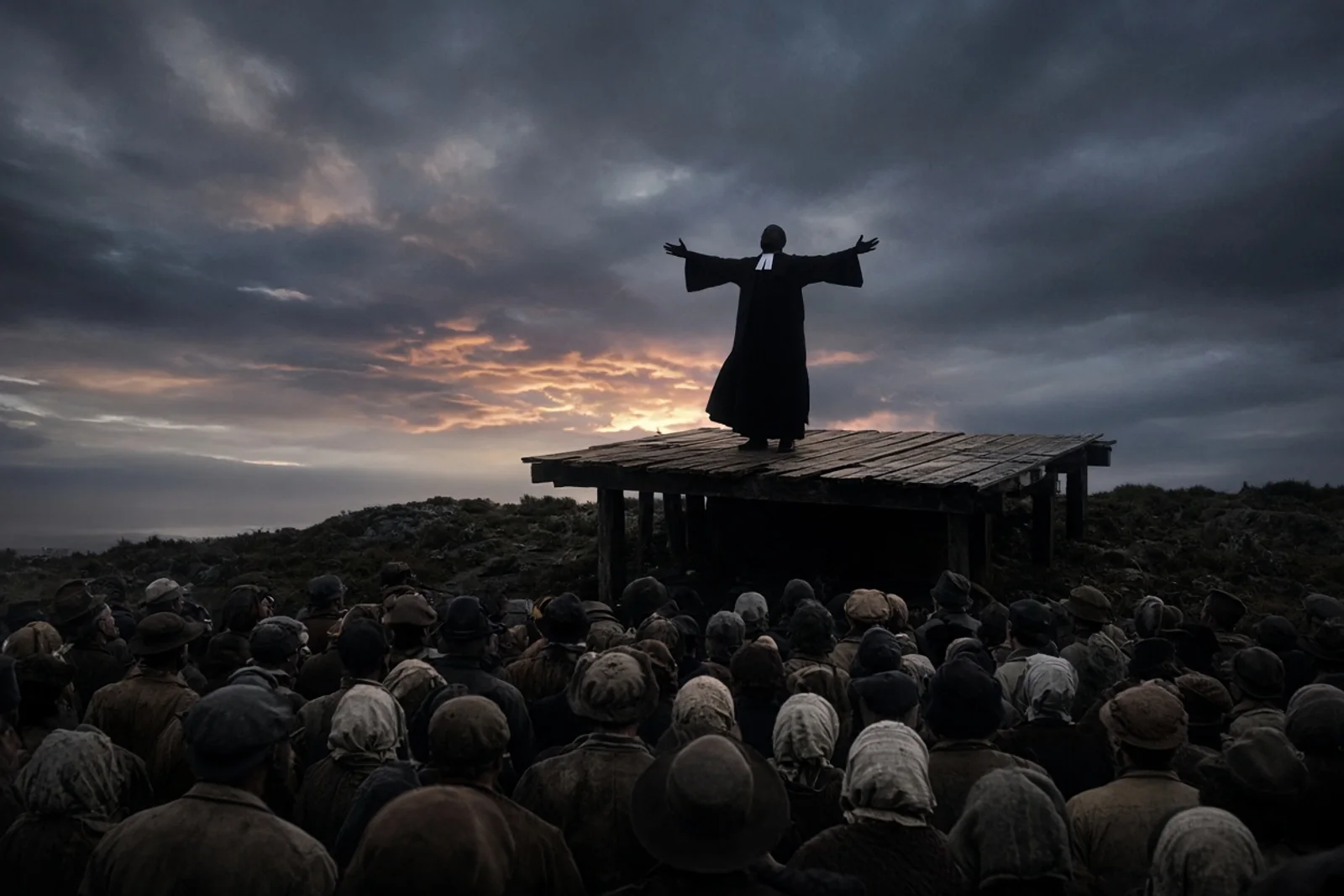
The road out of Bristol still smelled of coal dust when I reached the edge of the field. A low rise of grass sloped toward the city wall, and three thousand people already stood on it. I had come because a neighbor said the preacher from London would speak there at four. I carried nothing but the coat on my back and the ache in my legs from the morning shift.
Wesley climbed the small mound without a platform or rail. He wore the same black coat he had worn indoors the night before. For a moment he looked down at the packed ground as though counting heads. Then he opened the book and read the old words about the Spirit anointing someone to preach to the poor. His voice carried without strain. It reached the back rows where the children stood on crates.
I had heard Whitefield once, two weeks earlier, and the difference was plain. Whitefield shouted and moved his arms like a man driving cattle. Wesley stood almost still. He let the sentences land and waited. When he finished the reading he began to explain it, one phrase at a time. A miner beside me muttered that the man sounded like he was still inside a church, yet the words reached the open air without trouble.
By the time he stopped, the light had shifted. People did not leave at once. They stayed in small knots, talking. I walked back toward the city with two women who had come from the same lane as me. One of them said she had never stood that long without feeling the cold in her feet.
The next Sunday he preached at seven in the morning on the green near the river. A thousand came. Later he climbed Hannam Mount. Fifteen hundred miners and their families waited on the slope. He used the prophet’s call about water and wine without price. The wind moved across the open ground and carried the sound down into the hollows where the poorest cottages stood.
In the afternoon the crowd at Rose Green grew larger still. I counted the people in sections the way a tallyman counts loads. Five thousand was the number that stuck. Wesley stood on another rise with nothing behind him but sky. He read from John about rivers of living water. When he finished, a boy near me asked his mother if the preacher meant real water or something else. She told him to hush and listen.
Inside the societies the rooms stayed full. On the seventeenth of April I went to the house in Back Lane because the door had been left open. The floor had been propped with a post from below. Wesley had just begun when the wood gave with a crack that made every head turn. The post dropped. Dust rose. The boards sank a hand’s width and stopped. No one screamed. After a few moments people settled again and he kept speaking. The weight above never reached the ground.
I saw him the morning he meant to ride to Pensford. He had permission for the church there. A boy brought a folded note. Wesley read it once, folded it again, and put it in his pocket. He mounted anyway. The note said the minister thought him beside himself and would not open the pulpit. He rode the short distance and preached on the green outside the churchyard instead.
After that the pattern settled. He moved between the field places and the small rooms. The numbers did not shrink. Men who had never entered a church door stood on the grass and listened until the light failed. Women brought children and held them so they could see over the heads of those in front. The coal dust still hung in the air on still days, but the voices carried farther than the dust.